
 En
En
 عربى
عربى
Content
- 1 Why Embroidered Placemats Are More Than a Decorative Choice
- 2 Base Fabric Choices and How They Affect Embroidery Quality
- 3 Embroidery Techniques Compared: Hand, Machine, and Hybrid
- 4 Thread Types and Color Fastness: What the Specifications Actually Mean
- 5 Design Styles and How to Match Them to Your Table Setting
- 6 Care and Laundering: Protecting Your Investment Over Time
Why Embroidered Placemats Are More Than a Decorative Choice
Embroidered placemats occupy a unique position in table linen design — they function as practical surface protection while simultaneously serving as a deliberate aesthetic statement. Unlike printed or plain-woven placemats, embroidered versions carry texture, depth, and handcraft detail that cannot be replicated by digital printing or heat transfer methods. Each stitch physically interlocks with the base fabric, creating a design that remains visually intact even after repeated laundering and heavy daily use.
The global table linen market continues to grow, driven by increased consumer interest in home entertaining and dining aesthetics. Within that market, embroidered placemats represent a premium tier that spans everything from mass-produced machine-embroidered sets sold at retail chains to fully hand-embroidered artisan pieces commanding prices of more. Understanding what separates a high-quality embroidered placemat from a mediocre one requires looking closely at fabric construction, thread quality, embroidery technique, and finishing standards.
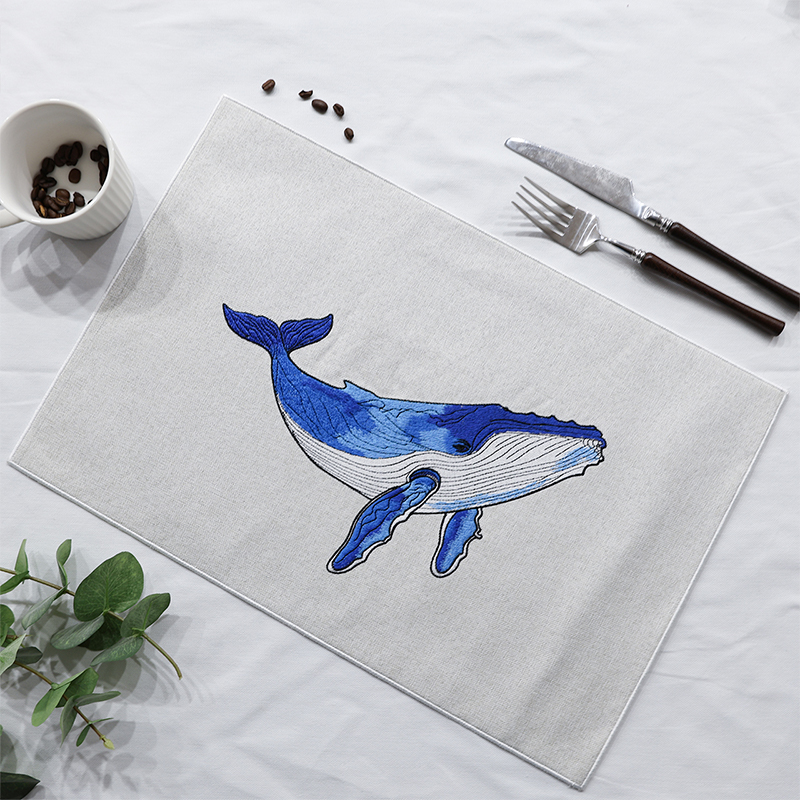
Base Fabric Choices and How They Affect Embroidery Quality
The base fabric is the foundation on which every embroidered placemat is built. Its weave structure, thread count, and fiber content directly determine how well the embroidery stitches anchor, how the finished placemat drapes on a table, and how it performs through washing cycles.
Cotton and Cotton-Linen Blends
100% cotton is the most widely used base fabric for embroidered placemats, and for good reason. Its natural fiber structure accepts embroidery thread with minimal puckering, holds color well after dyeing, and softens with each wash without losing structural integrity. For embroidery purposes, a medium-weight cotton with a thread count between 180 and 250 provides enough density to anchor stitches securely without being so tightly woven that the needle struggles to pass through cleanly. Cotton-linen blends — typically 55% cotton / 45% linen — offer the added benefit of linen's natural stiffness, which gives placemats a crisper lay-flat quality on the table while still being receptive to detailed embroidery work.
Pure Linen
Pure linen placemats with embroidery are a staple of European table linen traditions, particularly in countries like Portugal, Poland, and Hungary, which have centuries-old embroidery heritage. Linen's natural slub texture creates an organic, artisanal backdrop that enhances hand-embroidered motifs. However, linen's open weave can make dense embroidery fills more challenging, as stitches may shift slightly if the fabric is not properly stabilized with a backing material during production. High-quality linen embroidered placemats use a washed or stonewashed linen base that has been pre-shrunk, ensuring dimensional stability after the buyer's first wash.
Synthetic and Blended Performance Fabrics
Polyester-cotton blends and microfiber bases are increasingly used in mass-market embroidered placemats because of their wrinkle resistance and lower production cost. While these fabrics can accept machine embroidery effectively, they tend to lack the absorbency and texture of natural fiber alternatives, and can feel noticeably artificial in hand. For buyers prioritizing everyday washability and low-maintenance use, a 60% cotton / 40% polyester blend represents a practical middle ground that retains a degree of natural feel while resisting shrinkage and color fading.
Embroidery Techniques Compared: Hand, Machine, and Hybrid
The method used to create the embroidery is the single largest factor in both the price and the visual character of a placemat. Each technique produces distinctly different results and suits different use cases.
| Technique | Stitch Detail Level | Production Speed | Typical Price Range (per set of 4) |
|---|---|---|---|
| Hand Embroidery | Highest — unique per piece | Very slow (hours per piece) | $60 – $200+ |
| Machine Embroidery | High — consistent across units | Fast (minutes per piece) | $20 – $70 |
| Hybrid (machine base + hand finish) | High with artisan character | Moderate | $40 – $100 |
Hand Embroidery
Fully hand-embroidered placemats are produced by skilled artisans using needles, embroidery hoops, and thread — one stitch at a time. Traditional techniques include satin stitch for solid fills, chain stitch for outlines and flowing motifs, cross-stitch for geometric patterns, and drawn thread work for open lacework borders. Because each piece is made by hand, minor variations between placemats in a set are natural and considered a mark of authenticity rather than a defect. Hand-embroidered placemats from established textile regions — such as Madeira (Portugal), Oaxaca (Mexico), or Kutch (India) — often carry cultural heritage value that adds to their desirability among collectors and discerning buyers.
Machine Embroidery
Commercial embroidery machines operate with multi-needle heads that follow digitized design files, placing stitches with precise, repeatable accuracy at speeds of 400 to 1,200 stitches per minute. Machine embroidery excels at producing consistent, high-stitch-density designs — particularly filled satin stitch areas and complex multicolor patterns — at a cost that makes decorative placemats accessible to a much wider market. The quality gap between entry-level and premium machine embroidery is significant: higher-end production uses finer threads, tighter stitch densities, and more careful tension calibration, resulting in designs that lie flat and resist distortion through washing.
Thread Types and Color Fastness: What the Specifications Actually Mean
Thread quality is frequently the detail that separates a placemat that retains its beauty after two years of use from one that fades and pills after six months. The most common embroidery thread types used in placemat production each have distinct characteristics:
- Mercerized cotton thread: The standard for quality embroidered placemats. Mercerization is a chemical treatment that increases cotton thread's luster, tensile strength, and dye uptake. Mercerized cotton thread holds vibrant color through repeated washing and does not pill or fray at stitch edges. Look for thread labeled 2-ply or 3-ply for durability in table linen applications.
- Rayon (viscose) thread: Used widely in machine embroidery for its high sheen and smooth surface. Rayon produces visually striking results but is more sensitive to heat and aggressive detergents than cotton, which can cause dye bleeding or thread weakening over time. Best suited for decorative rather than everyday-use placemats.
- Polyester embroidery thread: The most durable option for machine-embroidered placemats that will see frequent washing. Polyester thread resists fading, shrinking, and chlorine bleach better than both cotton and rayon. High-quality polyester embroidery thread can achieve color fastness ratings of 4 to 5 on the ISO 105 scale — meaning minimal color change after 40 wash cycles.
- Metallic thread: Used as an accent element in festive or formal placemat designs. Metallic threads are more fragile than fiber threads and require lower machine speeds and careful needle selection. Placemats with significant metallic thread coverage should be hand-washed or placed in a mesh laundry bag to prevent thread breakage.
Design Styles and How to Match Them to Your Table Setting
Embroidered placemat designs span an extraordinarily wide stylistic range. Selecting the right design requires aligning pattern style, color palette, and scale with the existing character of your dining space.
Floral and Botanical Motifs
Floral embroidery remains the most universally popular category, ranging from delicate single-stem designs suitable for minimalist Scandinavian-style tables to dense, multicolor botanical compositions associated with English country house or Mediterranean aesthetics. A key consideration is scale: a placemat measuring the standard 30 × 45 cm (12 × 18 inches) has limited visual real estate, and an overly complex large-scale design can appear crowded. Border embroidery — where motifs run along the placemat's perimeter — is a reliable compositional choice that frames the dining setting without overwhelming it.
Geometric and Abstract Patterns
Geometric embroidery — including herringbone, chevron, lattice, and abstract color-block designs — suits contemporary and mid-century modern dining environments. These patterns are also technically well-suited to machine embroidery because their straight lines and repeating units digitize cleanly. When layered with a neutral linen base in natural or slate tones, geometric embroidered placemats achieve a sophisticated, understated look that complements both everyday dinnerware and formal table settings.
Monogram and Personalized Embroidery
Monogrammed placemats — featuring initials or family crests embroidered in classic serif or script letterforms — represent a formal tradition in table linen that continues to find demand for weddings, housewarming gifts, and heirloom table settings. Machine embroidery has made personalized placemats widely accessible, with turnaround times of 3 to 7 business days typical from specialist linen embroidery suppliers. For formal gifting, cotton-linen or pure linen base fabrics with tone-on-tone thread (white embroidery on white fabric, for example) deliver an elegantly restrained aesthetic.
Care and Laundering: Protecting Your Investment Over Time
Embroidered placemats require more considered care than plain table linens. The embroidery raises the fabric surface, creating areas of higher thread density that respond differently to heat, agitation, and detergents than the surrounding base fabric.
- Wash temperature: Machine wash at 30 to 40°C for most cotton and linen embroidered placemats. Higher temperatures risk shrinkage in linen bases and dye bleeding in non-colorfast threads. Always check the care label, as some rayon-thread designs require cold wash only.
- Detergent selection: Use a mild, pH-neutral detergent without optical brighteners or bleach agents. Chlorine bleach causes rapid color degradation in embroidery thread — even in white-on-white designs, bleaching can yellow cotton thread over time.
- Washing method: Turn placemats embroidery-side inward before placing in the machine. For hand-embroidered or metallic-thread placemats, use a mesh laundry bag or hand-wash in cool water to prevent snags and thread pulls.
- Drying: Line dry or lay flat to dry away from direct sunlight, which causes UV-related fading in both base fabric dyes and embroidery thread. Avoid tumble drying on high heat, which distorts embroidery fills and can cause cotton bases to shrink unevenly.
- Ironing: Iron on the reverse side of the embroidery with a pressing cloth between the iron and the fabric. Direct high heat on embroidery thread — especially rayon or metallic — causes sheen loss and thread distortion. A medium-heat iron setting (130–150°C) is appropriate for cotton-linen base fabrics.
Properly cared for, high-quality embroidered placemats made on a durable base fabric with colorfast thread should retain their visual quality through 50 to 100 wash cycles without significant degradation — making them a genuinely long-term addition to any table setting rather than a seasonal purchase.
 Previous



