
 En
En
 عربى
عربى
Content
- 1 Why Custom Embroidered Clothing Has Become a Wardrobe Staple for Women
- 2 Types of Embroidery Techniques Used on Women's Clothing
- 3 Best Garment Types for Custom Women's Embroidery
- 4 Designing Custom Embroidery: From Concept to Stitch File
- 5 Popular Design Themes for Custom Embroidered Women's Clothing
- 6 Ordering Custom Embroidered Clothing: Minimum Quantities and Pricing
- 7 Caring for Custom Embroidered Clothing to Preserve Its Appearance
Why Custom Embroidered Clothing Has Become a Wardrobe Staple for Women
Custom embroidered clothing for women has moved well beyond its traditional association with monogrammed towels and corporate uniforms. Today it sits confidently at the intersection of personal expression, artisan craft, and everyday wearability. A jacket with an embroidered floral motif on the back, a linen shirt with initials stitched at the chest pocket, or a fitted hoodie bearing a custom design communicates something that mass-produced fashion simply cannot — that the garment was made with intention, for a specific person or purpose. This shift in perception has driven significant growth in both the custom embroidery market and the consumer appetite for clothing that feels genuinely personal rather than generic.
The practical durability of embroidery adds another dimension to its appeal. Unlike screen-printed or heat-transfer designs that crack, peel, and fade with washing, embroidered designs are constructed from thread woven directly into the garment fabric. A well-executed embroidery design on quality fabric will outlast the garment itself. For women investing in pieces they intend to wear for years — workwear, team apparel, heirloom pieces, or wardrobe staples — that longevity justifies the premium over other decoration methods.
Types of Embroidery Techniques Used on Women's Clothing
Not all embroidery is produced the same way, and the technique used affects the visual outcome, the garment types it suits, and the cost of the finished product. Understanding the main techniques helps women make informed decisions when commissioning custom work or selecting from a custom clothing supplier's offerings.
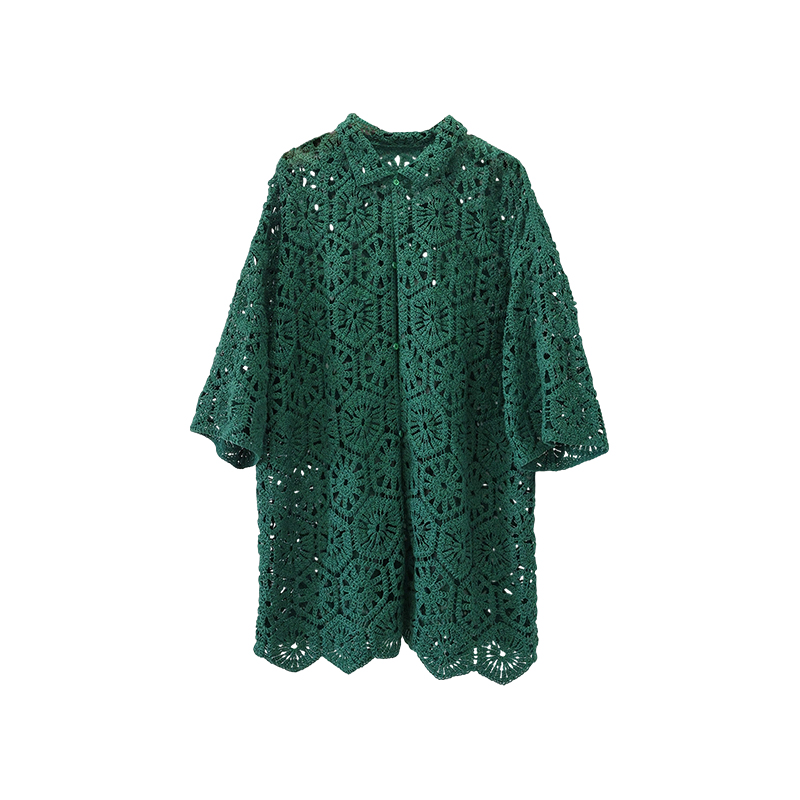
Flat Embroidery
Flat embroidery is the most common technique used in commercial custom clothing. The design is stitched directly onto the fabric surface using a combination of satin stitches, fill stitches, and running stitches to render letters, logos, and graphic elements. The result lies flush with the fabric, creating a smooth, refined finish that works well on structured garments like polo shirts, blazers, and caps. Flat embroidery is highly reproducible by machine and is the standard technique for corporate embroidered clothing, team apparel, and branded workwear.
3D Puff Embroidery
3D puff embroidery uses a foam underlay beneath the stitching to create a raised, three-dimensional effect. The technique is particularly effective for bold text and simple geometric shapes, and is widely used on caps, hoodies, and streetwear-influenced women's clothing where a bold, tactile design statement is the goal. The foam is cut away cleanly at the design edges, leaving only the embroidered raised surface. Puff embroidery is less suitable for fine detail or small lettering because the foam dimensionality obscures intricate linework.
Chenille Embroidery
Chenille embroidery creates a plush, velvety texture by forming loops of thick yarn on the fabric surface. Associated historically with varsity jackets and collegiate lettering, chenille has experienced a strong fashion revival in women's clothing, appearing on bomber jackets, sweatshirts, and tote bags as a premium decorative element. It produces a visually striking, soft tactile result that reads distinctly different from standard flat embroidery and carries a strong artisanal, retro aesthetic.
Hand Embroidery
Hand embroidery — worked by an artisan using needle and thread without a machine — produces results of unmatched character and individuality. Techniques such as satin stitch, French knots, crewelwork, and smocking are executed by hand and produce designs with organic variation that cannot be replicated by machine. Hand embroidery is slower and more expensive than machine embroidery, making it best suited to heirloom garments, bridal pieces, one-of-a-kind fashion items, and high-end customization where the handmade quality is itself a significant part of the product's value.
Best Garment Types for Custom Women's Embroidery
The choice of garment base is as important as the design itself. Different fabrics and garment constructions respond to embroidery in different ways, and selecting the right combination ensures the finished result looks as intended, maintains its appearance through washing, and wears comfortably.
| Garment Type | Best Embroidery Style | Ideal Placement |
| Polo shirts | Flat machine embroidery | Left chest, collar |
| Hoodies & sweatshirts | Flat or 3D puff | Chest center, back yoke, sleeve |
| Denim jackets | Flat or hand embroidery | Back panel, collar, cuffs |
| Linen & cotton shirts | Flat machine or hand | Chest pocket, collar, hem |
| Bomber jackets | Chenille or flat | Back center, chest, sleeves |
| Tote bags & accessories | Flat machine embroidery | Center front panel |
| Knit sweaters | Hand or flat with stabilizer | Chest, collar border |
Fabric weight and stability are the two most critical garment properties for embroidery success. Tightly woven, medium-to-heavyweight fabrics — canvas, denim, twill, piqué knit, and structured fleece — hold embroidery well because they resist distortion under the tension of the stitching. Lightweight, stretchy, or loosely woven fabrics such as chiffon, jersey, and viscose require cut-away or tear-away stabilizers to prevent puckering and design distortion. An experienced embroidery supplier will select the appropriate stabilizer type and weight for the specific fabric, but it is worth asking about this when placing a custom order to ensure the garment base and design complexity are well matched.
Designing Custom Embroidery: From Concept to Stitch File
The design process for custom embroidered clothing differs fundamentally from designing for print. A graphic created in vector software for screen printing cannot simply be sent to an embroidery machine — it must first be converted into a stitch file through a process called digitizing, where a skilled digitizer maps out the stitch types, directions, densities, and sequencing that will recreate the design in thread. The quality of the digitizing work has an enormous impact on the finished result: a well-digitized file produces clean edges, smooth color fills, and accurate rendering of detail; a poorly digitized file produces thread breaks, puckering, misregistration between color sections, and a finished result that does not resemble the original artwork.
When preparing artwork for custom embroidery, the following principles help ensure the best outcome from the digitizing and stitching process.
- Simplify fine detail: Elements that look sharp at small scale in print — thin lines, hairline details, very small text — often cannot be reproduced accurately in embroidery at the same size. A minimum text height of 4–5mm for machine embroidery is a practical guideline; below this, letterforms become indistinct. Simplifying highly detailed designs before digitizing produces better embroidery results than attempting to force excessive complexity into stitching.
- Limit the color count: Each color change in an embroidered design requires a thread change, adding time and cost to the production process. Most machine embroidery setups handle up to 12–15 thread colors, but designs with 4–6 well-chosen colors are typically more economical and visually cleaner than designs with many closely similar shades that add cost without significant visual impact.
- Provide artwork in vector format: Supplying your design as an SVG, AI, or EPS file rather than a low-resolution JPEG or PNG gives the digitizer the sharpest possible reference for recreating the design in stitches. If vector files are not available, a high-resolution raster file (minimum 300 dpi at the intended embroidery size) is the next best option.
- Request a sew-out sample before bulk production: Always ask for a physical sew-out — a sample of the embroidered design stitched onto the actual garment fabric — before approving bulk production. A sew-out reveals how the digitized file performs on the specific fabric and at the exact size, and allows any adjustments to thread colors, stitch density, or design scaling to be made before the full order is committed.
Popular Design Themes for Custom Embroidered Women's Clothing
The range of design possibilities for custom women's embroidery is essentially unlimited, but certain themes and motif categories consistently perform well both aesthetically and commercially. Understanding what works helps women and brands make design choices that will look intentional and wearable rather than arbitrary.
- Botanical and floral motifs: Flowers, leaves, branches, and botanical line drawings are among the most enduringly popular embroidery subjects on women's clothing. They translate naturally into the medium — curves, gradients, and organic forms are well-suited to satin stitch and fill stitch rendering — and complement a wide range of garment styles from casual shirts to structured blazers.
- Monograms and lettering: Personalized initials, names, or short phrases remain one of the most requested custom embroidery categories. Serif and script typefaces work particularly well in thread, and placement at the chest, cuff, or collar adds a refined, personal touch to otherwise plain garments. Custom lettering is also the standard approach for team apparel, corporate uniforms, and sorority or club clothing.
- Abstract and geometric patterns: Bold geometric shapes, abstract line compositions, and pattern-based designs translate effectively into machine embroidery and produce a contemporary, design-forward result. These work particularly well as back panel designs on jackets and hoodies where the scale allows the geometric complexity to read clearly.
- Brand logos and custom artwork: For women-owned businesses, creative professionals, and brands looking to build recognition through wearable merchandise, custom logo embroidery on clothing is a powerful and long-lasting branding tool. Unlike printed merchandise, embroidered garments carry an implicit quality signal that elevates the brand perception associated with the item.
- Cultural and heritage motifs: Traditional embroidery patterns drawn from folk art, regional textile traditions, and cultural heritage are increasingly popular in contemporary women's fashion, both as direct reproductions of traditional patterns and as modernized reinterpretations of heritage motifs on contemporary garment silhouettes.
Ordering Custom Embroidered Clothing: Minimum Quantities and Pricing
One of the most common practical questions women have when exploring custom embroidered clothing is how minimum order quantities (MOQs) and pricing work. The answer varies significantly depending on whether the order is placed with a commercial embroidery service, a small independent embroiderer, or a print-on-demand platform, and understanding these differences allows buyers to match their order volume and budget to the right type of supplier.
Commercial machine embroidery services typically work most economically at volumes of 12 pieces or more per design, because the setup costs — digitizing, thread loading, and machine programming — are spread across a larger number of garments. Digitizing fees for a new design typically range from $15 to $80 depending on design complexity and are a one-time cost; the digitized file is then stored and reused for reorders at no additional digitizing charge. Per-piece embroidery costs decrease significantly as order quantities increase, with price breaks typically occurring at 12, 24, 48, and 100+ units.
For women who want a single custom piece — a personalized gift, a one-off statement jacket, or a sample before committing to a larger order — print-on-demand platforms and small independent embroiderers who work without minimums are the appropriate option. Per-piece costs will be higher than bulk pricing, but the flexibility and the lack of inventory risk make single-piece ordering entirely practical for personal or gifting use cases.
Caring for Custom Embroidered Clothing to Preserve Its Appearance
Embroidered clothing is durable, but it benefits from care practices that protect the thread work from unnecessary mechanical stress and color fading. Following the right washing and storage routine keeps embroidered designs looking sharp and vibrant through years of regular wear.
- Wash inside out: Turning embroidered garments inside out before washing protects the embroidery surface from direct agitation against other items in the wash load, reducing the risk of thread snagging and surface abrasion that dulls the sheen of satin stitches over time.
- Use a gentle or delicate wash cycle: High-spin, high-agitation wash cycles stress the thread anchoring points in the backing fabric. A gentle cycle with cold or lukewarm water is sufficient to clean embroidered garments thoroughly without the mechanical stress of full wash cycles.
- Avoid tumble drying on high heat: High heat in a tumble dryer can shrink the backing fabric differentially from the embroidery threads, causing puckering around the design. Air drying flat or on a hanger, or tumble drying on a low heat setting, preserves the dimensional stability of both the garment and the embroidery.
- Iron from the reverse side or use a pressing cloth: Ironing directly over embroidery can flatten and crush raised stitches, especially in puff or chenille work, and can transfer color from dark threads onto lighter surrounding fabric under heat. Always press from the wrong side of the garment with a pressing cloth between the iron and the embroidery when working from the right side.
- Store folded rather than hanging for heavy embroidery: Heavily embroidered garments — particularly those with large back panel designs or dense all-over embroidery — can distort over time if hung on a hanger, as the weight of the embroidery pulls on the fabric around the stitching. Folding and storing flat or in a drawer prevents this gravitational distortion in long-term storage.
Custom embroidered clothing for women represents a category where craft, personalization, and everyday wearability converge. Whether the goal is a single personalized gift, a coordinated team wardrobe, or a branded clothing line, understanding how embroidery techniques, fabric choices, design principles, and care practices interact gives women the knowledge to commission and maintain pieces that genuinely stand apart from mass-produced alternatives — and that remain beautiful for as long as the garment itself holds together.
 Previous



