
 En
En
 عربى
عربى
Content
- 1 What Are Embroidered Placemats and Why Do They Elevate a Table Setting?
- 2 Base Fabric Choices and How They Affect Embroidery Quality
- 3 Types of Embroidery Styles Found on Placemats
- 4 How to Choose Embroidered Placemats for Different Table Settings
- 5 Thread Types and Their Impact on Appearance and Durability
- 6 Caring for Embroidered Placemats to Preserve Quality
- 7 What to Look for When Buying Embroidered Placemats
What Are Embroidered Placemats and Why Do They Elevate a Table Setting?
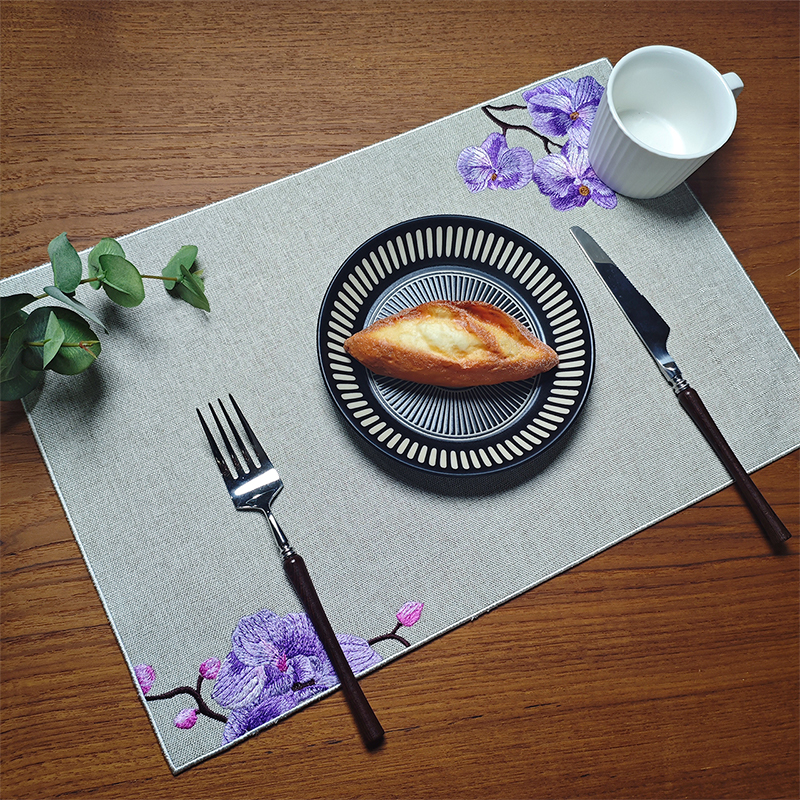
Embroidered placemats are decorative and functional table linens featuring stitched designs applied directly to a fabric base using thread — either by hand or machine. Unlike plain woven placemats or printed textile versions, embroidered placemats carry a tactile dimension that printed patterns cannot replicate: the raised texture of stitching adds visual depth, catches light differently depending on thread sheen, and communicates a level of craft and attention to detail that immediately signals quality at the table. Whether the embroidery is a simple monogram at one corner, a dense floral border, or an elaborate scenic design covering most of the mat's surface, the needlework transforms a utilitarian table accessory into a piece of decorative textile art.
From a practical standpoint, embroidered placemats serve the same role as any placemat — protecting the table surface from heat, spills, and scratches while framing each place setting and defining the structure of the table arrangement. The embroidery itself does not compromise these functions when the construction and thread selection are appropriate for the base fabric and intended use. A well-made embroidered placemat balances visual richness with the durability needed for regular laundering and everyday use at the dining table.
Base Fabric Choices and How They Affect Embroidery Quality
The base fabric of an embroidered placemat determines how well the embroidery sits on the surface, how the finished mat drapes and handles, and how the piece washes and ages over time. Different fabric types interact with embroidery thread in distinct ways, and understanding these interactions helps in selecting placemats that will retain their appearance through regular use.
Cotton and Cotton-Linen Blends
Cotton is the most common base fabric for embroidered placemats, and for good reason. Its tight, stable weave provides a predictable surface for both hand and machine embroidery — stitches penetrate cleanly, lie flat without distortion, and anchor securely without fraying the ground fabric. Cotton also launders easily, withstands repeated washing at moderate temperatures, and softens gradually with use without losing its structural integrity. Cotton-linen blends add a slightly coarser texture and a natural matte finish that suits rustic, farmhouse, or Scandinavian table aesthetics, while the linen content reduces the tendency of pure cotton to wrinkle excessively after washing.
Linen
Pure linen placemats carry a heritage association with fine European table linen traditions and are a preferred base for heirloom-quality hand embroidery. The natural irregular texture of linen provides visual interest even before embroidery is applied, and the slightly slubbed surface creates a backdrop against which densely stitched borders and motifs stand out particularly well. Linen is highly durable — it actually becomes stronger when wet — and develops a characteristic soft patina with washing and use that many people find more appealing than its appearance when new. The trade-off is that linen is more prone to initial puckering around dense embroidery areas if not properly stabilized during stitching, and it requires slightly more care in laundering to avoid shrinkage on first wash.
Polyester and Synthetic Blends
Polyester and polyester-cotton blend placemats are common in machine-embroidered commercial products because synthetic fabrics are dimensionally stable during the embroidery process, resist shrinkage in washing, and can be produced at lower cost than pure natural fibers. Polyester bases accept machine embroidery cleanly, produce crisp stitch edges, and hold color well without fading. The trade-off compared to natural fiber bases is a less natural hand feel and a slightly artificial sheen in some weave constructions, which may not suit formal or heritage-oriented table settings.
Types of Embroidery Styles Found on Placemats
Embroidered placemats are produced in a wide variety of stitching styles that range from extremely fine and labor-intensive hand techniques to efficient machine processes. The embroidery style directly shapes the visual character of the mat and its suitability for different table settings and occasions.
- Cross-stitch embroidery: One of the most traditional and globally recognized hand embroidery techniques, cross-stitch creates geometric patterns and pictorial motifs from a grid of X-shaped stitches. Cross-stitch placemats have a folk art character that suits casual, country, and holiday table settings. The bold, pixelated quality of cross-stitch design translates well to borders, repeated geometric patterns, and stylized floral or animal motifs.
- Satin stitch and surface embroidery: Satin stitch fills design areas with smooth, parallel thread runs that completely cover the base fabric, creating a dense, lustrous surface. This technique is widely used in Chinese, Indian, and Southeast Asian embroidered table linen traditions to produce elaborate floral, bird, and landscape designs with a painterly quality. Satin stitch placemats are often the most visually striking and the most labor-intensive to produce by hand.
- Cutwork and Hardanger embroidery: Cutwork techniques involve cutting away sections of the base fabric within a stitched framework to create open, lace-like areas within the design. Hardanger is a Norwegian variant that uses counted thread work over an even-weave fabric. Cutwork and Hardanger placemats have an elegant, refined appearance suited to formal dining and bridal table settings.
- Machine embroidery: Computer-controlled embroidery machines can reproduce complex multi-color designs with exceptional precision and consistency across large production runs. Machine embroidery is the dominant method for commercially produced embroidered placemats, allowing brands to offer elaborate designs at accessible price points. Modern machine embroidery can closely approximate the texture and visual density of hand embroidery, though experienced eyes can usually distinguish the two by the uniformity of stitch tension and the regularity of fill patterns.
- Monogram and custom embroidery: Single initials, monograms, or short text elements stitched onto a plain or lightly textured placemat base are a perennially popular option for personalized gifts, wedding table settings, and upscale hospitality presentations. Monogrammed placemats in classic script fonts on white or ivory linen are a standard of formal American and European table setting traditions.
How to Choose Embroidered Placemats for Different Table Settings
Matching the embroidery style, fabric, color palette, and size of a placemat to the intended table setting context is the key to achieving a coherent, polished look. The following guidelines help navigate the most common table setting scenarios:
| Setting Type | Recommended Fabric | Embroidery Style | Color Palette |
| Formal dinner | Pure linen | Monogram / cutwork | White, ivory, ecru |
| Everyday family use | Cotton or cotton-linen blend | Border motif / machine embroidery | Naturals, warm neutrals |
| Holiday / seasonal | Cotton or poly-cotton | Cross-stitch / themed motifs | Seasonal accent colors |
| Bridal / gift table | Linen or fine cotton | Monogram / floral satin stitch | White, blush, gold accents |
| Casual / rustic dining | Cotton-linen blend or washed linen | Folk motifs / cross-stitch border | Earthy tones, muted colors |
Size is another practical selection factor. Standard rectangular placemats measure approximately 12 inches by 18 inches, which accommodates most dinner plate and cutlery combinations without overhang beyond the table edge. Larger 14-by-20-inch placemats suit oversized dinner plates and contemporary place settings with multiple utensils. Round placemats in 13- to 15-inch diameters work well with circular tables and informal settings where rectangular mats can feel overly regimented.
Thread Types and Their Impact on Appearance and Durability
The thread used for embroidery on placemats affects both the visual quality of the finished design and how well the embroidery survives repeated washing and use. Thread selection is as important as fabric selection in determining the long-term appearance of an embroidered placemat.
- Cotton embroidery floss: The standard thread for hand embroidery and cross-stitch work, cotton six-strand floss is colorfast, soft, and available in thousands of colors. It produces a matte finish that suits folk art and casual embroidery styles. DMC and Anchor are the two dominant brands, with excellent dye stability that prevents color bleeding during washing when the thread is pre-washed or the placemat is laundered in cold water on its first wash.
- Rayon machine embroidery thread: The most commonly used thread in commercial machine-embroidered placemats, rayon thread has a high sheen that gives machine-embroidered designs a rich, lustrous appearance. Rayon is somewhat less color-fast than polyester thread and can lose vibrancy over many wash cycles, but for decorative placemats used regularly and washed at moderate temperatures it provides an excellent balance of appearance and durability.
- Polyester machine embroidery thread: Polyester thread offers superior color fastness, strength, and resistance to bleach compared to rayon. It is the preferred choice for placemats intended for high-frequency washing or commercial hospitality use. Polyester thread has a slightly lower sheen than rayon but modern high-trilobal polyester threads closely approach the visual richness of rayon while significantly outperforming it in washfastness.
- Metallic thread: Gold, silver, and copper metallic threads add a festive or luxurious accent to embroidered placemats and are commonly used in holiday designs, formal table linen, and South Asian embroidery traditions. Metallic threads require delicate laundering — hand washing or a gentle machine cycle in a mesh laundry bag — as aggressive washing can cause the metal wrap to separate from the core fiber and produce a fuzzy, degraded appearance.
Caring for Embroidered Placemats to Preserve Quality
Proper care is essential to maintaining the appearance of embroidered placemats through years of regular use. The embroidery thread and base fabric together determine the appropriate care approach, and following a few consistent practices dramatically extends the service life of even everyday embroidered table linen.
- Washing temperature: Cold to warm water (30°C or below) is recommended for most embroidered placemats, regardless of fabric. Hot water can cause color bleeding from embroidery thread, shrinkage in natural fiber bases, and distortion of dense stitch areas. For placemats with metallic thread embroidery, cold water hand washing is strongly preferred.
- Detergent selection: Use a mild, color-safe liquid detergent without optical brighteners. Optical brighteners in some powder detergents can cause white or light-colored base fabrics to develop a blue-white cast over time and may subtly alter the color balance of embroidery threads.
- Drying and ironing: Line drying or flat drying away from direct sunlight preserves thread color far better than tumble drying at high heat. When ironing is needed, press embroidered placemats on the reverse side over a thick towel — pressing directly onto the embroidery face with a hot iron flattens the raised stitch texture and can crush the visual depth that makes embroidery distinctive. A slightly damp cloth over the embroidery side before reverse pressing restores any slight flattening that may occur during washing.
- Stain treatment: Treat food and beverage stains promptly by blotting (not rubbing) the affected area with cold water and mild detergent. Avoid scrubbing the embroidery area directly as vigorous rubbing can distort stitches or cause thread abrasion. For stubborn stains on white or ivory linen placemats, a dilute white vinegar solution or oxygen-based stain remover applied to the base fabric — not directly saturating the embroidery — is safer than chlorine bleach, which can weaken embroidery thread fibers over repeated applications.
- Storage: Store clean, fully dry embroidered placemats flat or loosely rolled — never tightly folded on the same crease lines repeatedly. Persistent fold creases in linen and cotton can eventually cause fiber stress at the fold line, and dense embroidery areas compressed tightly in a fold can develop permanent impressions that are difficult to remove with ironing. Acid-free tissue paper between stacked placemats prevents thread color transfer and protects metallic thread from tarnishing during long-term storage.
What to Look for When Buying Embroidered Placemats
The market for embroidered placemats spans a wide quality range, from mass-produced machine-embroidered polyester sets at budget price points to hand-embroidered linen pieces produced by artisan workshops. Evaluating a few key quality indicators helps identify products that will deliver lasting satisfaction rather than disappointing after a few washes.
Examine the reverse side of the placemat — on a quality machine-embroidered piece, the underside should show clean, consistent thread jumps without excessive density of backing threads that create stiffness and bulk. A rigid, heavily stabilized underside often indicates that thick cut-away stabilizer has been left in place to compensate for inadequate digitizing of the embroidery design, which will cause the mat to feel stiff and uncomfortable under tableware. On hand-embroidered pieces, the reverse should show neat, secure thread ends and consistent stitch tension across the design area.
Check the edge finishing — a rolled hem, mitered corner hem, or overlock-stitched edge with consistent width indicates careful construction. Uneven hems, puckered corners, or loosely stitched edges that fray after one washing are reliable indicators of poor construction quality regardless of how attractive the embroidery looks in product photography. For placemats that will see daily use, a reinforced hem with a double-turned edge and even topstitching is the most durable edge finish and worth prioritizing when comparing otherwise similar products.
 Previous



