
 En
En
 عربى
عربى
Content
- 1 Why Cotton Is an Ideal Material for Coasters
- 2 Types of Cotton Coasters by Construction Method
- 3 Comparing Cotton Coaster Types: Performance at a Glance
- 4 Standard Sizes and When They Matter
- 5 Practical Features That Improve Performance
- 6 Cotton Coasters for Commercial and Hospitality Use
- 7 How to Wash and Care for Cotton Coasters
- 8 Choosing the Best Cotton Coasters for Your Needs
Cotton coasters occupy a deceptively simple but genuinely important role in everyday home life — protecting table surfaces from the moisture, heat, and condensation produced by cups, mugs, glasses, and bottles while adding a layer of tactile warmth and natural aesthetic to a dining table, coffee table, or desk. Unlike silicone, cork, or stone coasters, cotton coasters bring the unique combination of softness, absorbency, washability, and design versatility that only a natural fiber textile can provide. They absorb condensation rather than simply repelling it, they feel comfortable under fingertips when picked up with a cup, they can be machine washed and returned to their original freshness, and they are available in an almost limitless range of colors, patterns, textures, and sizes that allow them to contribute meaningfully to a room's decorative scheme. For anyone considering cotton coasters — whether for personal use, as a gift, or for commercial hospitality environments — understanding the material, construction methods, practical performance, and care requirements will help in making selections that deliver lasting satisfaction.
Why Cotton Is an Ideal Material for Coasters
Cotton's suitability for coasters is rooted in its fundamental fiber properties — properties that have made it the world's most widely used natural textile fiber for centuries. At the microscopic level, cotton fiber has a lumen — a hollow channel running through its core — that functions as a capillary conduit for moisture absorption. When condensation from a cold glass contacts a cotton coaster surface, the fiber structure wicks the moisture inward and away from the contact surface, keeping the coaster's face relatively dry and preventing the water from spreading outward onto the table surface beneath. This absorbency is a defining functional advantage over silicone and stone alternatives that simply redirect moisture to the coaster edge.
Cotton is also naturally breathable, allowing absorbed moisture to evaporate through the coaster rather than remaining trapped within it — which would promote mildew growth and degrade the coaster's performance over time. This breathability, combined with cotton's inherent resistance to heat damage at the temperatures produced by hot mugs and teapots, makes cotton coasters genuinely multi-functional. They protect against both the condensation from cold drinks and the surface heat from hot beverages without the risk of scorching or melting that synthetic alternatives can exhibit under very hot vessels. Cotton is hypoallergenic, free from the off-gassing concerns associated with some synthetic materials, and fully biodegradable at end of life — environmental credentials that increasingly influence purchasing decisions across both consumer and commercial markets.
Types of Cotton Coasters by Construction Method
Cotton coasters are produced through several distinct construction methods, each producing a product with different texture, absorbency, thickness, and visual character. Understanding these differences allows for more informed selection based on the specific performance and aesthetic requirements of the intended use.
Woven Cotton Coasters
Woven cotton coasters are produced on a loom — either a mechanical jacquard loom for complex patterned designs or a simpler rigid heddle or frame loom for plain and twill weaves. The weaving process interlaces warp and weft threads in a structured pattern that creates a dimensionally stable, flat coaster with a defined surface texture. Plain weave cotton coasters have a simple over-under thread pattern that produces a smooth, tightly woven surface with good moisture resistance properties. Twill weave variants — including herringbone and diagonal twill — create a more textured, visually dynamic surface. Jacquard woven coasters can incorporate complex multi-color geometric patterns, florals, or pictorial motifs woven directly into the fabric structure, making them particularly popular for decorative sets and branded hospitality products. The flat, structured nature of woven coasters makes them easy to stack and store and gives them a crisp, tailored appearance that suits formal and contemporary interior styles.
Knitted Cotton Coasters
Knitted cotton coasters — produced either by hand knitting or on flat-bed knitting machines — have a looped construction that gives them a softer, more elastic texture than woven alternatives and significantly greater surface area per unit of yarn, which contributes to higher absorbency. The open loop structure of many knitted cotton coasters creates a more three-dimensional texture that provides a slightly cushioned feel under a cup or glass. Chunky knitted coasters in thick cotton yarn have become particularly fashionable in Scandinavian-influenced interior decor styles, where their organic, handcrafted appearance complements natural wood furniture and linen textiles. The elasticity of knitted constructions means they conform slightly to the base of rounded vessels, maintaining contact across the cup base rather than only at the rim — a small but functional advantage for condensation absorption.
Crocheted Cotton Coasters
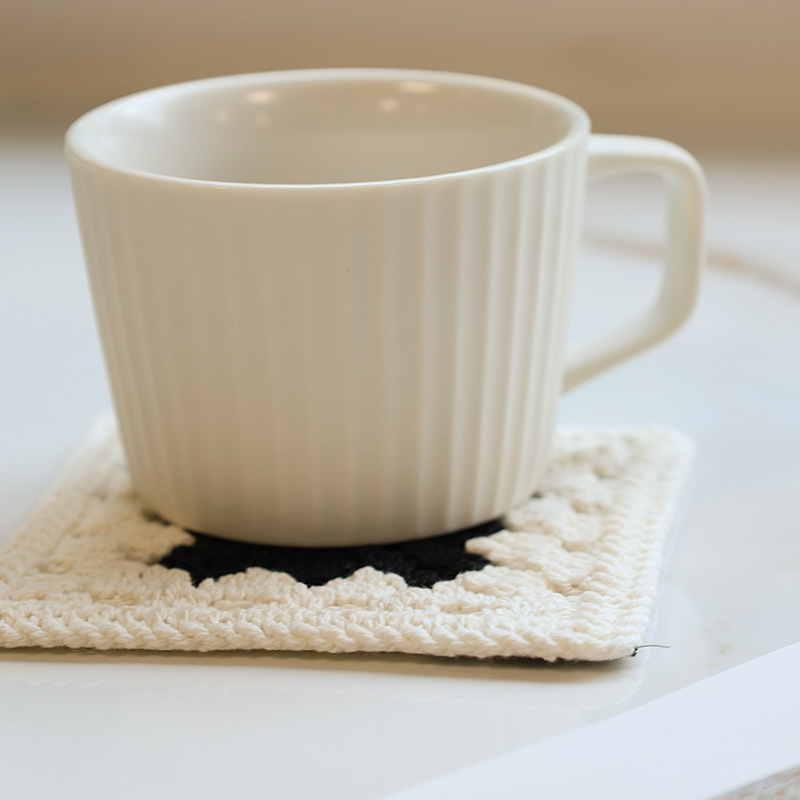
Crocheted cotton coasters are made using a single crochet hook to create interlocking loops in a continuous thread, producing a coaster with a distinctive, open lacework or solid textured appearance depending on the stitch type used. Hand-crocheted cotton coasters in 100% mercerized cotton thread have a long tradition as a cottage industry and handmade gift product, with the boho, artisanal aesthetic they project aligning well with current interior design trends favoring natural materials and handmade goods. Machine-crocheted cotton coasters produced in volume for the retail and wholesale markets replicate this aesthetic at lower cost, though with less variation in surface detail than hand-crocheted examples. Crocheted coasters in variegated or hand-dyed cotton threads produce particularly distinctive visual results.
Macramé and Braided Cotton Coasters
Macramé cotton coasters use knotting techniques applied to thick cotton cord or rope to create geometric patterns — most commonly square knots and spiral half hitches — that produce a heavily textured, three-dimensional coaster with a bold, artisanal character. Braided cotton coasters are made by plaiting multiple cotton cord strands in a flat braid that is then coiled and stitched to form a circular or oval coaster shape. Both styles use cotton cord typically in the 3mm–6mm diameter range, producing coasters with significant thickness — typically 8–15mm — that provides excellent insulation and cushioning for hot vessels while offering a distinctive rustic or boho visual statement. The thick construction of these styles also gives them a non-slip stability that lighter flat coasters sometimes lack.
Comparing Cotton Coaster Types: Performance at a Glance
Each cotton coaster construction type offers a different balance of absorbency, durability, thickness, aesthetic character, and washability. The table below provides a comparative summary to support selection decisions.
| Type | Absorbency | Thickness | Aesthetic | Best For |
| Woven | Moderate | Thin–Medium | Crisp, tailored, patterned | Formal settings, gifts, branding |
| Knitted | High | Medium | Soft, textured, cozy | Casual home, hygge interiors |
| Crocheted | Moderate–High | Medium | Artisanal, boho, lacy | Handmade gifts, eclectic décor |
| Macramé / Braided | Moderate | Thick | Bold, rustic, sculptural | Rustic/natural interiors, hot vessels |
| Terry / Towelling | Very High | Medium–Thick | Casual, functional | High condensation environments, bars |
Standard Sizes and When They Matter
Cotton coasters are produced in a range of standard sizes that correspond to the different vessel types they are designed to support. Selecting the right size is more than an aesthetic preference — an undersized coaster allows condensation to drip onto the table surface outside the coaster's coverage area, defeating its primary protective function.
- Small (8–10 cm): Suited to espresso cups, small teacups, and shot glasses. These compact coasters are appropriate for formal coffee service and tasting settings where base diameters are small and condensation volumes are low.
- Standard (10–12 cm): The most widely produced size category, covering standard mugs, regular glasses, cans, and bottles. This size works for the majority of everyday hot and cold drink vessels and is the appropriate choice when buying a set for general household use without a specific vessel type in mind.
- Large (12–15 cm): Suited to large mugs, pint glasses, tall tumbler glasses, and wide-based carafes. In bar and hospitality environments where tall, heavy glassware produces substantial condensation, large-format coasters provide the coverage needed to contain moisture effectively throughout a long service period.
- XL and pot coasters (15–25 cm): Oversized coasters designed for teapots, coffee pots, cafetières, and decorative vases. At this size, cotton coasters transition toward the function of a pot stand or trivet, protecting larger table surface areas from both moisture and heat.
Practical Features That Improve Performance
Beyond the basic choice of construction type and size, several specific design and material features significantly affect how well a cotton coaster performs in daily use. Evaluating these features when purchasing ensures that the coaster delivers its intended protective function reliably rather than looking attractive but performing poorly.
- Non-slip backing: A cotton coaster without any backing material can slide across smooth table surfaces when a cup is placed or lifted from it, scratching the surface in the process and failing to stay in position. Quality cotton coasters incorporate a non-slip backing material — typically a silicone print, rubber sheet, or non-woven anti-slip fabric — on their underside that prevents movement without adhering permanently to the table surface. This feature is particularly important for polished wood and glass table surfaces where even minor coaster movement can cause scratching.
- Backing layer for moisture protection: Some premium cotton coasters incorporate a waterproof or water-resistant backing layer — typically a laminated PUL (polyurethane laminate) or silicone-printed fabric — that prevents moisture that has saturated through the cotton from reaching and marking the table surface beneath. This additional layer is particularly valuable in high-humidity environments or when coasters will be used under very cold, heavily condensing glasses.
- Quilted and double-layer construction: Double-layer cotton coasters with a quilted construction — two layers of cotton fabric stitched together with a layer of cotton batting between them — combine the absorbency of both fabric layers with the additional insulation and cushioning provided by the batting. This construction is more effective at protecting surfaces from heat and provides a softer feel under cups than single-layer alternatives. The quilted stitching pattern also adds decorative texture and helps maintain the coaster's flat shape through repeated washing.
- Bound or hemmed edges: The edge finishing of a cotton coaster significantly affects its durability through washing cycles. Raw-cut edges without hemming or binding fray rapidly with repeated machine washing, progressively reducing the coaster's dimensions and producing loose threads that create lint in the washing machine. Properly hemmed edges — using a double-fold hem, a serged edge, or a separate binding tape — maintain their integrity through dozens of washing cycles and keep the coaster looking presentable throughout its service life.
Cotton Coasters for Commercial and Hospitality Use
In coffee shops, restaurants, hotels, and bars, coasters serve both a functional protective role and a brand communication function. Cotton coasters in commercial hospitality settings face more demanding performance requirements than residential coasters — higher cycling frequency, industrial laundering rather than domestic machine washing, and the additional expectation that they present consistently well across a full service period rather than just at the start of a shift.
For commercial hospitality applications, woven cotton coasters with jacquard-woven branding — incorporating the establishment's name, logo, or signature design pattern directly into the weave structure — are the most durable and visually consistent option. Unlike printed coasters where branding can crack, peel, or fade with industrial washing, woven-in designs are integral to the fabric structure and maintain their clarity and color through the industrial laundering cycles that commercial hospitality linen endures routinely. The minimum practical order quantity for custom jacquard-woven cotton coasters varies by supplier but is typically 500–1,000 pieces for standard woven patterns and 2,000+ for full custom programs. For hospitality buyers specifying cotton coasters in commercial quantities, evaluating the coaster's industrial wash test results — typically expressed as color fastness, dimensional stability, and appearance rating after 50 or 100 industrial wash cycles — provides a reliable basis for comparing supplier offerings on long-term performance rather than relying on initial appearance alone.
How to Wash and Care for Cotton Coasters
The washability of cotton coasters is one of their most significant practical advantages over cork, stone, or leather alternatives — but washing cotton correctly ensures they maintain their absorbency, shape, and appearance through the maximum number of cycles rather than degrading prematurely from improper care.
- Machine washing temperature: Most cotton coasters can be machine washed at 40°C–60°C. Washing at 60°C provides effective sanitization and is appropriate for coasters that have been used with dairy-based drinks or other food products where hygiene is a concern. Washing above 60°C risks shrinkage and color fading, particularly for darker dyed or patterned coasters. Always check the manufacturer's care label recommendation for the specific product before washing at high temperatures.
- Detergent selection: Use a standard liquid laundry detergent rather than a powder detergent for cotton coasters, as liquid detergents dissolve completely without leaving residue in the coaster's fabric structure that can reduce absorbency over time. Avoid fabric softener — it coats the cotton fiber surface with a hydrophobic film that significantly reduces the fiber's natural moisture-wicking and absorbency properties, which is precisely the performance characteristic that makes cotton coasters effective.
- Drying method: Cotton coasters can be tumble dried on a low to medium heat setting, which also helps restore the fabric's fluffy surface texture after washing. Lay them flat to air dry if tumble drying is not available or if the coasters have a non-slip silicone backing that the manufacturer advises keeping away from high tumble dryer heat. Avoid hanging cotton coasters by a single edge to dry, as this causes them to dry in a distorted shape that may not fully relax when laid flat.
- Stain treatment: Coffee, tea, and red wine stains — the most common cotton coaster stains — respond well to prompt pre-treatment with a stain remover or a paste of laundry detergent applied directly to the stain before washing. Allowing stains to dry and set before treatment significantly reduces the likelihood of complete removal. For stubborn tannin stains from tea or coffee, soaking the coaster in a solution of oxygen bleach and warm water for 30–60 minutes before washing is effective without the color damage risk associated with chlorine bleach.
Choosing the Best Cotton Coasters for Your Needs
Making the right cotton coaster selection involves matching the construction type, size, and features to the specific use context, the vessels they will support, the interior aesthetic of the space, and the practical requirements of the user. For a home environment prioritizing functional absorbency — particularly if cold beverages producing heavy condensation are regularly served — knitted or terry cotton coasters in the standard 10–12 cm size with a non-slip backing deliver the best performance. For a formal dining table or a setting where visual presentation is the primary concern alongside basic function, woven or jacquard-patterned cotton coasters in a coordinated color palette provide the cleaner, more tailored appearance that the context demands.
When buying cotton coasters as a gift, consider the recipient's interior style — chunky knitted or macramé coasters suit natural, boho, or Scandinavian interiors; classic woven cotton coasters in neutral tones or traditional patterns suit traditional and transitional home styles; brightly patterned jacquard woven sets suit contemporary and eclectic decorators. Buying in sets of four or six rather than as individual items is both more practical — ensuring consistent coverage for multiple simultaneous beverages — and more cost-effective per unit. Always verify that the coaster's fiber content is genuinely 100% cotton or a high cotton percentage rather than a cotton-polyester blend, as blended coasters sacrifice a meaningful proportion of the natural absorbency, breathability, and thermal comfort that make pure cotton the preferred material for this application.
 Previous



