
 En
En
 عربى
عربى
Content
- 1 Why Embroidered Placemats Transform Your Dining Experience
- 2 Understanding Different Embroidery Techniques for Placemats
- 3 Selecting the Best Fabric for Embroidered Placemats
- 4 Popular Design Styles and Motifs
- 5 Proper Care and Maintenance for Longevity
- 6 Styling Your Table with Embroidered Placemats
- 7 Choosing Quality Embroidered Placemats
- 8 Sustainable and Ethical Purchasing Considerations
Why Embroidered Placemats Transform Your Dining Experience
Embroidered placemats represent far more than simple table protection—they serve as functional art pieces that elevate every dining occasion from casual breakfasts to formal dinner parties. The intricate needlework transforms ordinary table settings into sophisticated displays, adding texture, color, and personality to your dining space. Unlike plain placemats, embroidered versions create visual interest through dimensional threadwork that catches light and draws the eye, making each place setting feel intentional and welcoming. The tactile quality of embroidery adds a sensory element that enhances the overall dining atmosphere.
The enduring popularity of embroidered placemats stems from their unique ability to blend tradition with contemporary style. Artisan-crafted embroidery carries forward centuries-old techniques while adapting to modern aesthetic preferences, creating pieces that honor heritage while fitting seamlessly into today's homes. These placemats offer exceptional versatility, working equally well in rustic farmhouse kitchens, elegant formal dining rooms, or minimalist contemporary spaces. The investment in quality embroidered placemats pays dividends through years of use, as well-constructed pieces withstand countless meals while maintaining their beauty. Additionally, the handcrafted nature of many embroidered placemats appeals to consumers seeking authentic, artisanal home goods that support traditional crafts and skilled artisans worldwide.
Understanding Different Embroidery Techniques for Placemats
The embroidery technique used significantly impacts the appearance, durability, and price of placemats. Recognizing these differences helps you make informed purchasing decisions based on your needs, budget, and aesthetic preferences.
Traditional Hand Embroidery
Hand-embroidered placemats showcase exceptional craftsmanship, with each stitch carefully placed by skilled artisans. Common hand embroidery techniques include satin stitch for smooth filled areas, French knots for textured details, stem stitch for outlines and curves, and cross-stitch for geometric patterns. The slight variations inherent in handwork give each placemat unique character and authenticity. Hand embroidery typically appears on one side of the placemat, with thread tails and knots visible on the reverse. These placemats command premium prices reflecting the labor-intensive process, but they offer heirloom quality that can be passed through generations. The three-dimensional quality of hand embroidery creates shadows and depth that machine work cannot replicate.
Machine Embroidery
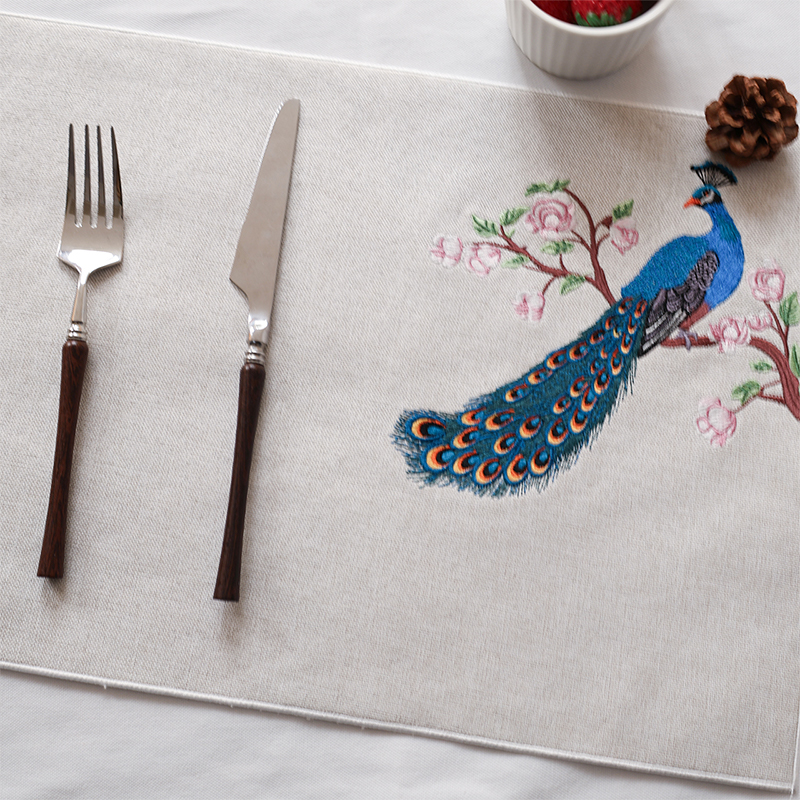
Computerized machine embroidery delivers consistent, precise patterns at accessible price points. Modern embroidery machines execute complex designs with remarkable accuracy, creating uniform sets perfect for those who value matching pieces. Machine embroidery works exceptionally well for intricate, detailed patterns that would be prohibitively time-consuming by hand. The tight, secure stitching withstands frequent washing and daily use better than some hand embroidery. While lacking the individual character of handwork, machine-embroidered placemats offer excellent value and practical durability for everyday dining. This technique allows for photorealistic designs, gradient colors, and fine detail work that challenges even skilled hand embroiderers.
Cutwork and Openwork Embroidery
Cutwork embroidery creates elegant, lace-like effects by reinforcing fabric edges with embroidery stitches before carefully cutting away portions to create openings. This sophisticated technique produces delicate, airy placemats perfect for formal occasions. Richelieu and Renaissance embroidery are popular cutwork styles that create stunning visual effects. These placemats require more careful handling and washing than solid embroidery but offer unmatched elegance. The interplay of solid and open areas creates beautiful shadow effects on table surfaces, adding another dimension to your table setting.
Selecting the Best Fabric for Embroidered Placemats
The base fabric determines how well placemats perform their protective function, how embroidery displays, and how the placemats wear over time. Different fabrics suit different needs and aesthetic preferences.
| Fabric Type | Key Benefits | Best Use |
| Linen | Absorbent, durable, elegant drape | Formal dining, special occasions |
| Cotton | Easy care, affordable, versatile | Everyday use, family meals |
| Cotton-Polyester Blend | Wrinkle-resistant, durable, low maintenance | Busy households, frequent use |
| Silk | Luxurious sheen, showcases embroidery | Decorative, special events |
| Burlap/Jute | Rustic texture, eco-friendly | Casual, farmhouse style |
Linen remains the gold standard for formal embroidered placemats due to its natural elegance, absorbency, and ability to showcase fine embroidery beautifully. Its natural texture complements embroidery work while providing excellent stain resistance when treated properly. Cotton offers the best value for everyday use, combining affordability with easy care and durability. Cotton-polyester blends add wrinkle resistance, making them ideal for busy households where frequent ironing isn't practical. The synthetic content helps placemats maintain their shape through repeated washing.
Silk embroidered placemats create show-stopping table settings but require delicate care and work better as decorative pieces than everyday placemats. The luminous quality of silk enhances metallic embroidery threads beautifully. For rustic or casual table settings, burlap or jute placemats with simple embroidery create charming, textured looks perfect for farmhouse or country-style homes. These natural fibers pair particularly well with folk-art style embroidery and earth-toned threads.
Popular Design Styles and Motifs
Embroidered placemat designs range from traditional to contemporary, allowing you to express your personal style while complementing your dining space décor. Understanding different design categories helps you select placemats that work harmoniously with your existing aesthetic.
- Floral embroidery remains timelessly popular, from delicate wildflowers to bold botanical prints, offering romantic elegance suitable for both casual and formal settings
- Seasonal motifs like autumn leaves, winter snowflakes, spring blooms, or summer fruits allow you to rotate placemats throughout the year for festive table settings
- Geometric patterns provide modern, structured aesthetics with clean lines perfect for contemporary dining spaces and minimalist décor schemes
- Traditional ethnic designs including paisley, mandala, or cultural motifs add global flair while honoring artisan traditions from around the world
- Monogrammed placemats featuring initials or family crests create personalized, heirloom-quality pieces perfect for formal dining or special occasions
- Border embroidery concentrates decorative elements around placemat edges, leaving centers plain for practical plate placement while maintaining visual interest
- Holiday-themed embroidery transforms dining tables for celebrations, from Christmas motifs to Easter designs, creating festive atmospheres for gatherings
When selecting embroidery designs, consider both aesthetic appeal and practical functionality. Heavily embroidered centers, while beautiful, may create uneven surfaces for dishes. Border-focused designs typically prove more practical for actual dining while still providing decorative impact. Consider your existing tableware, dining room colors, and overall home style when choosing embroidery colors and motifs. Neutral-toned embroidery on classic backgrounds offers maximum versatility and works across seasons, while bold, colorful designs make stronger statements but may limit coordination options.
Proper Care and Maintenance for Longevity
Embroidered placemats require thoughtful care to maintain their beauty and structural integrity through years of use. Proper washing, staining treatment, and storage techniques significantly extend their lifespan.
Washing Techniques
Always check care labels before washing, as requirements vary by fabric and embroidery type. Hand-embroidered placemats generally benefit from gentle hand washing in cool water with mild detergent. Avoid rubbing embroidered areas directly; instead, gently swish placemats in soapy water and rinse thoroughly. For machine-washable placemats, turn them inside out to protect embroidery, place them in mesh laundry bags, and use the delicate cycle with cold water. Wash embroidered placemats separately from rough fabrics like denim that might snag threads. Use color-safe, gentle detergents without bleach, which can fade embroidery threads and weaken fibers.
Stain Removal
Address spills immediately by blotting—never rubbing—with clean, absorbent cloths to lift liquid before it sets. For food stains, gently scrape away solids with a butter knife before treating. Apply stain remover to the reverse side of the fabric to push stains out rather than deeper into fibers. Test any stain treatment product on an inconspicuous area first to ensure it won't damage embroidery threads or fabric. For delicate hand-embroidered or silk placemats with stubborn stains, professional cleaning often provides the safest solution.
Drying and Ironing
Never wring embroidered placemats, as twisting damages embroidery and distorts fabric. Instead, press excess water out gently by rolling placemats in clean towels. Air-dry flat on clean towels away from direct sunlight, which can fade colors. Avoid hanging wet placemats, as the weight of water can stretch fabric. When placemats are nearly dry, iron on the reverse side using appropriate heat settings for the fabric type. Place a pressing cloth between the iron and embroidery to protect threads. For dimensional embroidery or placemats with beading, iron surrounding areas only or place embroidered sections face-down on a thick towel to cushion embellishments while pressing.
Storage Solutions
Store placemats flat or gently rolled rather than tightly folded to prevent permanent creases in embroidered areas. If folding is necessary, place acid-free tissue paper between folds to cushion embroidery. Keep placemats in breathable fabric storage bags or drawers rather than plastic containers that trap moisture. For seasonal placemats, label storage containers clearly for easy identification. Store away from direct sunlight to prevent fading, and ensure storage areas remain dry to protect both fabric and threads from mildew.
Styling Your Table with Embroidered Placemats
Embroidered placemats serve as foundational elements in table styling, setting the tone for your entire dining presentation. Strategic coordination with other table linens and décor creates cohesive, visually appealing settings.
Layer embroidered placemats over tablecloths or runners for dimensional, luxurious looks, particularly for formal occasions. Choose placemats that contrast with or complement tablecloth colors—white embroidered placemats on colored tablecloths create crisp, classic looks, while colored placemats on white tablecloths offer vibrant impact. For casual dining, place embroidered placemats directly on bare wood or glass tables, allowing table surfaces to show through and letting the placemats take center stage. Mix and match complementary embroidered designs for eclectic, collected-over-time aesthetics, or use identical placemats for formal, symmetrical presentations.
Coordinate napkins with placemat embroidery colors rather than matching exactly, which can appear overly matchy. Pull one accent color from multicolored embroidery for napkins to create cohesive yet interesting table settings. Consider the overall color story when selecting dinnerware—white plates showcase embroidery beautifully, while colored dishes should complement embroidery tones. Add centerpieces that echo embroidery motifs; floral embroidery pairs naturally with fresh flower arrangements, while geometric patterns work with modern, sculptural centerpieces. Adjust placemat styles seasonally to keep your dining space feeling fresh and current.
Choosing Quality Embroidered Placemats
Investing in quality embroidered placemats ensures satisfaction and longevity. Knowing quality indicators helps you distinguish well-crafted pieces from inferior alternatives across all price points.
Examine embroidery thread quality closely—high-quality threads resist fading and bleeding, maintaining color vibrancy through numerous washings. Check the reverse side of embroidery; well-executed work shows neat stitching with secured thread ends and no loose tails. Tug gently on embroidered sections to ensure stitches are secure and won't unravel with use. Assess base fabric quality by checking thread count, weight, and hand feel. Premium placemats use substantial fabrics that resist tearing and wrinkling while maintaining suppleness.
Inspect edges and hems for clean finishing—quality placemats feature properly hemmed or bound edges that won't fray. Look for consistent embroidery density and even stitching in machine work. In hand embroidery, appreciate slight variations as signs of authentic handwork rather than flaws. Check that embroidered areas lie flat without puckering or bunching, indicating proper stabilization during embroidery. For placemats with additional embellishments like beading or sequins, ensure decorative elements are securely attached and won't easily detach during washing.
Consider standard placemat dimensions—typically 12x18 inches or 14x20 inches—ensuring your chosen placemats fit your table size and dining style. Oversized placemats work well for large tables and formal settings, while smaller placemats suit compact tables and casual dining. Purchase complete sets when possible to ensure color and design consistency, as dye lots vary between production runs.
Sustainable and Ethical Purchasing Considerations
Conscious consumers increasingly seek embroidered placemats aligned with sustainable and ethical values. Understanding production methods and material sources enables responsible purchasing decisions that support both environmental stewardship and fair labor practices.
Hand-embroidered placemats often support artisan communities in developing regions, providing fair wages and preserving traditional crafts passed through generations. Look for products certified by fair trade organizations or brands transparent about artisan partnerships and labor practices. These relationships ensure embroiderers receive equitable compensation while maintaining cultural heritage. Many artisan-made placemats come with stories about their makers, creating meaningful connections between consumers and creators.
Consider environmental impact when selecting materials. Organic cotton, linen, and other natural fibers produced using sustainable farming methods reduce environmental harm compared to conventional agriculture. Natural fibers also biodegrade at end-of-life, unlike synthetic alternatives that persist in landfills. Some manufacturers use recycled or upcycled fabrics, giving new life to existing materials and reducing waste. Look for brands committed to sustainable production practices, including water conservation, non-toxic dyes, and reduced packaging.
Quality-over-quantity approaches sustainability through longevity—well-made embroidered placemats lasting decades reduce overall consumption compared to frequently replacing cheaply made alternatives. Vintage and antique embroidered placemats offer sustainable options while providing unique, often hand-embroidered pieces with historical character unavailable in current markets. Estate sales, antique shops, and online vintage marketplaces yield treasures that honor past craftsmanship while preventing waste. By choosing thoughtfully produced embroidered placemats and caring for them properly, you invest in pieces that serve your family for years while supporting positive industry practices and preserving artisan traditions for future generations.
 Previous



