
 En
En
 عربى
عربى
Content
- 1 What Makes Embroidered Throw Pillows Different From Printed or Plain Alternatives
- 2 Base Fabric Options and How They Affect the Finished Pillow
- 3 Embroidery Techniques Used in Throw Pillow Production
- 4 Thread Types and Their Effect on Pillow Appearance
- 5 Standard Sizes and Insert Considerations for Embroidered Throw Pillows
- 6 Styling Embroidered Throw Pillows Across Different Interior Schemes
- 7 Care, Cleaning, and Long-Term Maintenance of Embroidered Throw Pillows
What Makes Embroidered Throw Pillows Different From Printed or Plain Alternatives
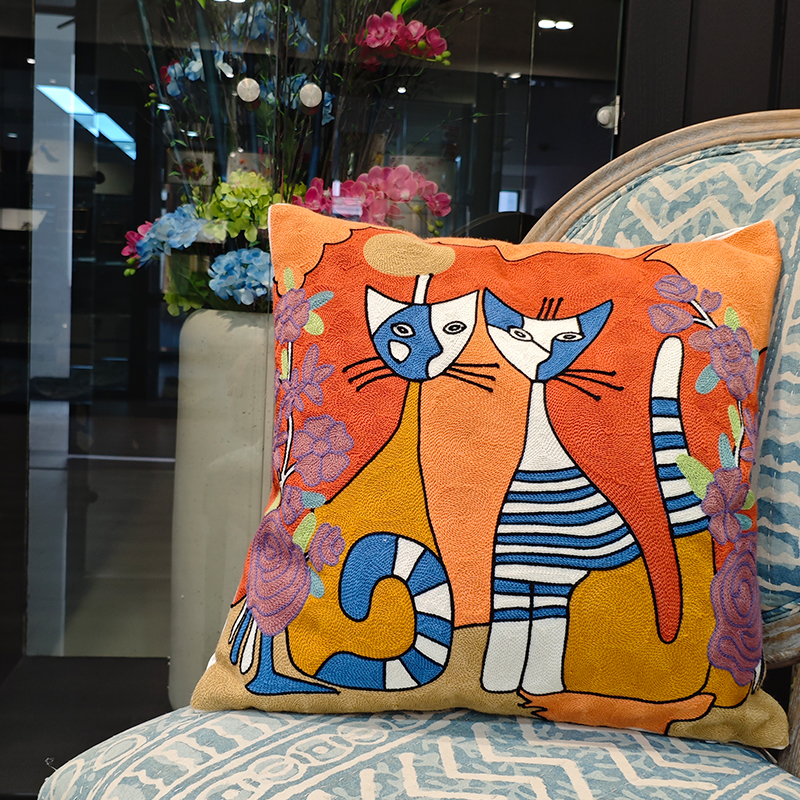
Embroidered throw pillows occupy a distinct category within decorative cushion design — one defined by the physical texture of thread raised above the fabric surface, the craftsmanship visible in each stitch, and the permanence of decoration that cannot peel, crack, or fade the way printed surface treatments eventually do. Where a digitally printed pillow applies color to the fabric surface, embroidery builds dimension and detail through the layering and interlocking of thread, creating a tactile quality that adds visual weight and perceived value to a piece in a way that flat printing cannot replicate. This three-dimensional quality is particularly apparent in natural light, where the thread catches and diffuses light differently from the surrounding fabric, giving embroidered designs a subtle luminosity that shifts as the viewing angle changes.
The decorative vocabulary of embroidered throw pillows spans an enormous range — from traditional crewelwork florals and geometric folk patterns to contemporary minimalist monograms, abstract line work, and sculptural raised designs in tonal thread on tonal fabric. This breadth means that embroidered pillows fit naturally into interior styles as varied as maximalist bohemian layering, coastal natural-material aesthetics, classic English country house decoration, and clean contemporary living rooms where a single embroidered accent pillow provides texture contrast against a field of smooth upholstery. Understanding the specific construction and design characteristics of embroidered throw pillows allows buyers and interior designers to make more informed selections that will perform well decoratively and practically over time.
Base Fabric Options and How They Affect the Finished Pillow
The fabric used as the foundation for embroidery significantly influences the final appearance, hand feel, durability, and care requirements of the finished throw pillow. Different base fabrics interact with embroidery thread in different ways — affecting how the design sits on the surface, how much the background shows through densely stitched areas, and how the pillow wears over time in a decorative setting.
Linen and Linen-Cotton Blends
Linen is one of the most traditional and widely used base fabrics for embroidered throw pillows, valued for its even weave structure, natural texture, and the warm, slightly matte surface that allows embroidery thread colors to read clearly without the visual competition of a shiny or heavily textured background. The natural slub variation in linen yarns adds visual interest to unpatterned background areas and gives the finished pillow an artisanal character that suits both traditional and contemporary interiors. Linen's relatively loose weave makes it easy to work with in hand embroidery, and its stability under machine embroidery hooping minimizes distortion of the finished design. Linen-cotton blends soften the hand of pure linen while retaining most of its structural and aesthetic advantages, and they are typically more affordable than 100% linen for high-volume production.
Velvet and Velveteen
Velvet base fabrics create a dramatically different embroidered pillow aesthetic — the dense cut pile provides a rich, deep background against which embroidery thread stands in sharp visual contrast, particularly in metallic or high-sheen thread types. Embroidery on velvet requires careful technique to avoid crushing the pile around the design area, and machine embroidery on velvet typically uses a topping — a water-soluble stabilizer film placed over the pile — to prevent stitches from sinking into the pile and losing definition. The finished result is luxurious and visually striking, making velvet embroidered throw pillows particularly effective in formal living rooms, bedroom settings, and maximalist interior schemes where layered texture and richness are the design objective.
Cotton Canvas and Twill
Cotton canvas and twill weaves provide a firm, stable base that is particularly well-suited to machine embroidery requiring high stitch counts and dense fill areas. The tightly woven structure supports embroidery without significant distortion or puckering, even in large-format designs with extensive coverage. Cotton canvas pillows with bold embroidered motifs in primary or earthy colors are a staple of casual and bohemian interior styling, and their durability makes them practical for family rooms and high-use spaces where decorative pillows are handled frequently. The slight diagonal texture of twill weaves adds subtle visual movement to the background areas of the design without distracting from the embroidery itself.
Embroidery Techniques Used in Throw Pillow Production
The embroidery technique used to create the design on a throw pillow determines its texture, durability, production cost, and the type of design detail achievable. Different techniques suit different design styles and price points, and understanding these differences helps buyers evaluate product quality and set appropriate expectations for what each technique can deliver.
Machine Embroidery
The majority of commercially produced embroidered throw pillows use computerized multi-needle embroidery machines that execute digitized stitch patterns with high speed, consistency, and repeatability. Machine embroidery can achieve stitch counts in the hundreds of thousands per design panel, enabling complex, photorealistic, or densely filled patterns that would be impractical to produce by hand at commercial scale. The quality of machine embroidery depends critically on the accuracy of the digitizing — the process of converting artwork into machine stitch instructions — as well as thread quality, machine calibration, and the skill of the backing and hooping preparation. High-quality machine embroidery uses dense underlay stitching beneath the visible design layers to stabilize the fabric and ensure that the final stitch layer sits flat and uniform, without gaps or puckering visible in the finished pillow.
Hand Embroidery and Artisan Techniques
Hand-embroidered throw pillows occupy the premium end of the market, valued for the uniqueness, craft, and design flexibility that machine production cannot fully replicate. Crewelwork — embroidery using wool thread on linen or cotton — produces pillows with rich, raised surfaces and a soft, slightly textured appearance that is distinctly different from machine-produced flat fill. Silk thread hand embroidery, practiced particularly in South Asian and East Asian craft traditions, creates luminous, fine-detail designs with a sheen that shifts dramatically under different lighting conditions. Kantha embroidery — a running stitch technique originating in Bengal — produces geometric or floral patterns with a rhythmic, hand-made quality visible in the slight variation between individual stitches. Each of these hand techniques produces pillows in which minor variations between individual pieces are a feature of authenticity rather than a quality defect.
Punch Needle and Tufted Embroidery
Punch needle embroidery creates looped pile designs on the pillow surface, with loops of thread standing upright from the base fabric to create a plush, textured effect similar in appearance to a small hooked rug. Punch needle throw pillows have a distinctly tactile, almost sculptural quality and are currently popular in contemporary interior design for their bold graphic patterns and handmade aesthetic. Tufted embroidery — using individual thread tufts knotted through the fabric — produces a similar raised effect with even greater visual density and is associated with traditional needlepoint pillow covers and vintage-inspired designs.
Thread Types and Their Effect on Pillow Appearance
Thread selection is as important as stitch technique in determining the final appearance of an embroidered throw pillow. Different thread materials and constructions create distinctly different surface effects, and understanding these differences helps both designers and buyers make more informed choices.
- Rayon thread: The most widely used thread in commercial machine embroidery, rayon offers a high sheen that gives designs visual brightness and definition. It is available in an extensive color range, is colorfast under normal washing conditions, and produces clean, smooth stitch coverage. Its slight sheen differentiates embroidery from the matte fabric background even when working in closely matched tonal colorways.
- Polyester thread: More durable and colorfast than rayon, polyester embroidery thread is preferred for pillows that will be washed frequently or used in high-UV environments where color fading is a concern. Modern high-tenacity polyester thread has a sheen level approaching rayon, making it visually competitive while offering superior practical performance in demanding use conditions.
- Cotton thread: Cotton embroidery thread has a soft, matte finish that reads as more subdued and artisanal compared to rayon or polyester. It suits designs where a hand-crafted, natural-material aesthetic is the goal — particularly on linen or cotton canvas bases where the combination of matte thread and natural fabric creates a cohesive, understated visual character.
- Metallic thread: Gold, silver, and copper metallic threads add reflective brilliance to embroidered designs and are frequently used as accent elements within otherwise matte or semi-matte designs. Metallic thread is more technically challenging to embroider — it requires slower machine speeds, specialized needles, and careful tension management to avoid thread breakage and looping — which contributes to the premium positioning of metallic-embroidered pillows in the market.
- Wool thread (crewel): Wool crewel thread produces the thickest, most raised surface of common embroidery thread types, creating designs with visible three-dimensional depth and a warm, tactile quality. Crewelwork pillows are associated with traditional English country and colonial American design aesthetics, and their distinctive textured surface is immediately recognizable as a premium hand embroidery product.
Standard Sizes and Insert Considerations for Embroidered Throw Pillows
Embroidered throw pillows are produced in a range of standard sizes, each suited to different furniture formats and styling arrangements. Selecting the correct size is important both for visual proportion and for ensuring that the embroidered design area is large enough to be appreciated at normal viewing distance without being overwhelmed by excessive blank background fabric.
| Pillow Size | Common Dimensions | Best Application | Typical Insert Fill |
| Small accent | 30 × 30 cm (12 × 12 in) | Layering, armchairs, children's rooms | Polyester fiberfill |
| Standard square | 45 × 45 cm (18 × 18 in) | Sofas, beds, floor seating | Down, down-alternative, fiberfill |
| Large square | 50 × 50 cm (20 × 20 in) | Large sofas, sectionals, statement pieces | Down or firm fiberfill |
| Lumbar | 30 × 50 cm (12 × 20 in) | Sofa front row, dining chairs, beds | Firm fiberfill or foam insert |
| Bolster | 20 × 55 cm (8 × 22 in) | Bed ends, sofa arms, daybeds | Cylindrical fiberfill or foam |
The insert fill material significantly affects how an embroidered throw pillow looks and feels in use. Down-filled inserts produce the classic plump, softly rounded profile that can be karate-chopped to create the coveted center indent seen in high-end interior photography. Down-alternative fiberfill mimics this appearance at lower cost without allergen concerns. For embroidered pillows with heavy stitch coverage — where the dense thread adds significant weight to the cover — a firmer fiberfill or foam insert prevents the pillow from collapsing under the cover's weight and maintains the defined shape that allows the embroidered design to be viewed at its best. Sizing the insert 2 to 3 cm larger than the cover dimensions ensures a taut, well-filled appearance that prevents the embroidered cover from looking loose or under-filled.
Styling Embroidered Throw Pillows Across Different Interior Schemes
Embroidered throw pillows are versatile enough to work across a wide range of interior design approaches, but they perform best when their design character — color palette, motif style, thread texture, and base fabric — is aligned with the broader visual language of the space. The following guidance addresses the most common interior contexts in which embroidered throw pillows are used.
- Contemporary and minimalist interiors: In clean, neutral-toned spaces, a single large embroidered pillow in a tonal colorway — cream thread on cream linen, or white on white cotton — adds textural interest without introducing color competition. Geometric or abstract designs in matte cotton thread on a smooth base fabric suit the restrained visual language of contemporary design, where texture rather than color carries the decorative weight.
- Bohemian and eclectic layering: In maximalist or bohemian schemes, embroidered throw pillows contribute best when mixed with plain, printed, and woven cushions in a layered arrangement that builds visual richness through variety of texture and pattern. Bold floral crewelwork, colorful folk embroidery, and metallic-thread geometric designs all work well in this context, particularly when mixed in complementary rather than matching colorways.
- Traditional and classic interiors: Crewelwork, needlepoint, and floral silk embroidery pillows are natural fits for traditional interior schemes — English country, colonial American, and French provincial styles all have a long decorative history with embroidered cushions. Deep jewel tones on dark velvet or natural linen, botanical and animal motifs, and symmetrical formal compositions suit the design grammar of classic interior styles.
- Coastal and natural-material aesthetics: Embroidered pillows on natural linen or jute canvas, with motifs drawn from marine life, botanical forms, or simple geometric patterns in muted blue, sand, and white thread, integrate naturally into coastal and Scandinavian-influenced interior schemes. The combination of natural base fabric and hand-embroidered or hand-embroidery-effect designs reinforces the organic, craft-connected character of these interior styles.
Care, Cleaning, and Long-Term Maintenance of Embroidered Throw Pillows
Embroidered throw pillows require more careful cleaning than plain or printed alternatives because the thread and stitching create a complex surface that can be damaged by inappropriate washing methods, excessive agitation, or harsh chemical cleaning agents. Understanding the correct care approach extends pillow life significantly and preserves the appearance of the embroidery through years of decorative use.
For machine-embroidered pillows on cotton or linen bases with rayon or polyester thread, gentle machine washing on a cool cycle (30°C maximum) inside a mesh laundry bag is typically safe and effective for routine cleaning. The mesh bag protects the embroidery from abrasion against the drum and prevents thread loops or raised stitch elements from catching on the drum interior during the wash cycle. Avoid tumble drying embroidered covers at high heat, as this can cause thread shrinkage differential between the embroidery and the base fabric, resulting in puckering around the design. Air drying flat or on a drying rack, reshaping the cover while damp, is the recommended approach for most embroidered pillow covers.
Hand-embroidered pillows with wool crewel thread, silk thread, or metallic elements require dry cleaning or very gentle hand washing in cool water with mild detergent, followed by careful reshaping and flat drying away from direct sunlight. Metallic thread in particular is susceptible to tarnishing from exposure to strong detergents and high-temperature washing, and to physical damage from machine agitation that can stretch or break the metallic core filament. Spot cleaning with a clean damp cloth is the safest approach for localized soiling on high-value hand-embroidered pieces, reserving full washing only when necessary. Storing embroidered throw pillows away from direct sustained sunlight prevents the gradual fading of thread colors — particularly in rayon thread, which has lower UV resistance than polyester — and preserves the visual impact of the embroidered design over the long term.
 Previous



