
 En
En
 عربى
عربى
Content
- 1 Why Embroidered Placemats Are a Practical Upgrade for Everyday Tables
- 2 Common Fabrics Used in Embroidered Placemats
- 3 Comparing Placemat Fabrics by Use Case
- 4 Embroidery Styles and Patterns Worth Knowing
- 5 How to Choose the Right Size and Shape
- 6 Caring for Embroidered Placemats Without Damaging the Stitching
- 7 Customizing Embroidered Placemats for Gifts and Special Occasions
- 8 Where Embroidered Placemats Fit Best in a Home
Why Embroidered Placemats Are a Practical Upgrade for Everyday Tables
Embroidered placemats serve a purpose beyond decoration. They protect tabletops from heat, spills, and scratches while giving a dining setup a more finished, intentional look. Unlike printed designs that can fade or crack after repeated washing, embroidered patterns are stitched directly into the fabric, which means the design holds its texture and color far longer through regular use. This makes embroidered placemats a better long-term investment for households that use placemats daily rather than only on special occasions.
Beyond durability, the raised texture of embroidery adds a tactile quality that flat printed mats cannot replicate. Running a hand over a stitched border or monogram gives a tablescape a tangible sense of craftsmanship, which is part of why embroidered placemats are commonly chosen for both casual family meals and more formal dinner settings.
Common Fabrics Used in Embroidered Placemats
The base fabric of a placemat affects how well it holds embroidery stitches, how it feels on the table, and how it responds to washing. Picking the right material upfront prevents puckering, fraying, or premature wear around the stitched areas.
Cotton and Linen Blends
Cotton and linen are the most traditional choices for embroidered placemats because their natural fibers hold thread tension well and resist puckering during the stitching process. Linen in particular has a slightly textured weave that gives embroidery a more pronounced, dimensional look, which is why it is often chosen for heirloom-style or monogrammed sets. The tradeoff is that natural fibers wrinkle more easily and may require ironing after washing to keep a crisp appearance on the table.
Polyester and Synthetic Blends
Polyester and polyester-cotton blends are popular for everyday use because they resist wrinkling, dry quickly, and tend to hold up better against repeated machine washing. These blends are a practical choice for households with children or for restaurants and cafes that need placemats to withstand frequent laundering without losing shape. The main drawback is that synthetic fibers can sometimes give embroidery a slightly flatter appearance compared to the depth achieved on natural fiber bases.
Comparing Placemat Fabrics by Use Case
| Fabric | Best For | Care Level | Embroidery Detail |
| Linen | Formal dining, heirloom sets | High, needs ironing | Very pronounced |
| Cotton | Everyday family meals | Moderate | Clear and crisp |
| Polyester Blend | High-frequency use, restaurants | Low | Slightly flatter |
Embroidery Styles and Patterns Worth Knowing
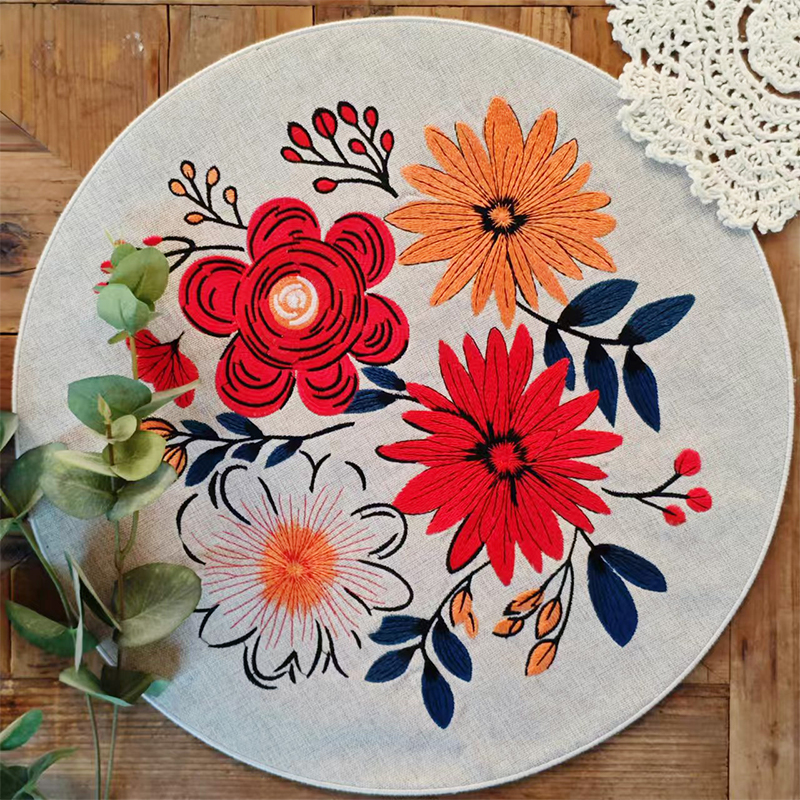
Embroidered placemats come in a wide range of stitch styles, and understanding the basic categories makes it easier to choose a set that matches a specific table setting or gift occasion. Satin stitch embroidery creates smooth, glossy patterns and is commonly used for floral motifs and borders. Cross-stitch designs give a more rustic, handmade appearance and are often found on farmhouse-style or country-themed placemats. Monogram embroidery, which typically features one to three initials in a decorative font, remains one of the most requested customizations for wedding registries and housewarming gifts.
- Satin stitch designs work well for floral, leaf, and curved decorative patterns due to their smooth thread coverage.
- Cross-stitch patterns suit geometric, folk-art, or seasonal themes and hold up well on heavier woven fabrics.
- Monogram lettering is best placed in a corner rather than the center to avoid interfering with plates and dishes.
- Border embroidery, stitched only along the edges, keeps the center clear while still adding decorative detail.
How to Choose the Right Size and Shape
Standard rectangular placemats typically measure between 13 by 18 inches and 14 by 20 inches, which fits most dinner plates while leaving room for silverware and a glass. Round placemats, usually between 13 and 15 inches in diameter, are a better match for round tables or smaller breakfast nook setups where rectangular shapes would overlap awkwardly at the edges. Oval placemats split the difference and are often chosen for tables that seat larger groups, since their shape accommodates wider place settings without consuming excess space between guests.
It is also worth measuring the actual table surface before ordering a full set, since narrow tables can make standard rectangular mats hang slightly off the edge. Many embroidery suppliers also offer custom sizing on request, which is useful for irregular table shapes or built-in dining nooks.
Caring for Embroidered Placemats Without Damaging the Stitching
Embroidered thread is more delicate than the base fabric, so washing instructions should always prioritize the embroidery rather than just the placemat material. Turning placemats inside out before washing reduces friction on the stitched side and helps prevent loose threads from snagging on other items in the wash. Cold or lukewarm water is generally safer than hot water, since high heat can cause certain embroidery threads, especially rayon or silk blends, to lose their sheen or bleed color into the surrounding fabric.
Air drying or using a low-heat dryer setting helps preserve both the thread quality and the shape of the placemat, since high dryer heat can shrink natural fibers unevenly around embroidered sections. For stubborn stains, spot treating with a mild detergent before a full wash works better than soaking, since prolonged soaking can sometimes loosen embroidery stitches at the edges.
Customizing Embroidered Placemats for Gifts and Special Occasions
Custom embroidery has become a popular way to personalize placemats for weddings, anniversaries, and holiday gifting. Many suppliers allow customers to choose thread color, font style, and placement, which makes it possible to match a placemat set to an existing color scheme or theme. Family names, wedding dates, or short phrases are common choices for gift sets, while seasonal motifs like pumpkins, snowflakes, or florals are popular for placemats meant to be rotated throughout the year.
When ordering custom embroidery, it helps to request a digital proof of the design before production begins, since adjusting thread color or letter spacing after stitching has started is far more difficult than catching an error at the proof stage. Buying one extra placemat beyond the immediate need is also a practical safeguard, since matching fabric dye lots exactly can be difficult if a replacement is needed later.
Where Embroidered Placemats Fit Best in a Home
Embroidered placemats are versatile enough to work across different rooms and occasions, not just the main dining table. They are commonly used on kitchen counters as a decorative base for fruit bowls or coffee stations, in guest rooms as part of a welcoming tray setup, and on outdoor patio tables during warmer months when a lighter, washable fabric is preferable to heavier tablecloths. Choosing a slightly more durable polyester blend for these secondary uses helps the embroidery hold up against more frequent handling and exposure to spills outside a formal dining setting.
 Previous



