
 En
En
 عربى
عربى
Content
- 1 Why Embroidered T-Shirts Stand Out in Custom Apparel
- 2 How the Embroidery Process Actually Works
- 3 Types of Embroidery Stitches Used on T-Shirts
- 4 Choosing the Right T-Shirt Fabric for Embroidery
- 5 Design Considerations That Affect Embroidery Quality
- 6 Embroidered T-Shirts for Business and Brand Identity
- 7 How to Care for Embroidered T-Shirts to Maximize Longevity
- 8 What to Ask When Sourcing Embroidered T-Shirts from a Supplier
Why Embroidered T-Shirts Stand Out in Custom Apparel
Embroidered t-shirts have carved out a permanent place in both fashion and corporate branding because they offer something screen printing and heat transfers simply cannot replicate: a textured, dimensional design that looks professional and lasts for years. The raised stitchwork creates a tactile quality that signals craftsmanship and attention to detail, making embroidered tees a preferred choice for businesses, sports teams, luxury streetwear labels, and promotional merchandise alike. Whether you are ordering a single custom piece or sourcing bulk uniforms, understanding what goes into an embroidered t-shirt helps you make smarter decisions about design, fabric, and supplier selection.
Unlike printed designs that sit on top of the fabric and can crack, peel, or fade after repeated washing, embroidery is stitched directly into the garment. This means the design becomes part of the fabric itself, retaining color vibrancy and structural integrity through industrial laundry cycles — a critical advantage for workwear, uniforms, and any apparel intended for long-term use.
How the Embroidery Process Actually Works
Modern embroidery on t-shirts is almost exclusively produced using commercial computerized embroidery machines, though hand embroidery remains available for artisan and bespoke applications. The process begins with digitizing — converting a logo, artwork, or text into a digital stitch file (commonly .DST, .PES, or .EXP format) that the embroidery machine can read and execute. The quality of the digitizing file directly determines how cleanly and accurately the design will be reproduced on fabric. Poor digitizing leads to thread breaks, gaps in coverage, and distorted shapes, regardless of how good the machine or operator is.
Once the stitch file is ready, the t-shirt is hooped — secured tightly in a frame that holds the fabric stable during stitching. A stabilizer (backing material) is placed beneath the fabric to prevent stretching and distortion, which is especially important on the knit fabrics used in most t-shirts. The machine then stitches the design automatically, with each color requiring a separate thread change. A moderately complex logo might involve 5,000 to 15,000 stitches, while a large chest or back design can exceed 50,000 stitches.
Types of Embroidery Stitches Used on T-Shirts
Different stitch types serve different purposes in an embroidered design, and experienced digitizers use combinations strategically to achieve the desired visual effect and durability.
- Satin stitch: Smooth, parallel stitches laid closely together. Ideal for lettering, borders, and narrow design elements. Produces a shiny, clean finish that stands out on dark and light fabrics equally.
- Fill stitch (tatami stitch): Used to cover large areas of a design with a consistent, slightly textured surface. More durable than satin for wide fills and less prone to snagging.
- Running stitch: A simple single-line stitch used for fine details, outlines, and underlay stitching that stabilizes the fabric before fill stitching begins.
- 3D puff embroidery: A foam layer is placed under satin stitches to create a raised, three-dimensional effect. Commonly used for bold lettering on caps but increasingly popular on t-shirt chest logos for a premium look.
Understanding which stitch types are appropriate for your design prevents common mistakes, such as using satin stitches on very wide fills (which causes gaps and instability) or expecting photographic detail reproduction in a medium that works best with clean shapes and limited color counts.
Choosing the Right T-Shirt Fabric for Embroidery
Not all t-shirt fabrics embroider equally well. The fabric's weight, weave structure, and fiber content all affect how the stitches settle and how the finished design looks and feels.
| Fabric Type | Embroidery Suitability | Notes |
| 100% Cotton (medium weight) | Excellent | Stable base, minimal stretch, stitch-friendly surface |
| Cotton/Polyester Blend | Very Good | Most widely used; balances stability and softness |
| 100% Polyester | Good | Requires careful stabilizer selection; can shift during hooping |
| Tri-blend (Cotton/Poly/Rayon) | Moderate | Soft but stretchy; limit stitch count to avoid puckering |
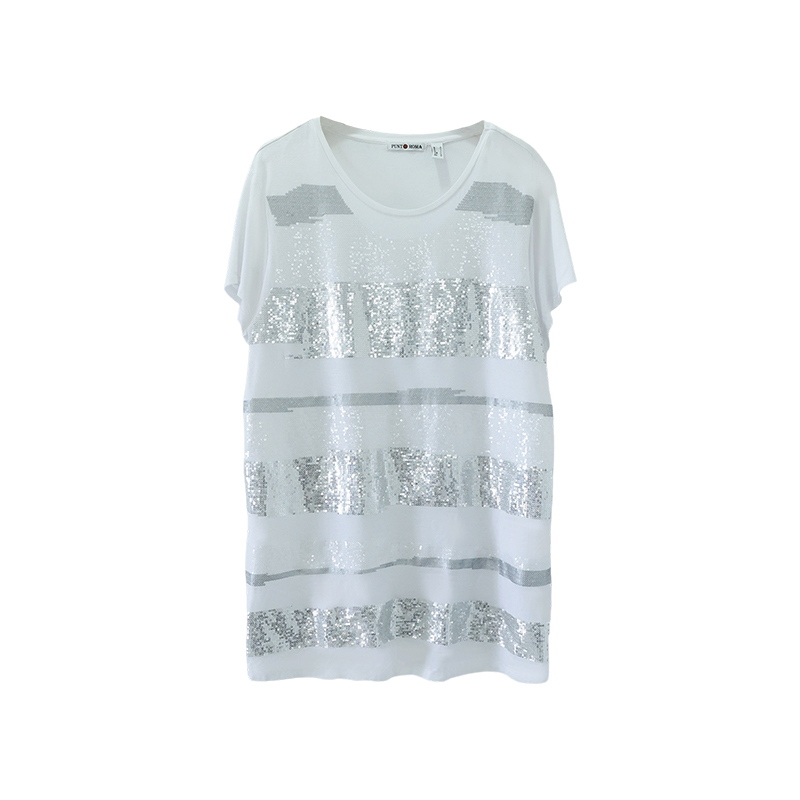
| Lightweight / Fashion Tees | Challenging | Thin fabrics distort easily; keep designs small and low in stitch count |
For most commercial embroidery applications, a medium-weight (180–220 gsm) cotton or cotton-poly blend t-shirt provides the best combination of stability, comfort, and stitch clarity. Heavier fabrics support larger, denser designs without distortion, while lighter fashion tees require more careful digitizing and stabilizer selection.
Design Considerations That Affect Embroidery Quality
Embroidery is a medium with specific design constraints that differ significantly from digital printing. Working within these constraints — rather than against them — produces sharper, cleaner, and more durable results.
Color Count and Thread Selection
Each color in an embroidered design requires a separate thread, and machine changeovers add time and cost. Most commercial embroidery pricing tiers are structured around thread color count, making it worthwhile to simplify complex gradients into solid color blocks. Polyester embroidery thread is the industry standard for t-shirts due to its color fastness, sheen, and resistance to washing. Rayon thread offers a slightly softer sheen but is less durable over time. Specialty threads — metallic, glow-in-the-dark, or variegated — can add visual interest but require slower machine speeds and more careful handling.
Minimum Text Size and Fine Detail
Embroidery struggles with very small text or intricate fine-line detail. As a general rule, text should be no smaller than 4–6mm in cap height to remain legible after stitching. Below this threshold, satin stitches crowd together and letterforms lose definition. Similarly, photographic images with subtle shading or gradients do not translate well to embroidery — bold, high-contrast graphics with clear shapes and defined edges produce the best results.
Placement on the Garment
Standard embroidery placement on t-shirts includes the left chest (most common for logos), center chest, full front, back yoke, and sleeve. Left chest embroidery typically measures 3–4 inches wide, which keeps stitch counts manageable and avoids fabric distortion. Full-front or large back designs are possible but require dense stabilizing and are better suited to heavier fabric weights. Seams, pockets, and collar edges create hooping challenges and should be avoided for precise, high-quality embroidery.
Embroidered T-Shirts for Business and Brand Identity
For businesses, embroidered t-shirts serve as walking brand advertisements that communicate professionalism and consistency. A well-embroidered company logo on staff uniforms conveys credibility in a way that a printed shirt rarely achieves, particularly in client-facing environments such as hospitality, retail, healthcare, and trades. The perceived value of embroidery is consistently higher than print, which is why many premium brands default to embroidered chest logos even when DTG (direct-to-garment) printing might technically reproduce the same image.
When ordering embroidered t-shirts for business use, consistency across a large order is essential. Reputable commercial embroiderers maintain stitch files that ensure every garment in a run — whether 12 or 1,200 pieces — receives an identical design. Standardizing thread color codes (Madeira, Isacord, or Robison-Anton numbering systems) and maintaining a master stitch file ensures reorders years later will match the original perfectly.
How to Care for Embroidered T-Shirts to Maximize Longevity
Embroidered t-shirts are durable by nature, but proper care extends their lifespan significantly and keeps the stitching looking sharp wash after wash.
- Turn inside out before washing: This reduces friction on the embroidered surface and prevents thread snags against other garments or machine drum surfaces.
- Use cold water on a gentle cycle: High-temperature washes can cause thread colors to bleed and backing materials to deteriorate faster than necessary.
- Avoid bleach and harsh detergents: These degrade polyester thread over time, dulling the sheen and weakening the fibers.
- Air dry or tumble dry on low heat: Excessive dryer heat can shrink the t-shirt fabric and cause the backing stabilizer to become brittle and flake.
- Iron on the reverse side only: Direct iron contact with embroidery flattens the dimensional stitching and can melt specialty threads. If pressing is necessary, use a pressing cloth on the reverse.
What to Ask When Sourcing Embroidered T-Shirts from a Supplier
Whether you are working with a local embroidery shop or an overseas manufacturer, asking the right questions upfront prevents costly misunderstandings and ensures you receive the quality you expect.
- Can you provide a physical sew-out sample before the full production run begins?
- What thread brand and numbering system do you use, and can you match specific Pantone or thread color codes?
- Do you retain the stitch file for future reorders, and is there a file transfer fee if I switch suppliers?
- What is your minimum order quantity, and does pricing scale significantly at higher volumes?
- What is your defect and remake policy, and how do you handle quality control across large batch orders?
A reliable embroidery supplier will answer these questions confidently and offer a pre-production sample as standard practice. Suppliers who skip the sew-out stage or cannot provide thread color matching are more likely to deliver results that diverge from your artwork — particularly for complex logos or brand-specific color requirements. Taking time to vet your supplier and review samples before committing to a full order is the single most effective step toward consistently high-quality embroidered t-shirts.
 Previous



