
 En
En
 عربى
عربى
Content
What Makes Embroidered Table Runners Special
Embroidered table runners are far more than decorative strips of fabric. They represent a fusion of textile craftsmanship and interior styling that can instantly transform an ordinary dining table into a curated centerpiece. Unlike plain runners, embroidered versions carry texture, color depth, and a sense of handmade or artisan quality that elevates any setting — from a casual Sunday brunch to a formal holiday dinner. The stitching itself tells a story, whether it's a geometric pattern from Indian block-print tradition, floral motifs inspired by European needlework, or abstract designs from contemporary textile artists.
The appeal of embroidered table runners lies in their versatility. A single well-chosen runner can anchor a tablescape, reduce the need for excessive décor, and serve as a conversation piece for guests. They also protect your table surface from scratches, heat marks, and everyday wear while adding undeniable visual warmth. Whether you're decorating a farmhouse kitchen table or a sleek modern dining room, there's an embroidered runner suited to your aesthetic.
Common Embroidery Styles and What They Suit
Not all embroidery is the same, and the style of stitching dramatically affects the overall look and feel of a table runner. Understanding these differences helps you make a more informed purchasing decision and ensures the runner complements your existing décor rather than clashing with it.
Crewel Embroidery
Crewel embroidery uses wool thread to create raised, textured designs — often floral or botanical in nature. These runners have a rich, layered look and feel substantial to the touch. They work beautifully in traditional or rustic settings, paired with wooden furniture and warm earth tones.
Cross-Stitch and Counted Thread
Cross-stitch runners feature precise, pixel-like patterns that often include symmetrical designs, borders, or folk art imagery. These are well-suited to farmhouse, Scandinavian, or cottagecore interiors. They pair naturally with linen tablecloths and simple ceramic tableware.
Cutwork and Broderie Anglaise
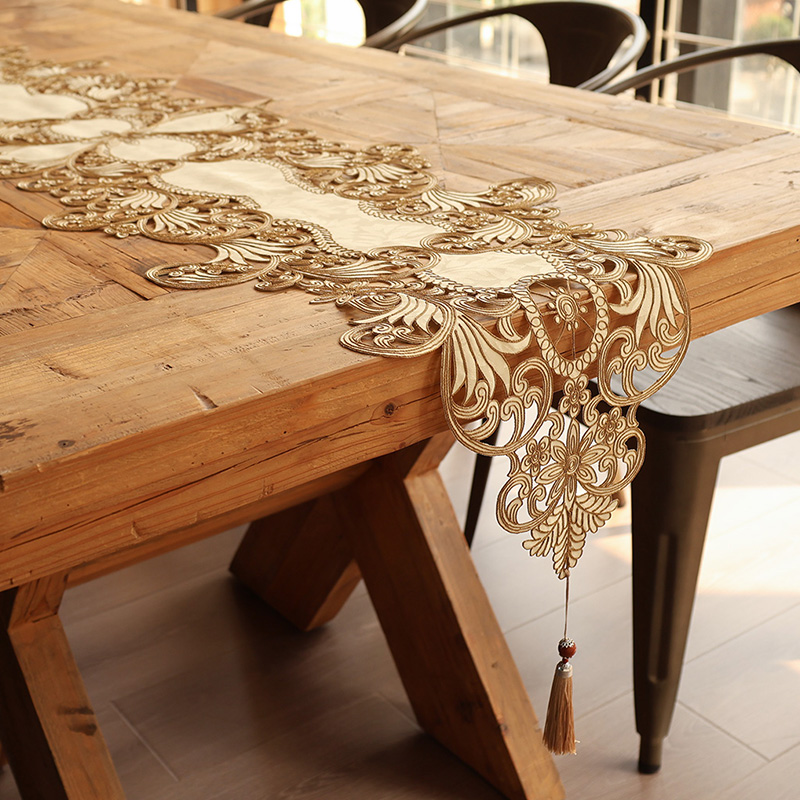
This style combines embroidery with small cut-out sections in the fabric, creating a lace-like appearance. These runners are ideal for formal dining, bridal showers, or Easter table settings. They look especially elegant over a contrasting colored tablecloth, allowing the base color to show through the cutouts.
Machine Embroidery
Machine-embroidered runners are more affordable and consistent in their patterning. Modern machines can replicate intricate designs with high precision, making these runners widely accessible without sacrificing visual appeal. They're a practical choice for everyday use and are often more durable when washed repeatedly.
Best Fabrics for Embroidered Table Runners
The base fabric of an embroidered table runner influences its drape, durability, ease of care, and how the embroidery sits. Here's a comparison of the most common fabric options to help guide your choice:
| Fabric | Feel & Drape | Best For | Care Level |
| Linen | Crisp, natural texture | Everyday & casual dining | Medium |
| Cotton | Soft, slightly stiff | Everyday use, washable | Easy |
| Velvet | Luxurious, heavy | Holidays, formal events | Delicate |
| Silk | Fluid, elegant | Special occasions | High (dry clean) |
| Burlap | Rough, rustic | Outdoor & boho settings | Easy |
For most households, linen and cotton offer the best balance of durability and aesthetic appeal. If you're planning to use the runner only for special occasions, velvet or silk will create a more dramatic impact and hold up well with occasional, careful laundering.
How to Choose the Right Size
Sizing is one of the most practical considerations when selecting an embroidered table runner and is often overlooked until the item arrives and looks awkward on the table. A runner that's too short will appear lost, while one that's too wide might look like a tablecloth. Here are the general sizing guidelines:
- Length: The runner should overhang the ends of the table by approximately 6 to 12 inches on each side. For a 60-inch table, choose a runner around 72 to 84 inches long.
- Width: Standard runners are between 12 and 16 inches wide. Narrower runners (around 12 inches) work best on slim tables or as console table accents, while wider ones (14–16 inches) suit large dining tables.
- Round tables: Consider using two runners laid perpendicular to create a cross pattern, or opt for a circular centerpiece cloth instead.
- Console or sideboard tables: Runners here can be narrower and shorter, functioning more as accent pieces than functional table protectors.
Always measure your table before purchasing. If you're between sizes, size up rather than down — a slightly longer runner drapes elegantly, while a short one can look unfinished.
Seasonal and Occasion-Based Styling Ideas
One of the biggest advantages of embroidered table runners is how easily they can be swapped out to match the season or occasion. Building a small collection of two to four runners means you can refresh your dining room look throughout the year without investing in entirely new tableware.
Spring and Easter
Choose runners with floral embroidery in soft pastels — blush pink, sage green, or lavender. White linen bases with delicate flower clusters work beautifully for Easter brunches and spring dinner parties. Pair with simple white plates and fresh tulips or daffodils in a centerpiece vase.
Summer and Outdoor Dining
For al fresco dining and barbecues, opt for cotton or burlap runners with bold embroidered motifs in bright colors. Sunflowers, citrus fruits, or nautical patterns add a cheerful, relaxed vibe that fits casual outdoor gatherings. These fabrics are also easier to clean if food or drink spills occur.
Fall and Thanksgiving
Rich autumn tones — burnt orange, mustard yellow, deep burgundy — work well in embroidered runners for fall. Look for harvest-inspired motifs like pumpkins, wheat sheaves, or leaves. A burlap runner with orange cross-stitch detailing creates a warm, welcoming Thanksgiving table with minimal additional décor needed.
Winter and Christmas
Velvet runners in deep red, forest green, or midnight blue with gold or silver embroidery are ideal for Christmas and winter holiday tables. Look for snowflake, holly, or star patterns. Layering a velvet runner over a white or cream tablecloth creates a dramatic, festive look that photographs beautifully.
Care and Maintenance Tips
Proper care extends the life of embroidered table runners significantly. Because embroidery threads can be delicate — especially with hand-stitched or raised designs — a little extra attention goes a long way.
- Always check the care label before washing. Hand embroidery and delicate fabrics like silk or velvet often require dry cleaning or hand washing in cold water.
- Turn the runner inside out when machine washing to protect the embroidery from snagging or fraying in the drum.
- Use a mesh laundry bag for machine-washable runners to add an extra layer of protection.
- Avoid harsh detergents. A gentle, color-safe detergent preserves both fabric color and thread vibrancy over multiple washes.
- Iron on the reverse side using a pressing cloth to avoid flattening raised embroidery or scorching delicate threads.
- Store flat or loosely rolled, not folded, to prevent permanent crease marks through embroidered areas.
Where to Buy Quality Embroidered Table Runners
The market for embroidered table runners spans a wide range of price points and quality levels. Knowing where to shop helps you find the right balance between craftsmanship and budget.
For handmade and artisan pieces, platforms like Etsy offer runners crafted by independent makers, often with customizable options for size, color, and design. These tend to cost more but carry genuine artisan value and uniqueness that mass-produced items can't replicate. Many sellers also offer personalization — adding monograms or custom embroidery — which makes them excellent gifts.
For affordable everyday options, retailers like Amazon, Wayfair, and HomeGoods carry a wide selection of machine-embroidered runners. These are ideal for households that use runners frequently and need easy-wash durability. Read customer reviews carefully and check the fabric composition before purchasing.
Specialty home décor stores and import boutiques often stock runners sourced directly from artisan regions — Indian kantha work, Mexican otomi embroidery, or Eastern European folk patterns. These bring cultural richness to your table and support fair-trade practices when purchased from reputable sellers.
When evaluating quality, look for even stitch density, secure thread ends that won't unravel easily, and base fabric weight appropriate to its stated use. A well-constructed embroidered table runner, properly cared for, can last a decade or more — making it an investment in your home's aesthetic that pays off over time.
 Previous



