
 En
En
 عربى
عربى
Content
- 1 Why Embroidered Placemats Are More Than Just Table Protection
- 2 Understanding Embroidery Techniques Used in Placemats
- 3 Best Base Fabrics for Embroidered Placemats
- 4 Choosing Embroidered Placemats by Occasion
- 5 How to Care for Embroidered Placemats Without Damaging the Stitching
- 6 Coordinating Embroidered Placemats With Your Table Setting
- 7 What to Look for When Buying Embroidered Placemats
Why Embroidered Placemats Are More Than Just Table Protection
Most placemats do one job: shield a table surface from heat, spills, and scratches. Embroidered placemats do that job and then go further — they transform an ordinary table into a deliberate, curated setting. The needlework on each piece, whether it is a trailing floral vine, a geometric border, or a monogrammed crest, signals care and intention. Guests notice. The table becomes a statement rather than a surface.
This dual role — functional protection and visual artistry — is what makes embroidered placemats a lasting choice for home entertaining. Unlike printed or plain woven placemats, embroidered versions carry texture, depth, and the visible trace of skilled craft. Light catches the raised threads differently at different angles, giving the table a living quality that no digital print can replicate. For romantic dinners, luxury afternoon tea settings, holiday gatherings, or simply elevating a weekday breakfast, the embroidered placemat earns its place on the table every time it is used.
Understanding Embroidery Techniques Used in Placemats
Not all embroidered placemats are made the same way. The technique used determines the texture, durability, and visual character of the finished piece. Knowing the difference helps buyers choose with confidence.
Hand Embroidery
Hand-embroidered placemats are produced stitch by stitch by a skilled artisan, typically using techniques such as satin stitch, chain stitch, cross-stitch, or cutwork. The result is a one-of-a-kind piece with subtle irregularities that actually add to its charm and perceived value. Indian hand-embroidered placemats featuring zari or silk thread work, Hungarian Kalocsa floral embroidery, and Portuguese whitework are among the most sought-after styles globally. Hand embroidery is time-intensive, which is reflected in the price, but the craftsmanship and uniqueness justify the investment for heirloom-quality table linen.
Machine Embroidery
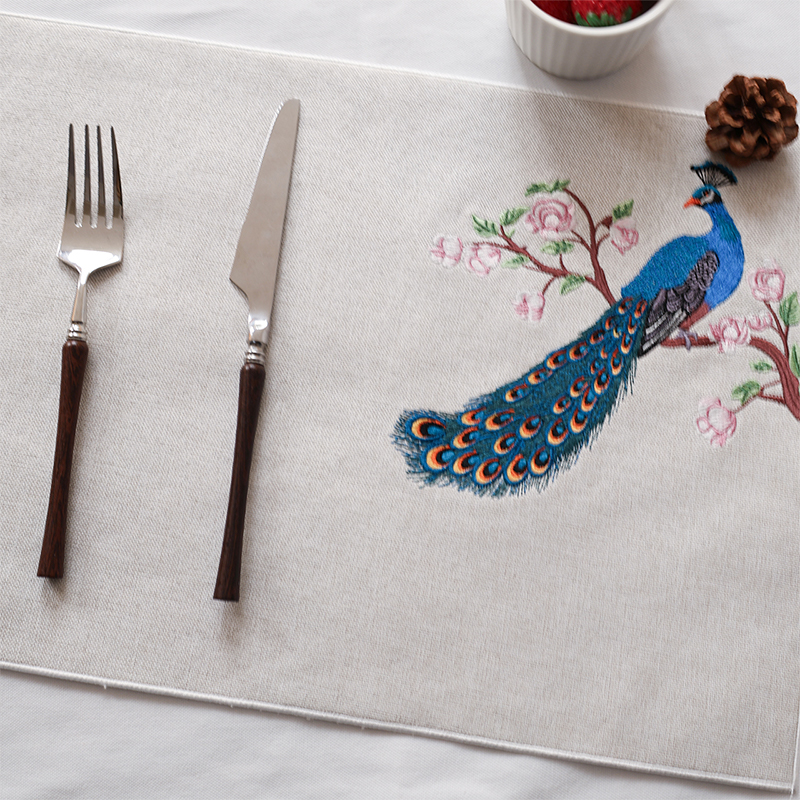
Machine embroidery uses computerized embroidery machines to replicate complex designs at scale with consistent stitch density and placement. High-end machine embroidery — especially on dense fabrics like linen or cotton damask — can achieve remarkable detail and uniformity. It is the dominant production method for mid-range and premium commercially sold placemats. When produced on quality equipment with high thread count and tight registration, machine-embroidered placemats are durable, washable, and visually impressive.
Cutwork and Eyelet Embroidery
Cutwork involves stitching around a design outline and then cutting away sections of the base fabric to create an open, lace-like pattern. When used on placemats, it creates an airy, elegant effect — particularly beautiful under candlelight or on a white tablecloth. Eyelet embroidery works similarly, punching small circular holes and finishing their edges with tight stitching. Both techniques are popular for afternoon tea settings and formal dining because they evoke classic European table linen traditions.
Best Base Fabrics for Embroidered Placemats
The fabric beneath the embroidery determines how well the stitching holds, how the placemat drapes and lays flat, and how it survives repeated washing. The following fabrics are the most commonly used and each has distinct advantages:
- Linen: The gold standard for embroidered placemats. Linen is naturally firm, slightly textured, and gets softer with every wash while maintaining its structure. It holds embroidery thread firmly without puckering and resists staining better than cotton. Its natural ecru or ivory tone gives embroidery a rich, warm background.
- Cotton: Versatile and easy to launder, cotton is widely used for both hand and machine embroidery. 100% combed cotton or percale-weave cotton provides a smooth, stable surface for detailed stitch work. It is more affordable than linen and available in a broader range of base colors.
- Linen-Cotton Blend: Combines linen's crispness with cotton's softness and washability. This is the most practical option for everyday use — it holds embroidery well, drapes cleanly, and tolerates regular machine washing without excessive wrinkling.
- Silk: Reserved for the most formal or decorative placemats, silk provides a luminous base that makes embroidery thread colors appear more vivid. Silk placemats are typically dry-clean only and better suited for display or very occasional formal use.
- Jute or Burlap: Used for rustic and farmhouse-style embroidered placemats. The open weave accepts thick cotton or wool thread beautifully and produces a casual, textured look suited to outdoor dining or casual tablescapes.
Choosing Embroidered Placemats by Occasion
Different settings call for different embroidery styles, color palettes, and fabric choices. The table below maps common occasions to the most appropriate placemat characteristics:
| Occasion | Recommended Style | Fabric Choice | Embroidery Detail |
| Romantic Dinner | Deep tones, floral or vine motifs | Linen or silk | Satin stitch with metallic thread accents |
| Luxury Afternoon Tea | White or ivory, cutwork or eyelet | Fine cotton or linen | Whitework, scalloped edges |
| Holiday Entertaining | Seasonal motifs, rich colors | Cotton or linen-cotton blend | Cross-stitch or chain stitch borders |
| Everyday Dining | Neutral tones, simple geometric border | Linen-cotton blend | Machine embroidery for durability |
| Casual Outdoor Dining | Earthy tones, bold patterns | Jute or heavy cotton | Thick wool or cotton thread embroidery |
How to Care for Embroidered Placemats Without Damaging the Stitching
Proper care extends the life of embroidered placemats significantly. The embroidery thread, whether cotton, silk, or metallic, requires more careful handling than the base fabric itself. Following a few straightforward practices will keep the stitching vivid and the fabric in good condition for years.
- Always turn embroidered placemats inside out before machine washing to protect raised stitching from friction against other items in the drum.
- Use a gentle or delicate cycle with cold or warm water — never hot. Hot water can cause thread colors to bleed, particularly on hand-embroidered pieces using natural dyes.
- Avoid bleach entirely. Even oxygen-based bleaches can weaken embroidery thread over time. Use a mild, color-safe detergent instead.
- Place placemats in a mesh laundry bag before washing to prevent threads from snagging on zippers or buttons of other garments.
- Tumble dry on low or, better yet, lay flat to dry. High heat in the dryer can warp the base fabric and distort the embroidery design.
- Iron on the reverse side only, using a pressing cloth between the iron and the fabric. Ironing directly over embroidery can flatten the raised stitching and dull the thread's natural sheen.
For silk-based or heavily hand-embroidered placemats with metallic thread, professional dry cleaning is the safest option. The cost of occasional dry cleaning is minimal compared to the replacement value of a quality hand-embroidered piece.
Coordinating Embroidered Placemats With Your Table Setting
An embroidered placemat works best when it is part of a cohesive table composition rather than treated as an isolated accessory. The key is to let the placemat lead and build the rest of the setting around it. If the placemat features navy and gold embroidery on ivory linen, pull one of those colors into the napkin rings, candle holders, or charger plates. The embroidery becomes the anchor, and everything else supports it without competing.
For formal settings, pair white or ivory cutwork placemats with white porcelain, silver flatware, and crystal glassware. The restraint of an all-white palette allows the embroidery's texture to carry the visual interest without being overpowered by colorful tableware. For relaxed or eclectic settings, contrast is your friend: a vibrant multicolor floral embroidered placemat on a dark wood table, paired with mismatched ceramics and linen napkins, creates a warm, layered look that feels personal and lived-in.
Tablecloth and runner combinations also benefit from embroidered placemats. A neutral linen runner down the center of a table, combined with coordinating embroidered placemats at each setting, creates a layered textile composition that reads as intentional and sophisticated. The runner frames the center display — flowers, candles, a fruit bowl — while the placemats define each guest's individual space.
What to Look for When Buying Embroidered Placemats
Quality varies considerably across the market. When evaluating embroidered placemats, pay attention to stitch density — higher stitch counts per square inch produce sharper design edges and greater durability. Check that the thread colors are colorfast by reading the care label; quality manufacturers test for color bleeding before production. Look at the reverse side of the placemat: on a well-made piece, the back should be neat with no loose or knotted threads that could snag a table surface.
For hand-embroidered pieces, mild irregularity in stitch length or spacing is expected and desirable — it confirms the piece is genuinely handmade. For machine-embroidered placemats, look for clean registration between colors, no jumping threads, and a backing fabric that stabilizes the embroidery without adding unnecessary stiffness. Hemming quality matters too: a rolled hem or mitered corner finish indicates attention to detail throughout the production process, while a raw or loosely serged edge suggests shortcuts that may affect long-term durability.
Embroidered placemats represent one of the most accessible ways to introduce genuine craft and artistry into everyday domestic life. Whether chosen for a single formal occasion or washed and used week after week, a well-made embroidered placemat rewards both the table it protects and the people who gather around it.
 Previous



