
 En
En
 عربى
عربى
Content
What Makes Embroidered Tablecloths a Timeless Choice
Embroidered tablecloths have remained a staple in home decor for generations because they combine practicality with artistry. Unlike printed or plain fabric covers, embroidered designs are stitched directly into the material, giving them a tactile, three-dimensional quality that catches light and adds texture to any table setting. Whether used for everyday dining or special occasions, these tablecloths bring a sense of craftsmanship that mass-produced alternatives simply cannot match.
Beyond aesthetics, embroidered tablecloths often carry cultural and regional significance. Many patterns trace back to traditional needlework styles from Europe, Asia, and the Americas, meaning each cloth can tell a story about heritage and technique. This makes them not just functional textiles but also decorative pieces that can be passed down through families or collected as keepsakes.
Popular Fabric Types Used in Embroidered Tablecloths
The base fabric of an embroidered tablecloth significantly affects its durability, drape, and overall look. Selecting the right material depends on how often the cloth will be used and the level of formality desired.
Linen
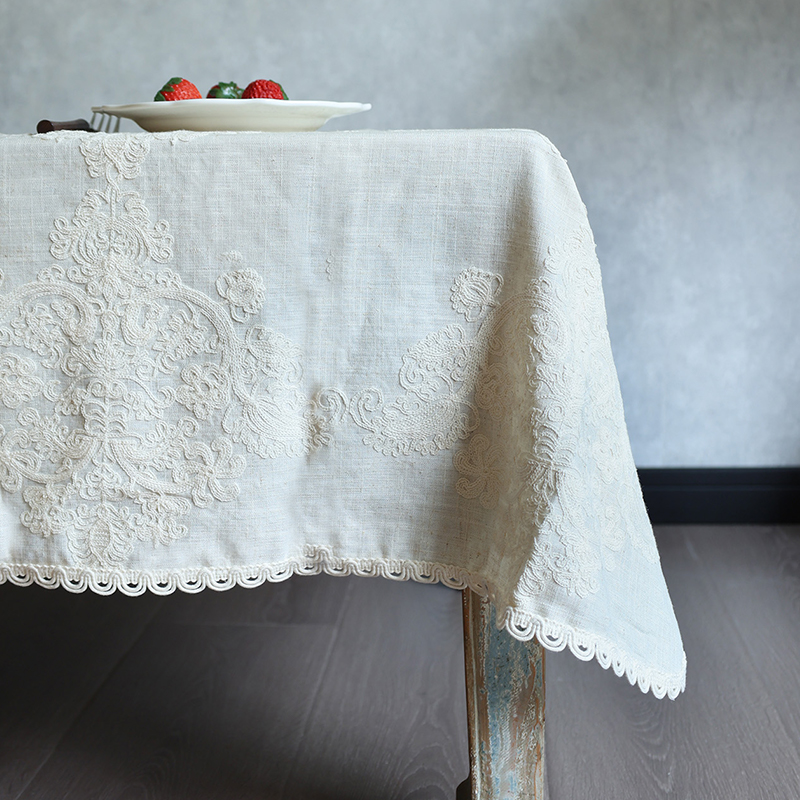
Linen is one of the most popular choices for embroidered tablecloths due to its natural texture and ability to hold stitches crisply. It has a slightly stiff, structured feel that works well for formal dining and holiday settings. Linen also ages gracefully, developing a soft patina over years of use.
Cotton
Cotton is a more affordable and widely available option. It is easier to wash and maintain than linen, making it a practical choice for daily use. Cotton embroidered tablecloths are common in casual dining rooms and kitchens.
Polyester Blends
Polyester and cotton-polyester blends offer wrinkle resistance and stain durability. These are ideal for households that want the look of embroidery without the intensive care requirements of natural fibers.
Common Embroidery Styles and Patterns
Embroidery techniques vary widely, and understanding the differences can help buyers select a tablecloth that matches their personal taste and home style.
| Style | Description | Best Setting |
| Cutwork | Fabric is cut away and edges reinforced with stitching | Formal dinners |
| Cross-Stitch | X-shaped stitches forming geometric or floral motifs | Rustic or country decor |
| Floral Satin Stitch | Smooth, dense stitching used to fill floral shapes | Spring or garden themes |
| Drawn Thread Work | Threads removed and remaining ones bundled decoratively | Traditional or heirloom style |
Each of these techniques requires a different level of skill and time investment, which is often reflected in the price of the finished product. Hand-embroidered pieces tend to be more expensive than machine-embroidered ones, but they also carry unique irregularities that many buyers find appealing.
How to Choose the Right Size and Shape
Selecting the correct size ensures the tablecloth drapes properly and complements the table without appearing too small or overwhelming the space. A general rule is to allow the cloth to hang between 6 and 12 inches over the edge of the table on all sides.
- Round tables typically pair best with round or square tablecloths.
- Rectangular tables require rectangular or oval cloths measured according to table length plus overhang.
- For buffet-style tables, a longer drop of 12 to 15 inches creates a more formal appearance.
- Measuring the table before purchasing prevents costly returns or ill-fitting cloths.
Caring for and Cleaning Embroidered Tablecloths
Proper maintenance extends the life of an embroidered tablecloth and preserves the integrity of the stitching. Because embroidery threads can be more delicate than the base fabric, care routines should be adjusted accordingly.
- Always check the care label before washing, as some embroidery threads require hand washing only.
- Use cold water and a mild detergent to prevent color bleeding and thread shrinkage.
- Avoid wringing the fabric; instead, gently press out excess water to protect stitched areas.
- Iron on the reverse side using a low heat setting to prevent flattening the embroidery texture.
- Store folded in a cool, dry place, or roll the cloth to avoid permanent crease lines in the embroidered sections.
Styling Ideas for Different Occasions
Embroidered tablecloths can be styled differently depending on the event or season. For everyday use, a lightly embroidered cotton cloth in neutral tones keeps the table looking fresh without appearing overly formal. For holiday gatherings, richer colors and denser embroidery patterns, such as floral or seasonal motifs, help set a festive tone.
Weddings and formal events often call for white or ivory linen cloths with cutwork or lace-trimmed edges, paired with matching napkins for a cohesive look. Outdoor gatherings, on the other hand, benefit from more casual cross-stitch or blended-fabric options that are easier to clean after exposure to food, wind, or sun.
Layering is another popular styling technique. Placing a smaller embroidered table runner over a solid-colored base cloth allows the embroidery to stand out as a focal point while keeping the overall setting versatile for different themes throughout the year.
 Previous



