
 En
En
 عربى
عربى
Content
- 1 Why Embroidered Tablecloths Remain a Timeless Home Textile Choice
- 2 Base Fabric Options and How They Affect Embroidery Quality
- 3 Embroidery Styles and the Settings They Suit Best
- 4 Sizing Guide: Matching Tablecloth Dimensions to Your Table
- 5 Caring for Embroidered Tablecloths to Maximize Their Lifespan
- 6 What to Look for When Buying Embroidered Tablecloths
Why Embroidered Tablecloths Remain a Timeless Home Textile Choice
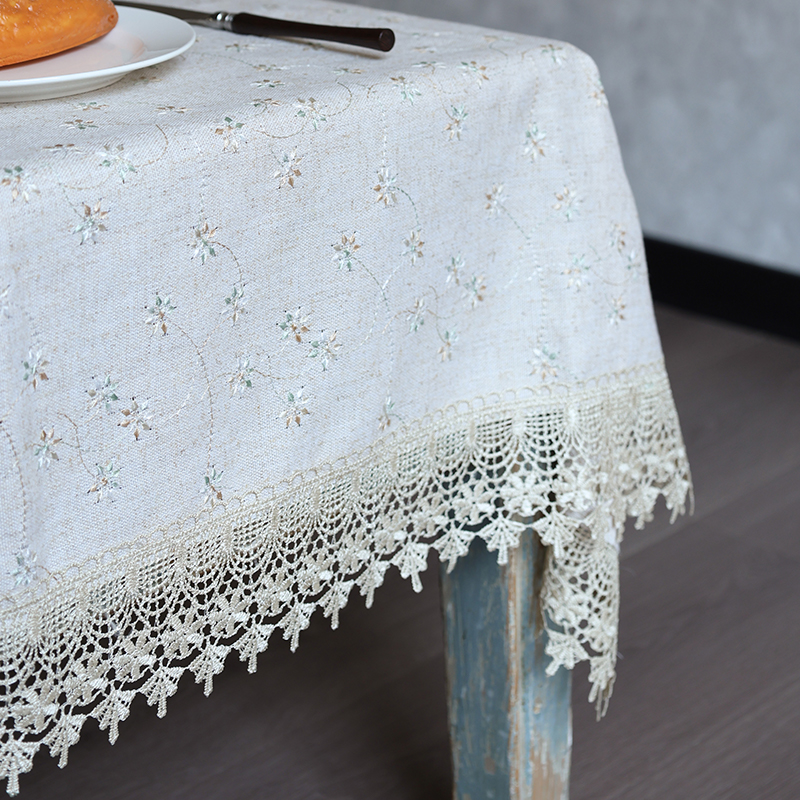
Embroidered tablecloths occupy a unique position in home textiles because they function simultaneously as practical table protection and as decorative focal points for dining rooms, event spaces, and holiday settings. Unlike printed tablecloths, where color and pattern sit on the surface of the fabric and fade with washing, embroidered designs are stitched directly into the weave of the base cloth, creating texture, dimension, and visual depth that printed alternatives simply cannot replicate. A well-chosen embroidered tablecloth transforms an ordinary dining table into a deliberate design statement, communicating the care and aesthetic sensibility of the household or event planner who selected it.
The enduring appeal of embroidered tablecloths also stems from the craft traditions they carry. Regions across Europe, Asia, Latin America, and the Middle East have developed distinctive embroidery styles over centuries, and tablecloths bearing these regional traditions connect contemporary households to rich cultural heritage. Whether the embroidery is the whitework cutwork of Madeira, the colorful cross-stitch of Eastern European folk tradition, the silk thread artistry of Chinese origin, or the geometric precision of North African needlework, each style brings a specific aesthetic character that mass-produced alternatives cannot authentically replicate.
Base Fabric Options and How They Affect Embroidery Quality
The base fabric of an embroidered tablecloth determines not only how the finished piece feels and drapes but also how well it supports the embroidery stitches and how it responds to laundering over years of use. Different base fabrics suit different embroidery styles and end uses, and understanding these relationships is essential for making a purchase that performs as expected.
Linen
Linen is the traditional choice for formal embroidered tablecloths and remains the preferred base fabric for high-quality hand embroidery. Its even, stable weave provides clear grid lines that guide counted embroidery techniques such as cross-stitch and hardanger, while its smooth surface allows satin stitch and surface embroidery to lie flat and lustrous. Linen becomes softer and more supple with each washing, developing a pleasing patina over time. It is highly absorbent, naturally temperature-regulating, and resistant to pilling. The primary trade-off is that linen wrinkles significantly unless it contains a small percentage of synthetic fiber or is treated with an easy-care finish.
Cotton
Cotton tablecloths are more affordable than linen and widely available in a range of weave weights suitable for embroidery. Tightly woven cotton percale and cotton damask are particularly popular base fabrics for machine embroidery because they accept dense stitch patterns without puckering. Cotton is easy to launder at high temperatures, making it practical for households with young children or for frequent entertaining. It does not drape quite as elegantly as linen and may pill slightly over time, but its accessibility and washability make it the most commonly used base for commercially produced embroidered tablecloths at mid-market price points.
Linen-Cotton Blends
Blended fabrics combining 55 percent linen with 45 percent cotton, or similar ratios, offer a practical compromise between the aesthetic qualities of pure linen and the easy-care properties of cotton. These blends wrinkle less than pure linen, launder more easily, and cost less, while still providing the characteristic texture and drape that makes linen tablecloths visually appealing. Many contemporary embroidered tablecloth collections use linen-cotton blends as their standard base fabric for exactly these reasons.
Polyester and Poly-Cotton Blends
Polyester-based tablecloths with machine embroidery are common in the event rental and hospitality industry, where durability, stain resistance, and wrinkle recovery take priority over the tactile and aesthetic qualities of natural fibers. Polyester tablecloths with embroidered borders or logo embroidery are used in hotel banquets, wedding venues, and restaurant settings. For residential use, poly-cotton blends are a reasonable choice for everyday tablecloths that will be washed frequently, though the embroidery on polyester bases rarely achieves the same visual richness as stitching on natural fiber grounds.
Embroidery Styles and the Settings They Suit Best
The embroidery style of a tablecloth defines its visual personality and determines which settings and occasions it complements most naturally. Understanding the differences between major embroidery styles helps buyers select a tablecloth that is genuinely appropriate for its intended use rather than simply attractive in isolation.
- Whitework and Cutwork: Whitework embroidery uses white or off-white thread on a white or natural ground fabric, relying on stitch texture and light reflection rather than color contrast for its visual effect. Cutwork combines embroidery with small areas of fabric removed to create lace-like open patterns. These styles are quintessentially formal and suit elegant dinner party settings, wedding receptions, and holiday tables where a refined, classic aesthetic is desired.
- Cross-Stitch and Counted Thread: Cross-stitch tablecloths feature geometric or pictorial designs built from X-shaped stitches on an even-weave ground. Folk motifs, botanical patterns, and seasonal designs are common themes. Cross-stitch tablecloths have a charming, handcrafted character that suits casual family dining, farmhouse-style kitchens, and festive seasonal table settings.
- Satin Stitch Surface Embroidery: Satin stitch fills design areas with parallel thread laid closely together to create smooth, lustrous surfaces that catch the light. Floral motifs, birds, and scrolling vines worked in satin stitch appear on tablecloths from many traditions including Chinese silk embroidery and European crewelwork. These tablecloths are visually rich and suit both formal dining rooms and statement-making casual settings.
- Machine Embroidery with Programmed Designs: Modern machine embroidery uses computerized embroidery machines to produce complex, densely stitched designs with consistent quality at scale. Machine-embroidered tablecloths offer the visual appeal of embroidery at accessible price points and are widely used for everyday dining, gifting, and commercial hospitality applications. The best machine embroidery is difficult to distinguish from handwork at a glance, though it lacks the subtle irregularities that give hand embroidery its character.
- Ribbon and Mixed Media Embroidery: Some decorative tablecloths incorporate dimensional elements such as ribbon embroidery, beadwork, or appliqué combined with thread embroidery to create textured, sculptural surface decoration. These tablecloths are typically reserved for special occasions and display rather than everyday use, as the dimensional elements require careful laundering.
Sizing Guide: Matching Tablecloth Dimensions to Your Table
Correct sizing is one of the most practical aspects of embroidered tablecloth selection and one that buyers frequently underestimate. An embroidered tablecloth that is too small will look inadequate and expose table edges, while one that drops excessively to the floor may interfere with seating. The standard guidance for tablecloth drop — the amount of fabric that hangs below the table edge on each side — is as follows:
| Setting Type | Recommended Drop per Side | Visual Effect |
| Casual everyday dining | 15–20 cm (6–8 inches) | Relaxed, practical, easy seating access |
| Formal dinner party | 25–30 cm (10–12 inches) | Elegant, traditional, generous drape |
| Buffet or display table | Floor length (full drop) | Dramatic, conceals table legs and storage beneath |
| Decorative overlay on solid cloth | 10–15 cm (4–6 inches) | Showcases embroidery against contrasting base cloth |
To calculate the correct tablecloth size, measure the table length and width, then add twice the desired drop to each dimension. For a rectangular table measuring 150 cm by 90 cm with a desired 25 cm drop on all sides, the tablecloth should measure 200 cm by 140 cm. Always measure your specific table rather than relying on nominal table size designations, which can vary between manufacturers.
Caring for Embroidered Tablecloths to Maximize Their Lifespan
Embroidered tablecloths require more attentive care than plain tablecloths because the raised embroidery threads are vulnerable to snagging, abrasion, and distortion if laundered carelessly. Following proper care procedures protects the embroidery and preserves the base fabric, ensuring that the tablecloth remains in excellent condition through years of use and washing.
- Pre-treat stains promptly: Food and wine stains should be blotted immediately with a clean cloth to absorb as much of the spill as possible without rubbing, which spreads the stain and can distort embroidery threads. Apply a mild stain remover appropriate for the base fabric and allow it to work before laundering.
- Wash in a mesh laundry bag: Place the folded tablecloth inside a mesh laundry bag before machine washing to protect the embroidery from snagging on drum protrusions or other items in the load. This simple step dramatically reduces the risk of pulled threads and embroidery damage.
- Use gentle cycle and cool water: Wash embroidered tablecloths on a gentle or delicate cycle using cool or lukewarm water and a mild detergent suitable for delicate fabrics. Hot water can cause embroidery thread colors to bleed onto the base fabric and may shrink natural fiber grounds.
- Iron on the reverse side: When ironing, turn the tablecloth embroidery-side down onto a thick towel and iron the reverse of the fabric. This protects the raised embroidery from being flattened by the iron while still removing wrinkles from the base cloth effectively.
- Store rolled rather than folded: Long-term storage of embroidered tablecloths is best done by rolling them around an acid-free tube or rolling them loosely rather than folding. Repeated folding along the same crease lines eventually weakens the fabric fibers and embroidery threads at the fold points.
What to Look for When Buying Embroidered Tablecloths
The market for embroidered tablecloths spans a very wide range from inexpensive mass-produced items to heirloom-quality hand-embroidered pieces, and the visual appearance alone does not reliably indicate which category a specific tablecloth falls into. Evaluating several key quality indicators before purchasing helps ensure that the piece delivers the performance and aesthetic quality expected at its price point.
Examine the density and consistency of the embroidery stitching. High-quality embroidery features even stitch tension throughout, with no loose loops, pulled areas, or gaps in filled sections. The reverse side of the embroidery should show relatively neat thread management without excessive jump threads, which are long threads spanning between design elements on the back of the fabric. Excessive jump threads indicate lower-quality machine embroidery programming and can snag on objects during use and laundering. Check that thread colors are saturated and consistent throughout each design element, as uneven thread coloring suggests inconsistent thread quality or production supervision.
Evaluate the base fabric by feel and construction. A quality tablecloth base fabric should feel substantial and smooth without excessive stiffness from finishing chemicals. Hold the fabric up to light to check for even weave density without thin spots or weaving irregularities. For linen tablecloths, slight natural texture variation is normal and desirable, but obvious weaving faults are not. Finally, verify that the tablecloth dimensions match the stated specifications by measuring before purchasing in-store, or by checking that the retailer has a clear return policy for online purchases where sizing cannot be verified before delivery.
 Previous



