
 En
En
 عربى
عربى
Content
- 1 Why Embroidered Placemats Are a Timeless Table Linen Choice
- 2 Base Fabric Options and How They Affect the Final Product
- 3 Embroidery Techniques and Their Visual Characteristics
- 4 Matching Embroidered Placemats to Your Interior Style and Occasion
- 5 Sizing, Placement, and Practical Table Setting Guidelines
- 6 Washing, Care, and Storage Best Practices
Why Embroidered Placemats Are a Timeless Table Linen Choice
Embroidered placemats occupy a unique position in home textiles — they are simultaneously functional and decorative, serving as protective barriers for dining surfaces while adding a layer of visual craftsmanship that plain placemats simply cannot replicate. The embroidery transforms what would otherwise be a utilitarian item into a handcrafted accent that communicates attention to detail and aesthetic intentionality in a dining space. Unlike printed patterns, which sit on the surface of the fabric and can fade, crack, or peel over time, embroidered designs are stitched directly into the textile structure, creating a textured, three-dimensional quality that retains its visual richness wash after wash and year after year.
The appeal of embroidered placemats spans a wide range of interior styles and occasions. A set of white linen placemats with delicate white-on-white broderie anglaise suits a minimalist Scandinavian dining room, while richly colored crewelwork placemats on a heavy cotton ground work beautifully in a traditional or country-style kitchen. Festive embroidered placemats featuring seasonal motifs — snowflakes, holly, autumn leaves, or floral sprays — are a practical investment that allows hosts to refresh their table setting for holidays and celebrations without replacing furniture or tableware. This versatility is a key reason why embroidered placemats remain a consistently popular category in home furnishings retail worldwide.
Base Fabric Options and How They Affect the Final Product
The base fabric of an embroidered placemat determines far more than its appearance. It governs the placemat's durability, how well the embroidery stitches anchor into the weave, the ease of care and laundering, and the overall feel and drape of the finished piece on the table surface. Understanding the characteristics of the most common base fabrics helps buyers make informed decisions that align with their household's practical demands and aesthetic preferences.
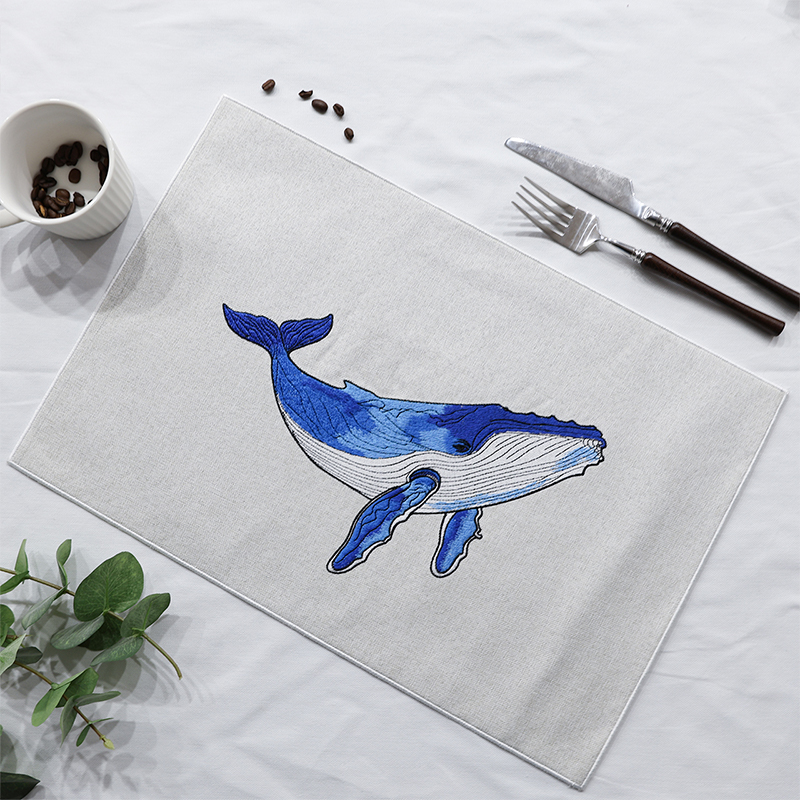
Linen
Linen is the traditional prestige fabric for embroidered table linens and remains the benchmark against which other materials are measured. Made from flax plant fibers, linen is naturally strong, absorbent, and becomes softer and more supple with each wash without losing tensile integrity. Its slightly textured, even weave provides an excellent ground for embroidery — stitches lie flat and anchor securely without distorting the surrounding fabric. Linen placemats develop a gentle luster over time that enhances the visual depth of embroidered motifs. The primary practical consideration is that linen wrinkles easily and may require ironing after laundering to look its best at a formally set table, though pre-washed stonewashed linen versions have a more relaxed, lived-in character that suits casual dining without the need for ironing.
Cotton
Cotton is the most widely used base fabric for everyday embroidered placemats because it combines affordability, ease of care, and sufficient durability for regular laundering at moderate temperatures. Tightly woven cotton — particularly percale or canvas-weight cotton — provides good stitch anchorage and resists puckering during machine embroidery. Cotton placemats are typically more colorfast than linen when washed frequently, and they are less prone to wrinkling, making them a practical choice for family households where placemats go through the wash multiple times per week. The trade-off is that cotton lacks the natural luster and heirloom quality of linen, and lower thread-count cotton fabrics can pill or thin more quickly under heavy use conditions.
Jute and Natural Fiber Blends
Jute and jute-cotton blend placemats have gained significant popularity in contemporary interior design for their organic, earthy texture that suits bohemian, coastal, and farmhouse-style dining spaces. Embroidery on jute presents unique technical challenges — the coarse, open weave requires thicker threads and simpler stitch patterns — but the visual contrast between the natural brown-gold ground fabric and colorful embroidered accents creates a striking artisanal aesthetic. Jute placemats are not typically machine washable and require spot cleaning, which limits their practicality for households with young children or frequent messy meals. However, for dining rooms used primarily for adult entertaining, they offer a distinctive look that is difficult to achieve with other materials.
Embroidery Techniques and Their Visual Characteristics
Not all embroidery is created equal. The technique used to create the embroidered design on a placemat significantly influences its visual style, texture, durability, and production cost. Buyers who understand the differences between major embroidery techniques can more accurately assess the value and quality of what they are purchasing, whether shopping in a retail store or ordering from an online wholesale supplier.
| Technique | Visual Character | Typical Application | Durability |
| Satin Stitch | Smooth, glossy filled areas | Floral motifs, monograms | Good with careful washing |
| Cross Stitch | Pixelated, geometric patterns | Borders, folk designs | Excellent — very stable |
| Crewelwork | Textured, raised wool designs | Traditional, botanical motifs | Very good with gentle care |
| Broderie Anglaise | Cutwork with eyelet holes | Elegant, formal settings | Good — avoid aggressive washing |
| Machine Embroidery | Precise, consistent, multicolor | Mass-produced retail sets | Excellent — tightly locked stitches |
| Hardanger | Counted thread, open grid work | Scandinavian, heirloom pieces | Good with proper storage |
Matching Embroidered Placemats to Your Interior Style and Occasion
One of the most practical considerations when purchasing embroidered placemats is how they will integrate with an existing dining room aesthetic and the range of occasions for which they will be used. Buying placemats purely on the basis of a single image can lead to purchases that look incongruous in context, so approaching the selection with your broader tabletop and room palette in mind produces far more satisfying results.
Formal and Special Occasion Dining
For formal dining tables used for celebratory meals, dinner parties, or holiday gatherings, embroidered placemats in white, ivory, or champagne linen with tone-on-tone or gold thread embroidery create an elegant foundation that complements fine china, crystal, and silverware without competing for visual attention. Monogrammed embroidered placemats add a personalized, heritage quality to a formal table setting and make exceptional gifts for weddings, anniversaries, and housewarmings. When using heavily embroidered placemats at a formal setting, keep floral centerpieces and candle arrangements restrained to avoid a visually cluttered table.
Everyday Family Dining
For daily use in a household with children or frequent casual meals, durability and ease of care should guide selection. Machine-embroidered cotton placemats in medium-dark grounds — navy, sage green, terracotta, or charcoal — are practical choices because they conceal minor staining between washes and withstand frequent machine laundering at 40°C without significant color loss. Geometric border embroidery and simple repeating motifs hold up better through repeated washing than large satin-stitched floral designs, which can develop a slightly worn appearance at the edges of filled areas over time. A set of eight to twelve identical placemats ensures that the table can be dressed uniformly even while some placemats are in the wash.
Seasonal and Festive Settings
Building a small collection of seasonal embroidered placemat sets allows hosts to refresh their dining table with minimal investment throughout the year. A set of four to six spring placemats embroidered with cherry blossoms or tulips, a summer set with coastal or botanical motifs, an autumn set with leaves or harvest imagery, and a Christmas or winter holiday set with traditional seasonal embroidery creates a rotating wardrobe for the dining table that keeps the space feeling intentionally styled for each season. Storing off-season sets properly — folded with acid-free tissue paper in a cool, dry drawer or linen press — preserves the embroidery and fabric quality between uses.
Sizing, Placement, and Practical Table Setting Guidelines
Standard embroidered placemats are typically produced in sizes ranging from 30 cm × 40 cm (12" × 16") to 35 cm × 48 cm (14" × 19"). The correct size for a given dining table depends on the table dimensions, the number of place settings, and whether the placemats are intended to be used with or without a tablecloth. At a 90 cm wide dining table, placemats up to 35 cm in depth can be positioned comfortably without overlapping the center zone reserved for serving dishes. Larger placemats — 35 cm × 48 cm or 36 cm × 50 cm — suit generous farmhouse-style tables and provide better coverage for large dinner plates with side bread plate placements.
When placing embroidered placemats directly on a bare wooden or glass table, it is worth checking whether the embroidery on the underside of the placemat is finished with a backing — either a woven backing fabric or a foam-backed layer — that prevents the placemat from sliding and protects the table surface from any abrasion caused by embroidery knots or rough backing threads. Better-quality embroidered placemat sets include a coordinating backing in a solid complementary color that improves grip, protects the table, and gives the placemat a more substantial, finished feel when handled.
Washing, Care, and Storage Best Practices
Proper care is the single most important factor in maintaining the appearance and longevity of embroidered placemats over years of regular use. Embroidery threads — whether cotton, silk, wool, or metallic — respond differently to water, heat, and agitation, and care instructions should always be followed precisely rather than treated as optional guidance.
- Machine Washing Temperature: Most cotton-based embroidered placemats can be safely washed at 30°C to 40°C on a gentle cycle. Linen placemats should generally be washed at 30°C to prevent excessive shrinkage, especially in the first few washes. Placemats with metallic thread embroidery should always be washed at 30°C maximum to prevent the metallic coating from cracking or flaking off the thread core.
- Detergent Selection: Use a mild liquid detergent rather than a powder detergent or biological enzyme formula. Enzyme-based detergents can break down the protein content in silk or wool embroidery threads over time, causing progressive fiber weakening and color dulling. For white or ivory linen placemats, an oxygen-based whitening product used occasionally at low temperature maintains brightness without the fiber damage caused by chlorine bleach.
- Drying Method: Air drying flat or on a clean drying rack is preferable to tumble drying for embroidered placemats, as the heat and mechanical agitation of a tumble dryer can cause shrinkage, distortion of the embroidered design, and premature wear on both fabric and thread. If tumble drying is necessary, use the lowest heat setting and remove placemats while still slightly damp to finish air drying flat.
- Ironing Embroidered Areas: Always iron embroidered placemats face down on a thick terry towel or padded ironing board cover. Ironing directly on the embroidery face with a hot iron will flatten the textured stitches and can cause sheen damage or burning on satin-stitched areas. Use a pressing cloth between the iron and the embroidery on the reverse side for additional protection, particularly for raised or padded embroidery designs.
- Stain Treatment: Treat food and beverage stains on embroidered placemats promptly by blotting — never rubbing — with a clean damp cloth to prevent the stain from setting into the fiber. For stubborn stains, apply a small amount of mild liquid detergent directly to the stained area and allow it to soak for five to ten minutes before rinsing with cold water. Avoid applying stain remover sprays directly to embroidered areas, as many commercial stain removers contain solvents or bleaching agents that can discolor embroidery threads irreversibly.
 Previous



