
 En
En
 عربى
عربى
Content
- 1 What "3 Pcs" Usually Means in a Gingham Tablecloth Set
- 2 Why Light Blue Gingham Works So Well on the Table
- 3 Fabric Choices That Hold Their Color and Shape
- 4 Print Quality, Check Scale, and Color Matching
- 5 Matching Pieces That Complete the Set
- 6 Sizing and Drop: Getting the Proportions Right
- 7 Care and Colorfastness for Repeated Use
- 8 Custom Sets for Brands, Restaurants, and Events
A light blue gingham tablecloth is one of those pieces that quietly does a great deal of work. It turns an ordinary dining table into a picnic scene, warms up a farmhouse kitchen, and photographs beautifully at showers, birthdays, and summer brunches. Buyers who search for a "3 pcs light blue gingham tablecloth" are usually not after a single cloth, though. They want a coordinated set that covers the table and finishes it with two matching pieces.
Below, we explain what those three pieces usually are, how fabric and print decisions change the final look, and what brands, restaurants, and event planners should confirm before an order goes into production.
What "3 Pcs" Usually Means in a Gingham Tablecloth Set
Three is a merchandising convention rather than a fixed standard, so the first useful step is knowing which combinations suppliers actually build.
- One tablecloth plus two napkins, the most common retail bundle for a four- to six-seat table.
- One tablecloth plus two placemats, a practical pairing for cafés and bistros where placemats absorb daily wear.
- One tablecloth, one runner, and one stack of napkins, counted as three components in hospitality kits.
- Three cloths in graduated sizes, used to dress a long buffet or banquet table end to end.
Because the label is loose, ask for a piece-by-piece breakdown: the exact dimensions of each item, the quantity per size, and whether napkins or placemats are included. A set advertised only as "tablecloth" often turns out to be one cloth plus two napkins, while some hospitality listings mean three separate cloths. Confirming this before quoting saves returns, rework, and awkward conversations later.
Why Light Blue Gingham Works So Well on the Table
Gingham is a balanced check: two colors of similar visual weight crossed in a simple grid that reads as calm instead of busy. Light blue keeps that grid cool and airy, which is why it sits comfortably in so many settings.
- Summer and outdoor dining: the pale blue stays fresh in daylight and hides light crumbs better than plain white.
- Showers and gender-neutral celebrations: light blue pairs with white, cream, lemon, and sage without looking themed.
- Farmhouse, coastal, and country kitchens: a checked cloth is the classic finishing layer on a wooden table.
- Bakery and café displays: gingham under a cake stand or bread basket adds warmth at very little cost.
The scale of the check matters as much as the color. A fine, close check reads as delicate and works well on napkins and runners; a broad block check makes a bolder statement and suits long tables seen from a distance. If your table is small, a large check can overwhelm it, so scale the pattern to the surface rather than to the photograph that inspired you.
Fabric Choices That Hold Their Color and Shape
The same light blue can behave very differently depending on the base cloth. Yarn-dyed checks are woven from colored threads and keep their pattern through repeated washing, while printed checks are applied to a finished fabric, which allows finer detail and faster color changes.
| Fabric | How the check is made | Best suited to | Care notes |
|---|---|---|---|
| Cotton | Printed or yarn-dyed | Dining rooms, retail sets, events | Machine wash warm, press slightly damp |
| Polyester | Printed or woven | Restaurants, rentals, outdoor use | Wipes clean, dries fast, resists fading |
| Linen and ramie | Woven or printed | Premium home and hospitality | Wash cool, expect a relaxed texture |
| Jacquard | Woven into the structure | Statement cloths and gift sets | Gentle cycle, low tumble dry |
For a soft, traditional hand feel, cotton remains the most requested base for light blue gingham. That is why we build our cotton range around tightly controlled dye lots and consistent finishing, so a reorder placed months later still matches the set already on the shelf.
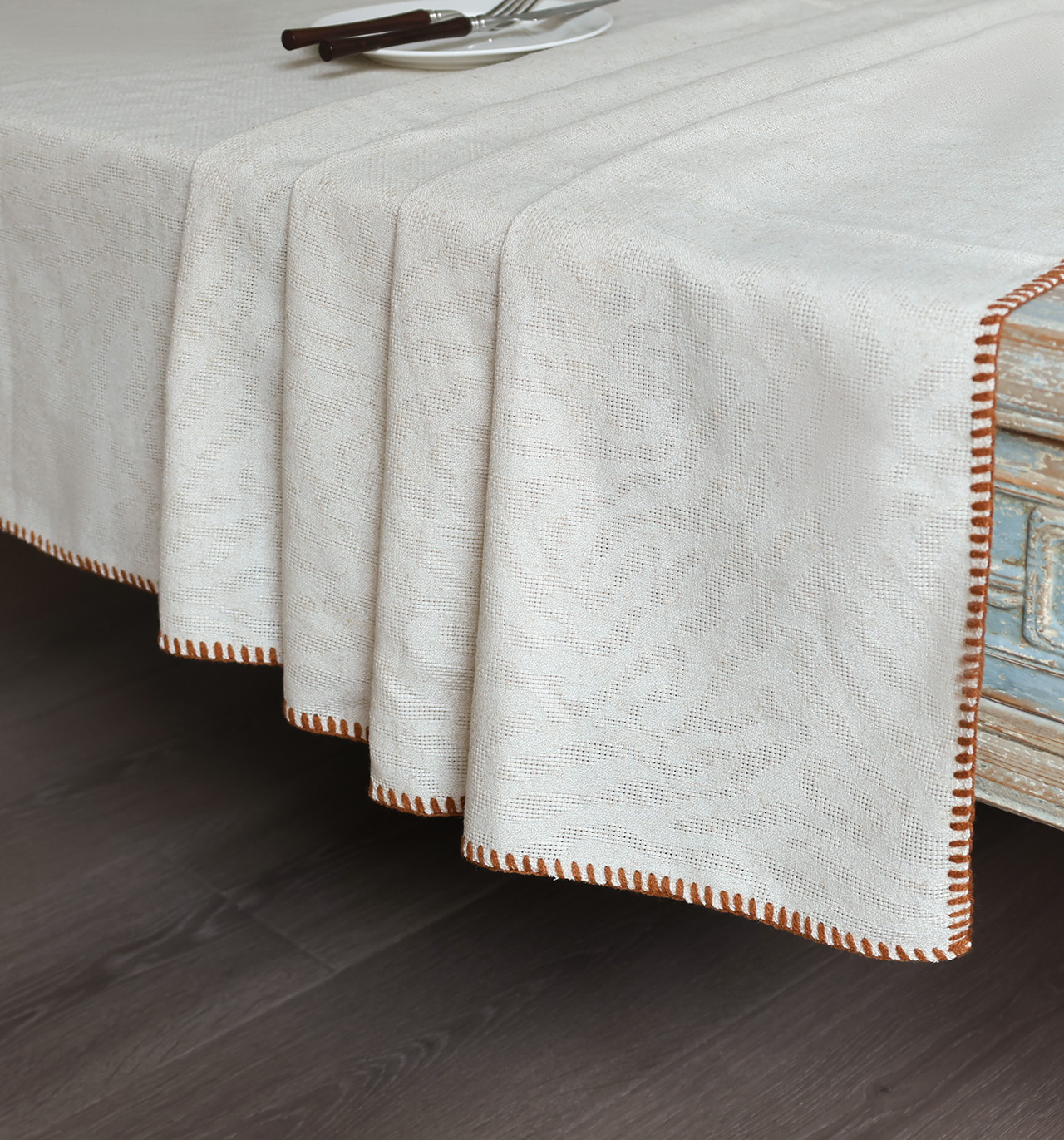 Cotton TableclothsDescribe Natural cotton tablecloths are skin-friendly and eco-conscious, for daily home use, creating a naturally cozy dining atmosphere.View Product →
Print Quality, Check Scale, and Color Matching
When a check is printed, three details decide whether the finished cloth looks premium: registration, or how cleanly the darker squares line up with the lighter ones; ink penetration, or whether the reverse side looks washed out; and color tolerance from batch to batch. Ask for a lab dip or a strike-off before bulk production, and put the acceptable tolerance in writing.
We print checks on cotton and blended grounds with repeat sizes ranging from a fine pin check to a broad block gingham, and we can match a named color reference or a physical sample you send us. That means your light blue stays the same light blue across sizes, packaging runs, and replenishment orders.
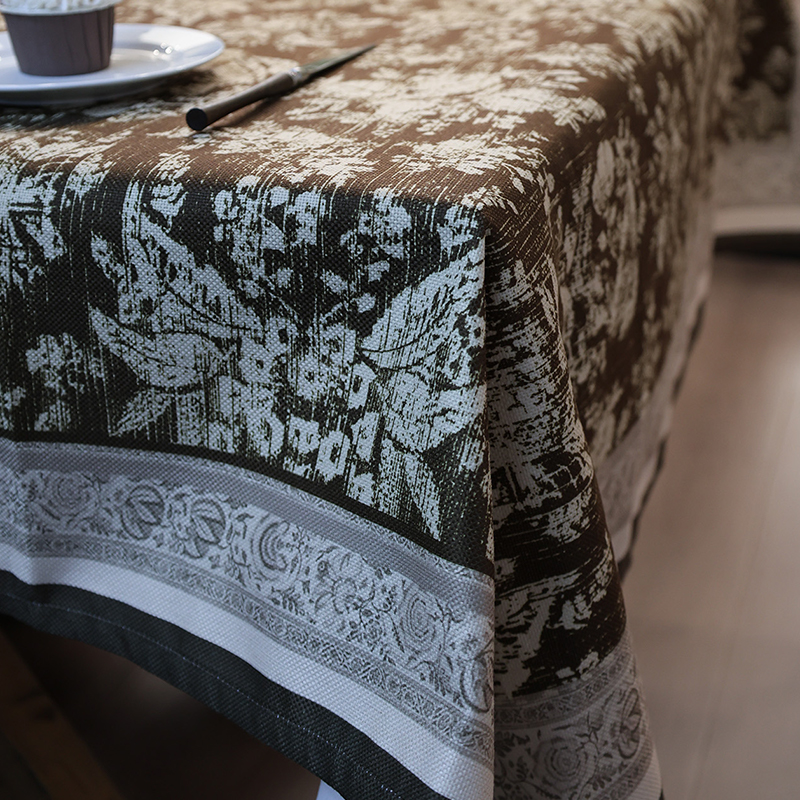 Printed TableclothsDescribe Printed tablecloths offer greater customization freedom and affordability, fitting effortlessly into themed parties and eclectic spaces with bold, full-table ...View Product →
Matching Pieces That Complete the Set
The second and third pieces in a set are where most of the daily wear happens. Napkins take the heaviest use, so choose a weave that can be washed hot and pressed flat without losing its shape. A well-made cloth napkin also lifts a casual table instantly, which is something we have written about in more detail in our note on the practical appeal of cloth napkins.
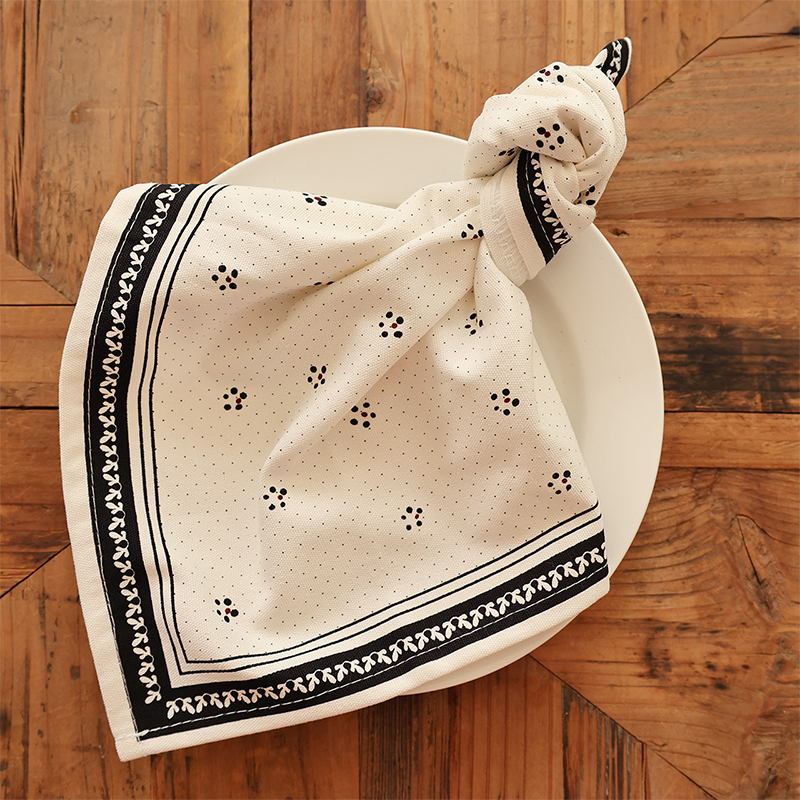 Cotton NapkinsDescribe Exceptional water absorption and skin-friendly comfort. Plant-based cotton fibers are biodegradable, with high colorfastness, making them adaptable to any din...View Product →
Placemats and coasters are the other common partners in a three-piece bundle. For hospitality use, add a waterproof backing or a coated finish to the placemats while keeping the tablecloth itself uncoated, so the set still feels like fabric rather than plastic. If the third piece is a runner, keep its check slightly smaller than the tablecloth's so the two do not compete for attention.
Sizing and Drop: Getting the Proportions Right
A three-piece set only looks intentional when the pieces relate to each other in size. Two numbers matter most: the table dimensions and the drop, meaning the length of cloth that hangs over the edge.
- A 20 cm (8 in) drop: casual, everyday dining.
- A 30 cm (12 in) drop: a balanced, slightly formal look.
- A 40 cm (15 in) drop or more: banquet and buffet presentation.
- Napkins: 40 x 40 cm for lunch service, 45 x 45 cm or larger for dinner.
- Runners: allow 20 to 30 cm of overhang at each end of the table.
Measure your table before ordering and share those figures with your supplier. For a matched set, ask that napkins and runners be cut from the same dye lot as the tablecloth, so the light blue stays consistent when the whole set is laid out in daylight.
Care and Colorfastness for Repeated Use
Light blue shows fading and yellowing more readily than deeper shades, so care instructions belong in the buying decision, not just on the label afterward.
- Wash new cloths before first use to remove any finishing residue and to settle the weave.
- Skip chlorine bleach, which dulls pale blues quickly; use an oxygen-based stain remover instead.
- Wash similar colors together and avoid overloading the drum, which causes creasing and abrasion.
- Tumble dry on low and remove the cloth while slightly damp to cut ironing time.
- Store folded flat, away from direct sunlight, to slow yellowing between uses.
For hospitality buyers, a pre-shrunk and colorfast finish matters more than the initial unit price. Ask for shrinkage figures measured after three washes and for a wash-test report on the exact colorway you intend to reorder.
Custom Sets for Brands, Restaurants, and Events
Most of the interesting work happens when a light blue gingham tablecloth is developed for a specific project rather than picked off a shelf. Restaurants may need a colorfast check that survives commercial laundering, hotels may want a wider drop and discreet hems, retail brands often want the check scaled to a catalog shoot, and event planners may need 200 identical napkins with a monogram.
Pan International Trade (Hangzhou) develops tabletop textiles from fabric selection through weaving, dyeing, printing, and finishing, with in-house embroidery for monogram and logo work. Our team can walk through sampling, lead times, packing, and inspection requirements for a three-piece set, and you can review the full scope of that support on our service page before you commit to a specification.
What to Prepare Before Sampling
- Target dimensions and quantities for each piece in the set.
- Fabric and finish preference, including any coating or backing.
- A color reference, either a named standard or a physical sample.
- Monogram or logo artwork in a usable vector format.
- Packing, labeling, and carton marking requirements.
- Expected annual volume and your target in-market date.
A light blue gingham tablecloth set is a small purchase with an outsized effect on how a table feels to sit at. Whether you are buying three pieces for a family dining room or developing a program for a hotel group, the questions are the same: what is actually inside the set, how is the check made, and will the color hold after fifty washes. Get those three answers and the rest of the decision becomes straightforward.
 Previous



