
 En
En
 عربى
عربى
Content
- 1 What a 3 Pcs Light Blue Gingham Tablecloth Set Usually Contains
- 2 Why Light Blue Gingham Still Sells
- 3 Choosing the Right Base Fabric
- 4 Yarn-Dyed Checks Versus Printed Checks
- 5 Sizing a Light Blue Gingham Tablecloth Correctly
- 6 Designing the Three Pieces as One Set
- 7 Finishing Details That Raise the Value of a Gingham Set
- 8 Quality Control Before a Gingham Order Ships
- 9 Care Guidance Worth Passing to End Users
- 10 Building a 3 Pcs Gingham Program with Pan
A light blue gingham tablecloth is one of the most dependable sellers in tabletop textiles. The check is familiar enough to feel safe on a dining table and graphic enough to look styled in a photograph, and the soft blue keeps it fresh for spring and summer while still working indoors through winter. When a buyer asks us for a 3 pcs light blue gingham tablecloth, they are almost always describing a coordinated pack: one main cloth plus two smaller pieces that share the same check, the same blue tone and the same finishing standard.
At Pan, we design, weave, print, dye and finish tabletop textiles for brands, retailers and hospitality buyers worldwide, from cloth napkins and placemats to runners, tablecloths and coasters. The briefs we receive for gingham sets raise the same questions every time: which base fabric, what check size, how large should the cloth be, and how do you keep three pieces looking like one set after twenty washes? This guide answers those questions from the production side of the table.
What a 3 Pcs Light Blue Gingham Tablecloth Set Usually Contains
3 pcs is a retail convention rather than an industry standard, so the first task in any order is agreeing on what sits inside the pack. In practice, most gingham sets on the market follow one of three configurations.
- One tablecloth plus two napkins: the classic gift and casual dining pack, and the version most often searched for online.
- One tablecloth plus two placemats: a practical fit for small bistro and cafe tables where two settings sit opposite each other.
- One tablecloth, one runner and two napkins: frequently listed as 3 pcs or 4 pcs depending on the seller, so the pack count belongs in the spec sheet.
For wholesale production the details matter more than the label. Confirm the dimensions of every piece, the check size on each item, whether napkins are plain hemmed or hemstitched, and how the three pieces are folded, banded and bagged. A three-piece set only reads as a set when the blue tone, the check scale and the hem width stay consistent across all three items.
Why Light Blue Gingham Still Sells
Gingham has moved in and out of fashion for two centuries and has never truly left. Its structure is simple, two colors in a woven or printed grid, but that simplicity is exactly what makes it useful to brands. A light blue and white check reads as clean and calm. It suits brunch service, coastal rentals, farmhouse kitchens, baby showers, afternoon tea and hotel terraces, and it photographs beautifully against white porcelain, rattan and natural wood.
Light blue is also a commercial advantage. It flatters food without competing with it, hides light wear better than pure white, and works for both men and women as end users, which makes volume buying easier. Unlike a bold seasonal color, a light blue check can stay in a catalogue all year and simply be merchandised differently in spring and autumn.
Choosing the Right Base Fabric
Every gingham program starts with the cloth underneath the check. The three bases we run most often for light blue checks each solve a different problem.
| Fabric | Character of the check | Care and durability | Best fit |
|---|---|---|---|
| Cotton | Matte surface, soft definition between blue and white | Machine washable, softens with use, presses to a sharp finish | Retail sets, gift packs, cafes, home dining |
| Polyester | Very consistent color, crisp edges to the check, holds shape | High wash resistance, minimal shrinkage, dries quickly | Restaurants, hotels, event hire, high-turnover service |
| Linen and ramie | Textured, slightly irregular surface with a relaxed look | Strong and breathable, softens over time, needs gentle washing | Premium collections, slow dining, boutique hospitality |
The choice usually follows the wash cycle rather than the look alone. A venue laundering cloths daily will be far happier with polyester, while a brand selling sets to home cooks tends to earn more repeat purchases with cotton. Cotton remains the default for retail gingham sets, and if you want to see how the base cloth behaves across weights and finishes, our cotton tablecloth range is a sensible starting point.
Yarn-Dyed Checks Versus Printed Checks
There are two ways to put a light blue gingham pattern onto a tablecloth, and the difference shows up in cost, color range and lifespan.
Yarn-dyed gingham
The blue and white yarns are dyed before weaving, so the check becomes part of the cloth rather than sitting on top of it. Color is identical on the face and the back, the pattern never cracks or fades unevenly, and the fabric improves with washing. It costs more because the mill must plan dye lots carefully, but it is the right choice for premium and heirloom-positioned collections.
Printed gingham
The check is printed onto a woven base, usually white or pale blue. This route makes small checks, oversized buffalo checks, irregular hand-drawn checks and unusual blue tones easy to produce, and it keeps entry costs lower for seasonal stories and test runs.
A practical route many of our customers take is to print the tablecloth and its coordinating pieces for the first season, measure sell-through, and then move the best-performing colorway to yarn-dyed weaving once volumes justify the tooling.
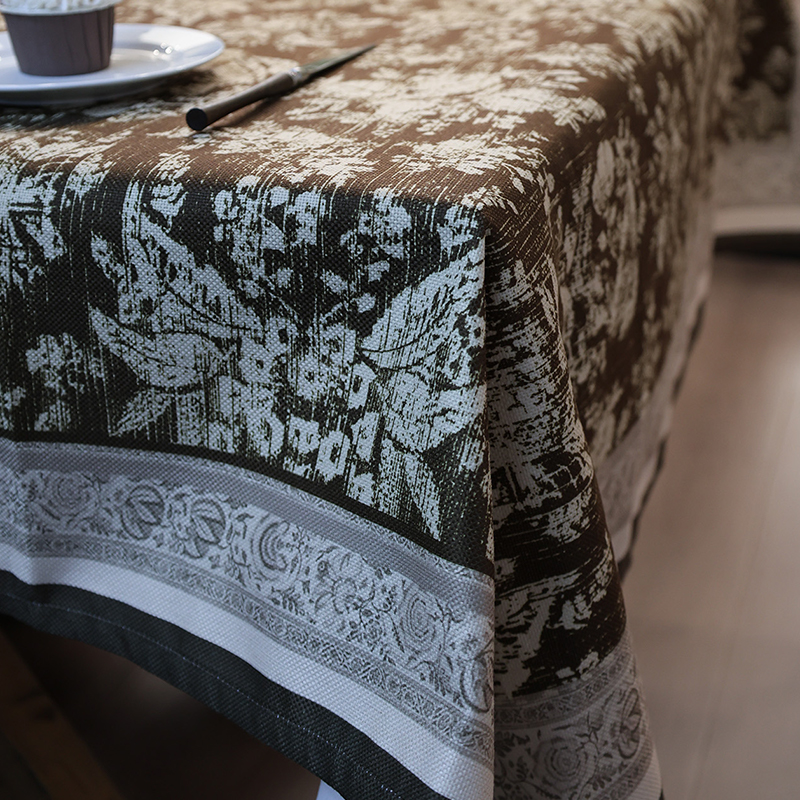 Printed TableclothsDescribe Printed tablecloths offer greater customization freedom and affordability, fitting effortlessly into themed parties and eclectic spaces with bold, full-table ...View Product →
Sizing a Light Blue Gingham Tablecloth Correctly
The drop, meaning how far the cloth hangs below the table edge, decides both the look of the table and how the set is used.
- 6 to 8 inches: bistro and cafe look, keeps the cloth off the floor and away from footfall.
- 8 to 10 inches: everyday dining and brunch service.
- 12 to 15 inches: formal dinner and hospitality settings.
- Around 30 inches: floor length for banquet rounds and wedding tables.
Once the drop is fixed, the cloth size follows the table dimension.
| Table shape and seats | Table size | Cloth with 8 in drop | Cloth with 15 in drop |
|---|---|---|---|
| Square, 4 seats | 34 x 34 in | 50 x 50 in | 64 x 64 in |
| Rectangular, 6 seats | 36 x 60 in | 52 x 76 in | 66 x 90 in |
| Rectangular, 8 seats | 40 x 84 in | 56 x 100 in | 70 x 114 in |
| Round, 4 seats | 48 in diameter | 64 in diameter | 78 in diameter |
| Round, 6 seats | 60 in diameter | 76 in diameter | 90 in diameter |
Napkins usually sit at 18 to 20 inches square, placemats at roughly 13 x 19 inches, and runners at 14 x 72, 16 x 90 or 16 x 108 inches depending on the table. Keep the check proportional to the piece: a large check reads bold on a tablecloth and can look clumsy on a small napkin.
Designing the Three Pieces as One Set
A three-piece set earns its price when the pieces look designed together rather than merely packed together. Two routes work reliably.
- Same check, different scale: a medium check on the tablecloth and a small check on the napkins or placemats, held together by an identical blue.
- Same check, with a solid coordinate: a checked tablecloth paired with a plain dyed light blue runner or napkins, which gives the table a calmer edge.
Finishing should be consistent across the pack: the same hem width, the same thread color, the same corner treatment. Mitred corners on the cloth and a narrow hem on the napkins are the small details that make a set feel considered, and a runner is the easiest third piece to add without changing the tablecloth dimension.
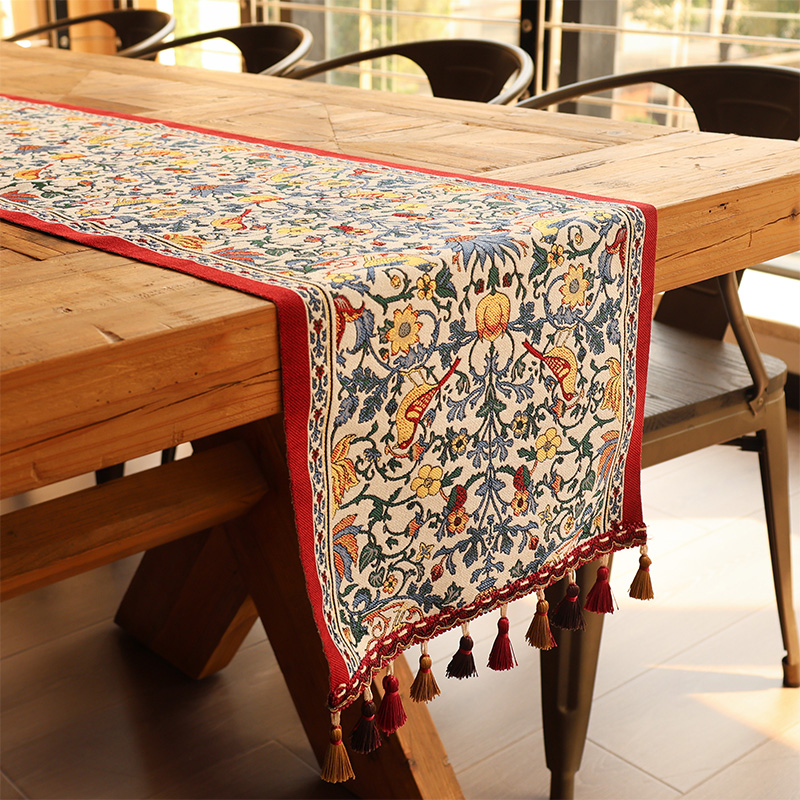 Cotton Table RunnersDescribe Natural cotton table runners are for everyday home use—machine washable, breathable, skin-friendly, and eco-friendly, ideal for households with babiesView Product →
Finishing Details That Raise the Value of a Gingham Set
Once the fabric and sizing are settled, the finishing is what separates an ordinary pack from one that can carry a higher retail price.
- Monogram or logo embroidery on napkins and runners, which turns a table set into a branded or personalised gift.
- Hemstitching along the napkin border for a traditional, hand-finished appearance.
- Scalloped edges for wedding and occasion tables, where a soft wave softens the geometry of the check.
- Contrast binding or piping in white or navy to frame the light blue grid.
- Custom woven labels, belly bands and gift boxes so the three pieces arrive as one product.
Embroidery is where these details become memorable, and a simple napkin is often the piece that carries a brand best. If you would like to see how a plain square of cloth becomes a signature item, our note on the timeless elegance and practical power of cloth napkins is worth a few minutes.
Quality Control Before a Gingham Order Ships
Checks are unforgiving: a small error in alignment or shade is instantly visible, because the eye follows the grid. These are the checks we run on gingham sets.
- Check alignment at every seam and across the full width of the cloth, so the grid continues without stepping.
- Shade continuity between the tablecloth, napkins and runner, verified under daylight and store lighting.
- Shrinkage testing after repeated washing, since a cloth that pulls in will no longer fit the table it was sized for.
- Colorfastness against washing, rubbing and light, particularly important for deep blues printed on white.
- Stitch density, hem width and corner construction measured against the approved sample.
- Measurement tolerance on every piece, because a set is only coordinated if the dimensions match the specification.
Care Guidance Worth Passing to End Users
Clear care instructions reduce returns and keep a gingham set looking new for longer. We include these notes with most tabletop programs.
- Wash in cold or lukewarm water with similar colors, and avoid overloading the drum.
- Skip bleach and harsh brighteners, which dull the blue before the white shows wear.
- Tumble dry on low or line dry in the shade to limit shrinkage and fading.
- Iron on the reverse while the cloth is still slightly damp for a crisp, flat check.
- Rotate pieces between uses so wear is distributed evenly across the set.
Building a 3 Pcs Gingham Program with Pan
Because we run embroidery in our own factory and work with partner mills for weaving and dyeing, a light blue gingham set can be developed from first sketch to packed carton in one place. A typical program starts with your color reference or a swatch you already sell, moves through lab dips and a check-scale trial, and continues into construction samples for the tablecloth, napkins and runner. From there we confirm finishing details, packing format and labelling. Our service team handles the sampling schedule and documentation so that the approved sample and the bulk order match exactly.
If you are planning a gingham collection for an upcoming season, send us the table dimensions, the pack contents you have in mind and a rough target price. We will come back with a fabric recommendation, a check scale and a set that holds together on the table and on the shelf.
 Previous



