
 En
 عربى

Content
If you have ever stood in a linen closet with a measuring tape in one hand and a six foot folding table in the other, you already know the frustration. "Six foot" tells you how long the table is, but it says nothing about how much fabric should hang over the edge, and that single decision changes the cloth size by more than a foot in each direction.
We have spent years producing table linens for restaurants, hotels, wedding planners and home hosts, and the questions we get are remarkably consistent. So here is the practical version: how a six foot table is actually measured, how to work out the drop you want, and which standard cloth sizes genuinely cover it.
What a Six Foot Table Really Measures
A six foot rectangular banquet table is almost always 72 inches long, 30 inches wide and 30 inches high. That last number matters as much as the first, because the table height determines how much fabric you need for a floor-length look.
Not every six foot table follows the rule. Conference and folding tables sometimes measure 36 inches across, which adds six inches to the required cloth width. A six foot round table is a different shape entirely, 72 inches in diameter rather than 72 inches long. Before you order anything, measure three things: the length of the top, the width of the top, and the height from floor to tabletop. Write them down. Guessing is how people end up with a cloth that puddles on one side and barely covers the other.
How Drop Length Changes the Cloth Size
Drop is simply the distance from the table edge down to the hem. A two-inch drop looks tidy and utilitarian; a thirty-inch drop reaches the floor. Once you have picked a drop, the math is straightforward:
- Cloth length = table length + (2 x drop)
- Cloth width = table width + (2 x drop)
For a standard 72 x 30 inch table, that produces a few very dependable working numbers:
- A 6 inch drop gives 84 x 42 inches, the crisp and businesslike look of a buffet or café table.
- A 12 inch drop gives 96 x 54 inches, the most common everyday choice for dining rooms and events.
- A 30 inch drop gives 132 x 90 inches, the classic floor-length banquet cloth.
As a rough convention, 6 to 8 inches reads as casual and functional, 10 to 15 inches reads as a properly set dining table, and anything from 24 inches downward signals something more formal. Full floor length hides table legs, storage boxes and uneven flooring, which is why it dominates wedding and hotel work.
Standard Six Foot Table Cloth Sizes at a Glance
If you would rather skip the arithmetic, the table below covers the sizes we produce and ship most often for six foot tables.
| Table | Drop | Cloth Size | Where It Works |
|---|---|---|---|
| 72 x 30 in | 6 in | 84 x 42 in | Café, buffet, service counters |
| 72 x 30 in | 10 in | 92 x 50 in | Trade shows, casual dining |
| 72 x 30 in | 12 in | 96 x 54 in | Everyday dining, parties |
| 72 x 30 in | 15 in | 102 x 60 in | Formal dining, banquet seating |
| 72 x 30 in | 24 in | 120 x 78 in | Near-floor looks, seated dinners |
| 72 x 30 in | 30 in | 132 x 90 in | Floor length, weddings, hotels |
| 72 in round | 15 in | 102 in round | Casual round-table dining |
| 72 in round | 24 in | 120 in round | Near-floor settings |
| 72 in round | 30 in | 132 in round | Floor length on a six foot round |
Two notes on reading it. A cloth that is an inch or two narrower than the ideal still works, because fabric has give and a slightly shorter drop is rarely noticeable. A cloth that is ten inches short does not. When you are between sizes, round up rather than down, then hem or tuck as needed.
Fabric Choice Affects Fit, Not Just Feel
The same nominal size behaves differently depending on what it is made from, and this is where a lot of returns and disappointments originate.
Polyester and polyester-blend cloths are the most predictable. They shrink very little, hold their colour after repeated laundering, and fall in a clean, even line, which is why they are the default for restaurants running several covers a night.
 Jacquard Polyester Tablecloths for Hospitality and Home DiningHigh-density, wrinkle-resistant polyester tablecloths with jacquard patterns, suited to restaurants, banquets, cafés, and home dining where low shrinkage and easy care matter.View Product →
Cotton feels softer and photographs beautifully, but expect roughly two to four percent shrinkage on the first wash. Order with that allowance in mind, or pre-wash the linens before a big event so the hem lands where you planned.
Linen and ramie bring texture and a natural slub that no synthetic can imitate. They wrinkle, and that is part of the charm, but the weave can relax slightly with use, so a generous hem is worth having.
 Printed Linen and Ramie Tablecloths with Natural TexturePrinted linen-ramie blend tablecloths with breathable, irregular texture and floral or geometric designs, offering natural drape for rustic, minimalist, and contemporary dining settings.View Product →
Jacquard and embroidered cloths sit heavier on the table. That weight helps them drape without shifting, though dense embroidery can draw a hem in slightly, so a cloth with a wide embroidered border may measure a touch smaller than its flat cut.
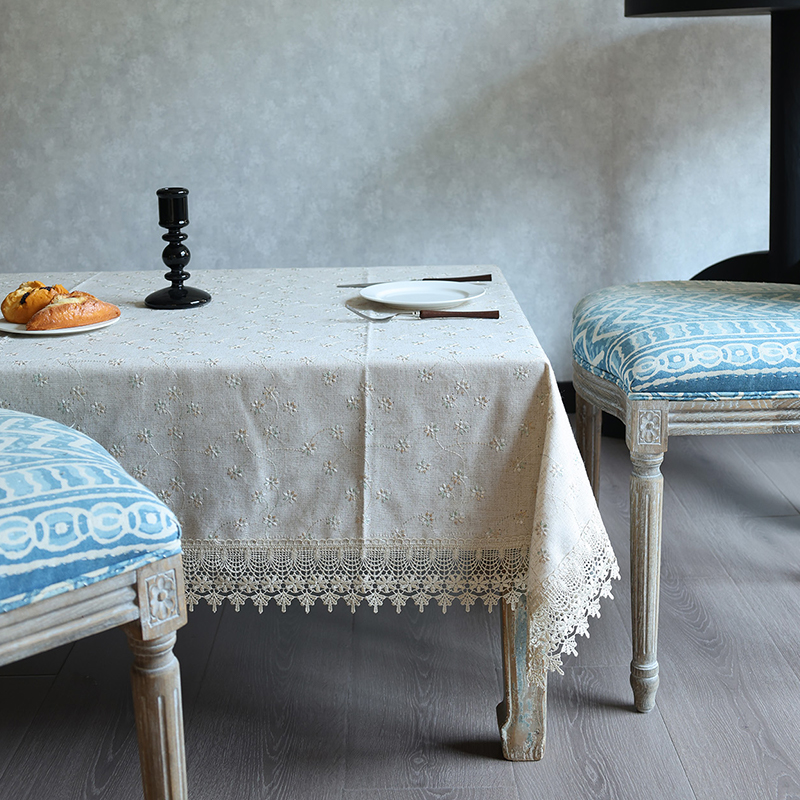 Embroidered Tablecloths for Formal Banquets and Ceremonial TablesDecorative embroidered table linens with all-over or edge detailing, adding texture and old-world charm to wedding head tables, banquets, and upscale dining settings.View Product →
Whatever you choose, wash a sample or read the care instructions before committing to a set of twenty. Shrinkage discovered the day after the event is expensive.
When Standard Sizes Do Not Fit
Sizing charts assume a clean 72 x 30 inch table with four unobstructed sides. Real venues are messier. Tables get pushed together, some have splayed legs that catch a floor-length hem, and a few have benches or a lip that changes the effective width.
In those cases, cut-to-size is usually simpler than settling for the nearest stock measurement. We regularly produce table cloths outside the standard grid, in custom widths, with mitred corners, monogrammed borders or a hem finish that matches an existing set. Browse our tabletop textiles collection to see the fabric and finishing options, and if you are working to a venue specification or a brand guideline, our service team can walk through sampling, packing and delivery with you before anything goes into production.
A Short Checklist Before You Order
- Measure the tabletop length, width and height, not the old cloth.
- Decide the drop, keeping floor length for formal events and 10 to 12 inches for everyday use.
- Apply the formula, then round up to the nearest standard size where one exists.
- Adjust for fabric shrinkage, especially with cotton and linen blends.
- Check how the hem will sit around legs, benches or table lips.
- Order one test piece for high-volume events before committing to a full set.
Questions We Hear Most Often
Is 90 x 132 the right cloth for a six foot table?
Yes, for a standard 72 x 30 inch table standing 30 inches high, 90 x 132 inches gives a full floor-length drop. If you would rather see a little leg or protect the hem from foot traffic, a 24 inch drop version is a sensible alternative.
What size cloth gives a 15 inch drop on a six foot table?
102 x 60 inches. This is a popular middle ground for banquet seating, because it hangs well past the table edge without touching the floor.
Will a 90 x 156 inch cloth fit?
It will cover the table, but it is cut for an eight foot table and will pool noticeably on the floor at both ends of a six foot top. Puddling can look deliberate in a wedding setting if it is even, and simply untidy if it is not.
Six foot tables are everywhere, and the cloth that fits them is less mysterious than it first appears. Measure the top, choose the drop you actually want, and let the numbers do the rest. Once the size is right, the fabric becomes the interesting decision rather than the risky one.
 Previous


