
 En
En
 عربى
عربى
Content
A light blue gingham tablecloth is a humble piece that quietly does a lot of work. It softens a bare wooden table, flatters plain white plates, and makes an ordinary dinner feel a little more considered. When a product listing says "3 pcs", it usually means the tablecloth arrives with two matching companions, most often napkins or placemats. This guide goes through what is actually in the box, how gingham behaves on different fabrics, how to choose a size that drapes properly, and how to keep the blue fresh.
What "3 Pcs" Usually Means
Three-piece table linen sets are sold in a few different combinations, and the photographs on a product page do not always make it obvious which one you are looking at. The arrangements that come up most often are:
- One tablecloth plus two napkins — the retail standard for four- and six-seat tables.
- One tablecloth plus two placemats — common for two-seat bistro or breakfast tables.
- One tablecloth plus two smaller pieces of the seller's choosing — a runner, a pair of coasters, or matching cushion covers.
Occasionally the "3 pcs" is three identical items, such as three napkins or three placemats bundled together rather than a full setting. Before ordering, check the dimensions of every piece, the fibre content on the label, and whether the napkins are cut from the same weight of cloth as the tablecloth. A set that lists only the tablecloth measurement is worth a second look, because thin napkins feel noticeably cheaper in the hand. If you need a set for one specific table, most suppliers — including us — will cut a custom combination to your size.
Why Light Blue Gingham Keeps Coming Back
Gingham has one of the longest histories of any check pattern still in daily use. The name comes from the Malay word genggang, meaning striped, and the cloth travelled through the Indian subcontinent and Dutch trade routes into Europe in the seventeenth century, where it was soon woven in cotton as an affordable, cheerful alternative to fine linen.
Light blue is the gentlest version of the pattern. Red gingham reads as picnic blanket and black gingham as a Parisian bistro, while pale blue sits comfortably in kitchens, dining rooms, cafés and wedding venues without shouting. It pairs almost automatically with white porcelain, cream stoneware, natural wood and navy accents, and it has a useful habit of making inexpensive glassware look intentional.
Check Scale Changes the Mood
Scale does as much styling work as colour. A quarter-inch check looks refined and almost solid from across the room, which suits formal dining rooms. A half-inch to one-inch check is the everyday favourite and stays clearly visible at the table. Checks of two inches and above — often called buffalo check — feel rustic and read best on a plain table with simple crockery. On a three-piece set, a small check on the napkins and a larger one on the tablecloth adds depth without introducing a second pattern.
Gingham Is a Pattern, Not a Fabric
This is the point most buyers only discover after the first wash. Gingham can be made as a yarn-dyed woven check, where dyed threads are woven so the pattern appears on both faces of the cloth, or as a printed check, where the pattern sits on the surface of a plain fabric. Yarn-dyed checks cost more, hold colour well over many washes, and still show the pattern when the corners fold back. Printed checks offer far more freedom in colour matching — a printed cloth can be produced to match your exact blue — and they usually cost less.
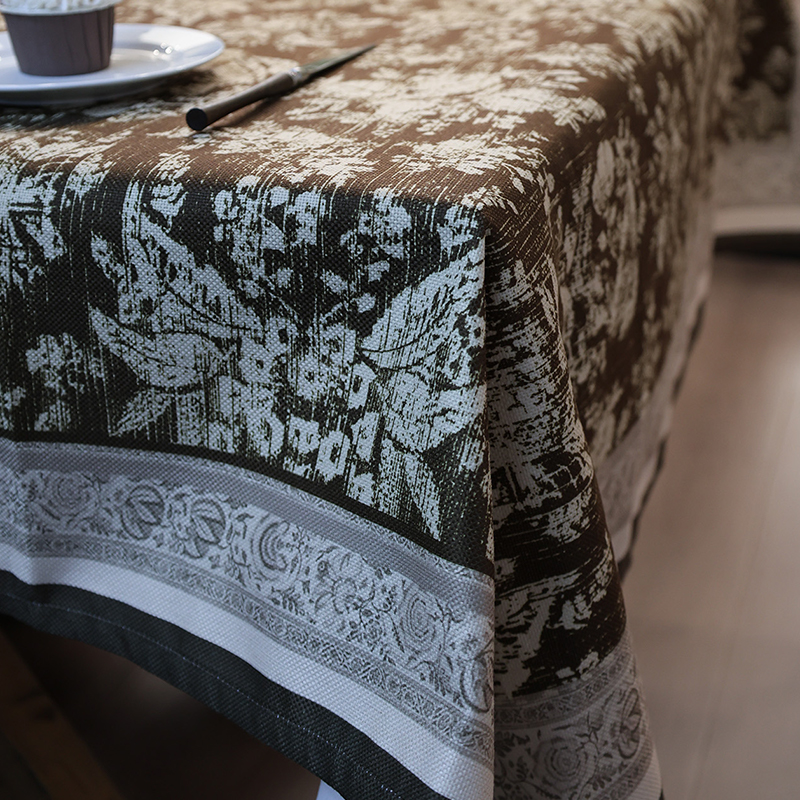 Custom Printed Tablecloths for Weddings and Themed EventsCustomizable printed tablecloths offer affordable color matching and bold designs for weddings, parties, and cohesive table settings.View Product →
The base cloth matters just as much as the pattern itself.
| Base fabric | Look and drape | Care | Best suited to |
|---|---|---|---|
| 100% cotton | Matte, soft, holds a crisp fold | Machine washable, needs ironing | Family dining, cafés |
| Polyester | Smooth, slight sheen, resists creasing | Very easy, quick drying | Restaurant use |
| Cotton-poly blend | Middle ground in feel and shine | Easy, light ironing | Rental and event linen |
| Linen or ramie | Textured, elegant, natural slubs | Wash cool, press damp | Weddings and styling |
| Jacquard weave | Pattern built into the weave | Gentle cycle, low iron | Hotels, formal settings |
| Brushed or suede finish | Soft, matte, warmer tone | Cold wash, no tumble dry | Autumn and winter tables |
For a light blue gingham tablecloth, cotton is the safest all-round choice: it presses well, absorbs spills instead of beading them, and ages honestly. Polyester wins on laundry costs and linen wins on atmosphere. For a home rather than a business, cotton or a cotton-rich blend is usually the sweet spot.
Getting the Size and Drop Right
Fit is the difference between a tablecloth that looks styled and one that looks borrowed. Measure the table, then decide how far the cloth should fall. As a rule of thumb, 6 to 8 inches of drop per side suits casual dining, around 12 inches looks more formal, and 15 inches or more suits banquets and floor-length settings. Round tables are measured by diameter; add twice the drop to work out the cloth size.
| Table and seats | Table size | Suggested cloth | Approximate drop |
|---|---|---|---|
| Square, 2-4 seats | 30" x 30" | 52" x 52" | 11" per side |
| Rectangular, 4-6 seats | 60" x 36" | 60" x 84" | 12" per side |
| Rectangular, 6-8 seats | 72" x 40" | 60" x 102" | 15" along the length |
| Rectangular, 8-10 seats | 96" x 40" | 60" x 120" | 12" along the length |
| Round, 4 seats | 40" diameter | 70" round | 15" all round |
| Round, 6-8 seats | 60" diameter | 90" round | 15" all round |
Two practical notes. If your table has a thick apron or chunky legs, add an inch or two so the cloth does not sit on the frame. And in a three-piece set the napkins are usually a fixed 18 or 20 inches square; the larger size simply leaves more room for a fold, a monogram, or a generous lap.
Finishing the Set: Napkins, Runners and Placemats
A tablecloth does the heavy lifting, but the two extra pieces are what make a table look finished. Cotton napkins in the same light blue check are the classic partner — cloth napkins have outlasted every paper alternative that promised to replace them, simply because they feel better in the hand and photograph better on a set table.
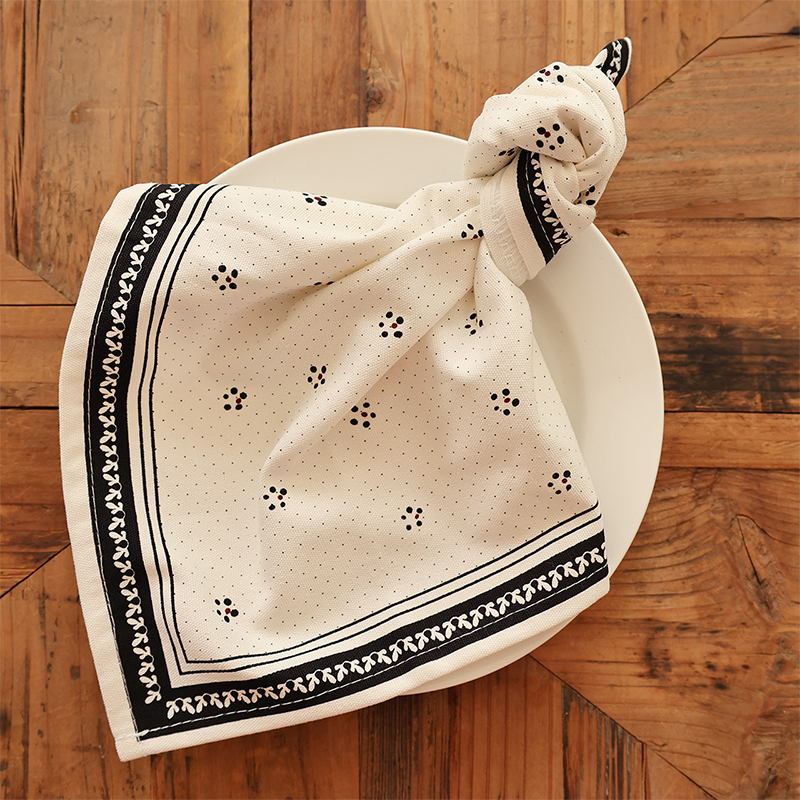 Printed Cotton Dinner Napkins for Reusable Table SettingsSoft, absorbent printed cotton napkins pair with checked tablecloths for reusable, machine-washable dining linens in contemporary neutral designs.View Product →
If the set includes placemats instead, rectangular mats around 13 by 19 inches suit standard settings, while round mats of 15 to 17 inches look softer and more casual. Add a runner when the tablecloth is plain and you want a second layer of pattern: 13 by 72 inches fits most four-seat tables, and 16 by 90 inches covers longer dining tables and sideboards. Keep the check scale consistent across the set unless you are deliberately mixing, because three different check sizes on one table tends to look accidental rather than designed.
Washing and Keeping the Blue Fresh
Light blue hides stains better than white but less well than navy, so a little routine goes a long way:
- Shake crumbs off before washing and deal with spills within an hour where possible; a blot with cold water handles most of them.
- Wash cotton at 40°C or lower with a mild detergent, and avoid chlorine bleach, which dulls blue dye faster than anything else.
- Skip hot dryer settings; line drying in the shade keeps both colour and fibre in better condition.
- Press cotton while it is still slightly damp, working along the grain of the check so the pattern stays square.
- Store cloth folded rather than hung for long periods, and keep dyed linen out of direct sunlight to prevent fade lines.
Yarn-dyed checks generally hold colour better over many washes, but a well-printed cloth treated kindly stays true for years. For commercial dining rooms we build in a longer first wash and a durable press finish as standard.
For Brands and Buyers: Sourcing Three-Piece Sets
When you are buying table linen for a restaurant group, a hotel, a retail label or an online store, the questions shift from styling to consistency. Can the light blue stay the same blue across three reorders? Will the napkins match the tablecloth weight? Can the set carry your own mark?
We are Pan, a Hangzhou-based textile company, and tabletop textiles have been our main work for years. We design, produce and trade high-end fabrics for brands worldwide, running our own embroidery factory while working with partner weaving and dyeing mills, so the chain from raw material to finished piece sits largely under one roof. For a gingham program that usually means matching your specified blue, choosing between printed and yarn-dyed construction, cutting tablecloth, napkins, placemats and runners from a single lot, and finishing edges to suit the setting — plain hem, hemstitch, scalloped edge or a woven border.
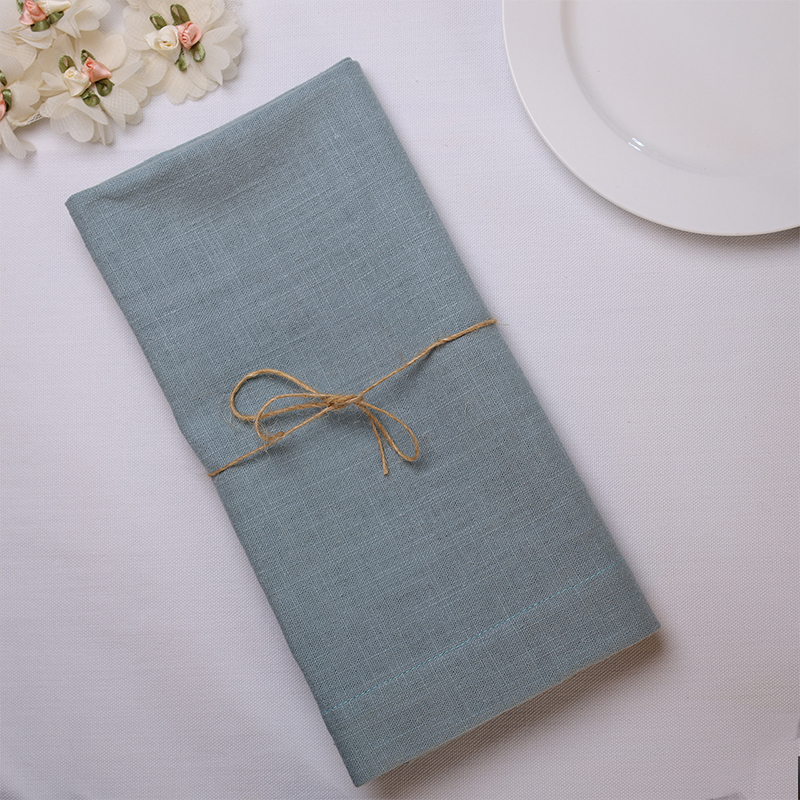 Custom Monogram Logo Cloth Napkins for Events and BrandingPersonalized cloth napkins offer embroidery or printing options in linen, cotton, or satin for corporate gifts, weddings, and branding.View Product →
Monogramming is where a three-piece set becomes genuinely yours. An embroidered initial or a full brand mark on the napkin corner turns a stock item into something a guest remembers, and it is the addition restaurants and wedding suppliers ask for most. Our embroidery is done in-house by experienced craftspeople, which keeps letterforms sharp and timings predictable, a useful detail when a set has to arrive before a launch or a season.
You can see how we work with brands on our services page, and we are always happy to talk through fabric, size and finish before you commit to anything. Every project starts the same way: a sample in your hands, in your blue.
A three-piece light blue gingham tablecloth set is a small purchase with an unusually long life. Choose the right base cloth, get the drop right, and treat the blue gently in the wash, and the table will look considered for years rather than weeks. If you would like help matching a colour or sizing a set for an awkward table, we would be glad to hear from you.
 Previous



