
 En
 عربى

Content
Gingham has a way of making a table look cared for without asking for much. A light blue check reads fresh in spring, calm in the middle of winter, and just as at home on a café terrace as it is under a wedding centrepiece. That range is exactly why one request keeps arriving in our inbox: a 3 pcs light blue gingham tablecloth set, packed as one coordinated trio rather than three separate pieces.
We work with tabletop textiles every week at Pan, from tablecloths and napkins to runners, placemats and coasters, and we have learned that a three-piece set lives or dies on small decisions. How the light blue reads under warm restaurant lighting. Whether the check is woven in or printed on. Where the drop breaks against the floor. What follows is the way we walk a buyer through those decisions, in the same order we usually do it on a call.
What the Three Pieces Usually Are
In almost every program we have handled, "three pieces" does not mean three tablecloths. It means one cover plus two matching accessories, and the right build depends on where the set will actually live: a bistro table, a family dining room, or a gift box on a retail shelf.
| Set build | Pieces | Best suited to | Production notes |
|---|---|---|---|
| Classic pairing | One tablecloth, two napkins | Café and bistro tables, breakfast nooks, small dining rooms | Simplest to produce; napkins fold inside the tablecloth for retail packing |
| Buffet build | One tablecloth, two placemats | Rectangular dining tables, sideboards, buffet service | Placemats need a firmer hand so the check stays flat at the edges |
| Pattern-play trio | One tablecloth, two napkins in a second check scale | Gift sets, boutique retail, styled photo shoots | Keep the base blue identical so two check sizes read as one family |
The napkins deserve more thought than they usually get. A 20 by 20 inch square in a mid-weight cotton keeps a crisp fold on a restaurant table, while something lighter drapes more softly for home use. If the set will be washed commercially, weight and hem construction matter far more than the pattern does.
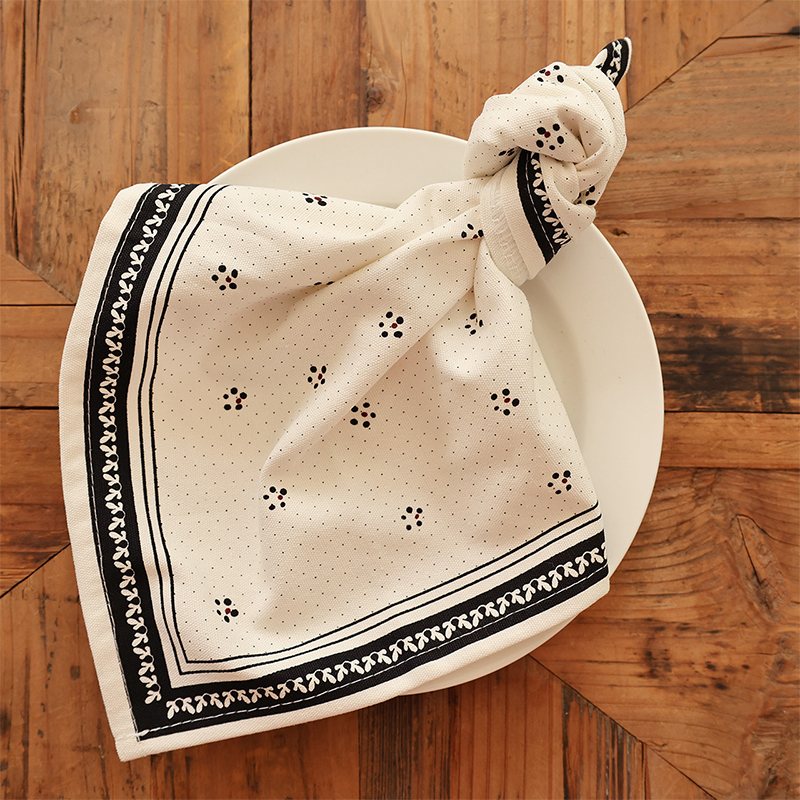 Printed Cotton Dinner Napkins for Reusable DiningReusable printed cotton dinner napkins offer soft absorbency, colorfast designs and machine-washable durability for everyday dining and hospitality settings.View Product →
It also pays to fix the packing format early. A folded stack inside a printed belly band is a very different cost from three pieces in a rigid gift box, and the decision can shift your unit price more than a small change in fabric weight ever will.
Why Light Blue Gingham Holds Up Almost Everywhere
Light blue is the quietest of the classic gingham shades. It photographs without a colour cast, it lets food take the attention, and it flatters both white china and warm wood. In practice we see the same shade working across a surprisingly wide spread of settings: a spring brunch, a baby shower, a coastal rental property, a farmhouse kitchen, an Easter table, a picnic shoot, a small wedding, and the branded tables of a café that wants to look friendly rather than formal.
That versatility is also a warning. Because light blue gingham suits so many contexts, buyers often try to make one set serve all of them, and the result is a tablecloth that is slightly too short for a banquet and slightly too large for a two-top. Pick the primary use first, then let the sizes follow.
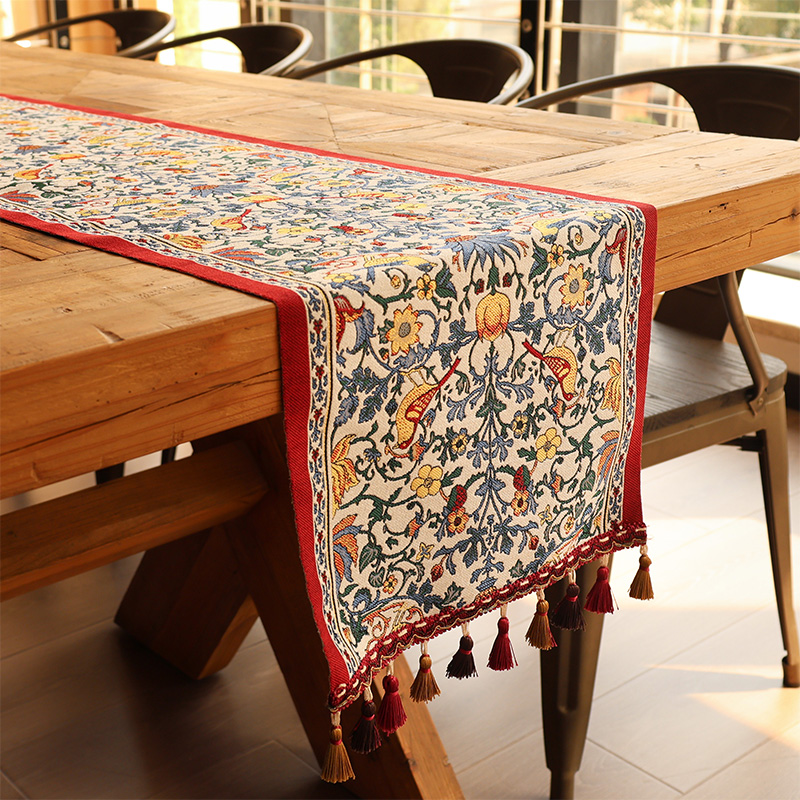 Natural Cotton Table Runners for Everyday TablesMachine-washable natural cotton runners add breathable, absorbent texture to family meals and layer easily over existing tablecloths for versatile tablescapes.View Product →
If you plan to grow the range later, a runner is the easiest fourth piece to add. It layers over an existing cloth, uses far less fabric, and gives you a second selling unit without a second print run.
Choosing the Fabric and the Check
Yarn-dyed versus printed checks
A true gingham is yarn-dyed: the coloured yarns are woven in, so the check sits inside the cloth and shows on both faces. Colour depth is excellent and it survives repeated laundering well. A printed check is applied to a greige base, which gives you a much wider shade range, faster development for small runs, and lower minimums, at the cost of a pattern that sits on the surface and can look slightly flatter up close.
For a light blue that must sit exactly on brand, ask for lab dips either way. Light blue is one of the hardest shades to repeat across lots, because a small shift in dye strength tips it towards grey or mint.
Fibre choice changes the hand
Cotton gives the crisp, thirsty feel most people picture when they hear gingham. Polyester keeps its colour and resists creasing, which is why hospitality programs lean on it. Linen and ramie add texture and a little slub, and blends land somewhere in between on cost, drape and wrinkle recovery.
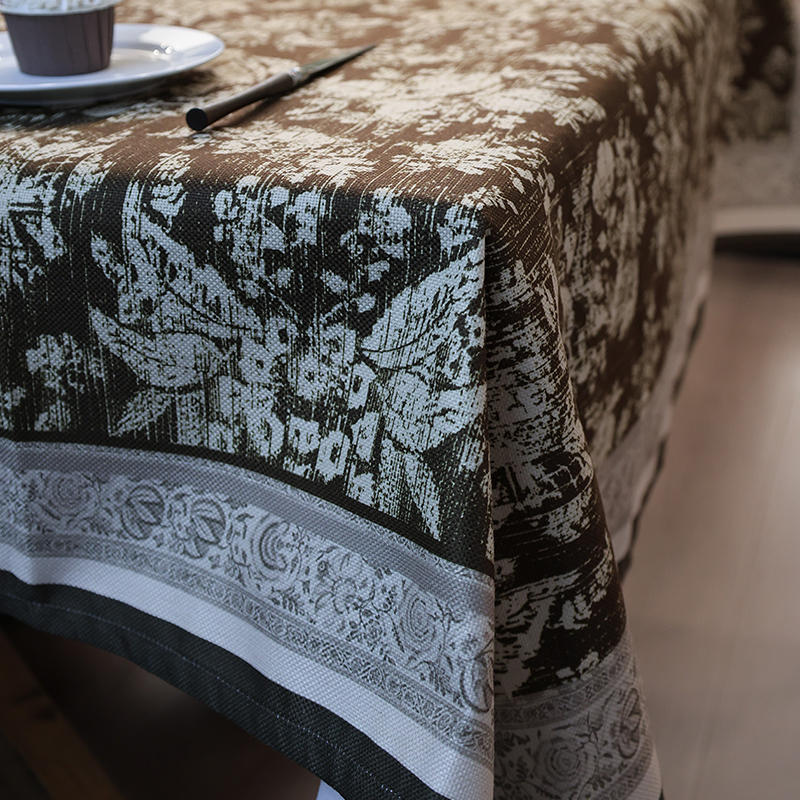 Custom Printed Tablecloths for Weddings and EventsCustom printed tablecloths bring patterned, spill-resistant drape to weddings and events, offering a cost-effective alternative to rentals while allowing personalized designs.View Product →
- Colourfastness to washing and to light, tested to the standard your market expects.
- Dimensional stability after three washes, not just one.
- Check alignment at the seam, which only shows up once the cloth is cut.
- Pilling and abrasion, especially on napkins that will be folded daily.
Sizing a Three-Piece Set to a Real Table
Measure the table top, not the old cloth. The drop on each side is the difference between the cloth width and the table width, divided by two, and that single number decides whether the set looks casual or formal.
- A 6 to 8 inch drop suits cafés, breakfast tables and anything that will be sat at from the side.
- A 10 to 12 inch drop is the standard dining look and the safest default for a three-piece set.
- A 15 inch drop or more, down to the floor, is for events, buffets and photography.
- On round tables, keep the check square to the table edge rather than to the seam, or the pattern will appear to twist.
- Napkins work best between 18 and 20 inches square; placemats around 13 by 19 inches.
When a buyer is unsure, we usually suggest producing a plain-dyed sample in the exact size first. It is a cheap way to see the drop on the real table before committing fabric to a check layout.
Wash, Wear and Repeat Use
A tablecloth for a restaurant or hotel is a working item, not a decorative one, and a set that fades or shrinks after twenty cycles becomes a cost problem rather than a styling one. Ahead of any production run, agree on a wash protocol and test against it: temperature, detergent type, whether oxygen bleach is allowed, and how the piece will be dried and finished.
- Specify residual shrinkage rather than "pre-shrunk", which tells you very little.
- Confirm whether tumble drying is expected, because it changes the fabric choice quickly.
- Agree on hem construction, since a narrow single fold will not survive a commercial laundry.
- Ask for care-label wording that matches the destination market's rules.
We went into the practical side of reusable napkins in more depth in our notes on cloth napkins, which is worth a read if your set will be laundered rather than hand washed.
What to Confirm Before a Production Run
Most of the problems we help solve are not manufacturing problems. They are specification problems that were never written down. A short, specific brief saves weeks.
- Shade target: a Pantone reference or a physical swatch, plus the tolerance you can accept.
- Check scale: a small gingham of roughly an eighth of an inch behaves very differently from a one inch buffalo check.
- Finishing: hem width, mitred corners, stitch density, and whether a hemstitch or scalloped edge is wanted.
- Embellishment: a monogram, woven logo or embroidery, which is work we handle in our own embroidery facility.
- Packing: polybag, hangtag, belly band or gift box, plus barcode and carton marks.
- Sampling and lead time, agreed against a calendar rather than an estimate.
You can see how we structure sampling, production and follow-up on our service page. Bring us the table dimensions and the shade you have in mind, and we can usually tell you within a day whether the build you want is straightforward or needs a small redesign.
A three-piece gingham set looks like a simple product from the outside, and it can be one, provided the small questions are answered before the fabric is cut. Get the drop, the shade and the wash expectations right, and the same light blue check will work for a café, a wedding and a kitchen table without ever feeling like three different products.
 Previous


